
The Great British Writer Alan Hollinghurst, 71, Has Written His First Novel with a Protagonist of Color
We talked about the very tender "Our Evenings." And about the graphic sex scenes and racial dynamics of his debut "The Swimming Pool Library." And about why his long clubbing stint is finally over.


Hi folks - happy Pride Week to all the New Yorkers reading this. It’s also my birthday this Friday! (I was literally born on June 27, 1969, perhaps even while those bricks and heels were flying at the cops, so I am the genuine Stonewall baby.) At this very moment, though I don’t want to leave my air-conditioned bedroom for Pride, my birthday or anything, because it’s a fucking oven out there. Oh, and we’re at war in the Middle East again—yay! (not).
And amid all that, I am so delighted to post this interview because it’s with truly one of my longest-time literary heroes, the very cherished gay British writer Alan Hollinghurst, 71, who brought us the bracing highbrow porn of The Swimming-Pool Library in 1988…
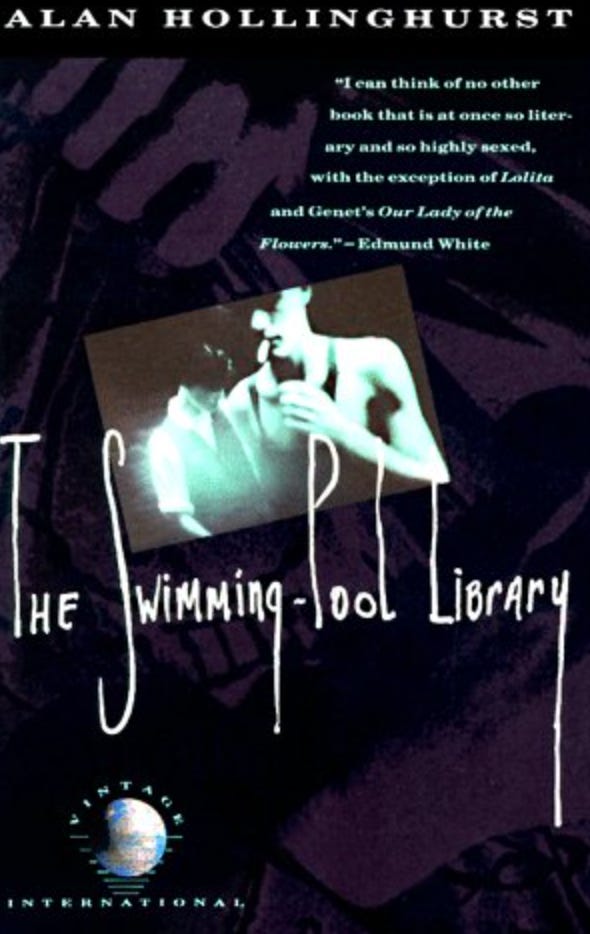
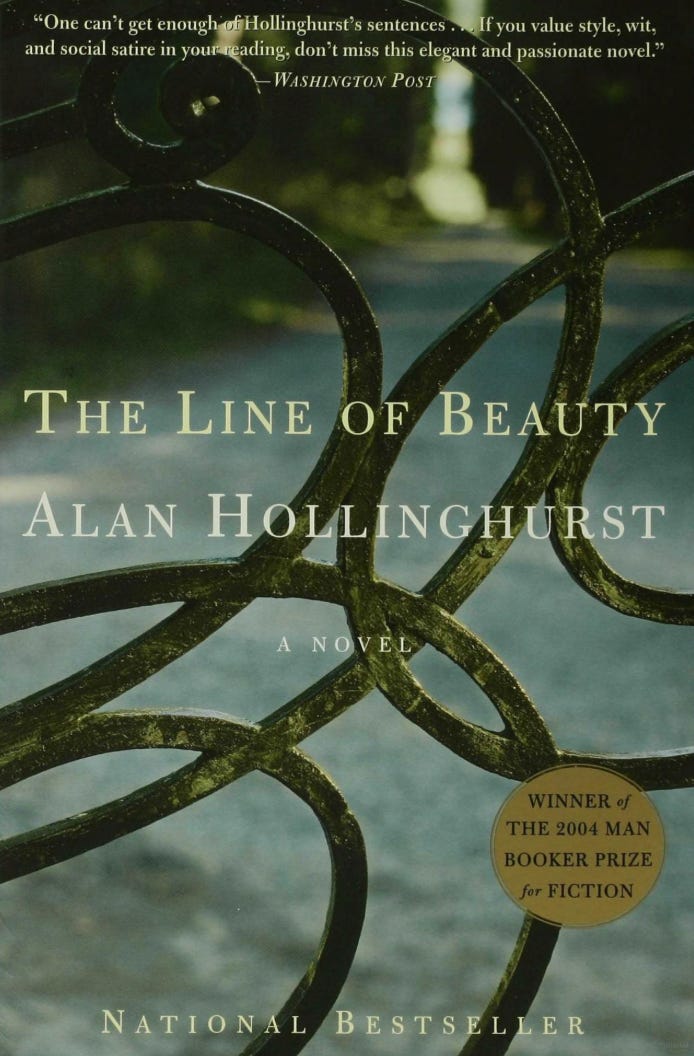
…and then six more novels: The Folding Star (one of the most mysterious novel titles ever, IMO), The Spell (almost like Alan’s gay 1990s London Sex and the City), (the epic, Booker Prize-winning) The Line of Beauty, The Stranger’s Child, The Sparsholt Affair and, late last year, his first novel with a title that doesn’t begin with The: Our Evenings.
I have loved Alan’s novels since I first read Swimming-Pool in the early nineties in my early twenties. I loved it partly because I’d never read such graphic (read: hot!) sex scenes in a novel that was so otherwise highbrow—it’s a privileged young man’s sex romp in early ’80s London right on the brink of the AIDS crisis. I adored the richly, subtly narrated and homoerotically charged The Folding Star and The Spell as well, even if I’ve read them a long time ago and only remember parts. I agreed with the general literary consensus that he was stepping into more ambitious territory about the UK’s recent political history (the Thatcher era and the U.K. AIDS crisis, basically) in The Line of Beauty.
I’ll now admit something that I did not admit to Alan, which is that while I loved, as ever, the plushness of his writing in The Stranger’s Child and The Sparsholt Affair, I didn’t finish them—although I must admit I want to return to both of them, just because I love his writing so much.
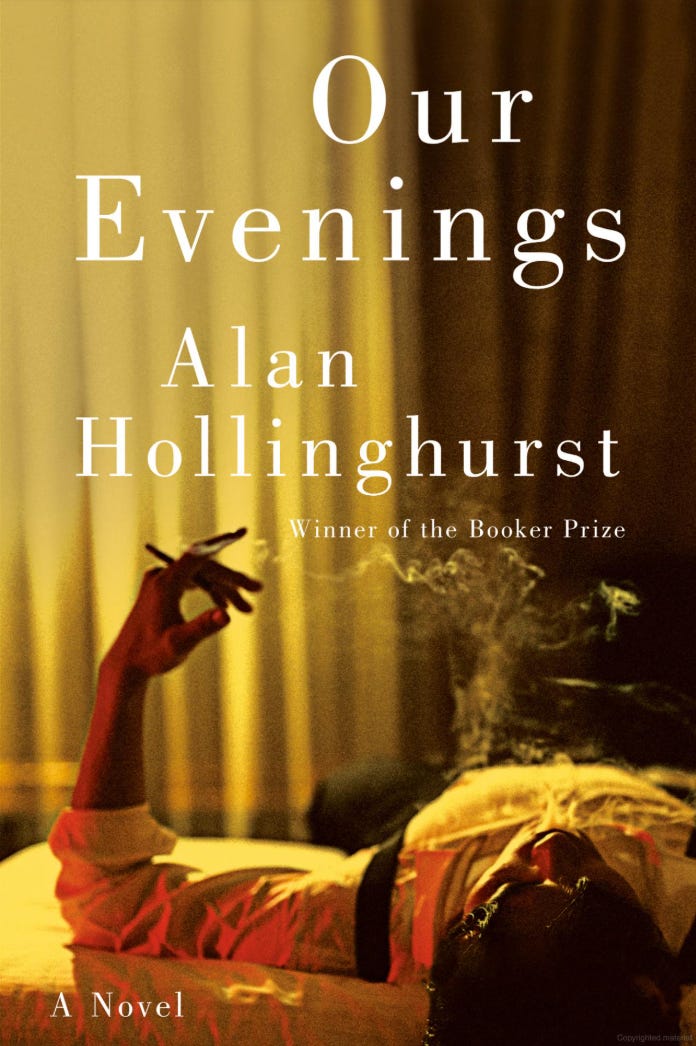
And finally, I loved Our Evenings with my whole heart. It represents a big leap for Alan: After years of having gay characters of color in his novels (both fetishistically in Swimming-Pool and more affectingly in The Line of Beauty), he has finally written a novel from the point of view of a gay character, Dave Win, who is half white and half Burmese (even though he grow up in white England, never knows his Burmese father and has all but zero ties to Burmese culture).
I’m not the first to note that not a lot happens in Our Evenings, but, unlike with Sparsholt and The Stranger’s Child, that didn’t stop me from reading. The inner world that Alan constructs for the visibly of-color Dave, moving through largely white bourgeois British society from the 1960s until recent years, is so gently witty, and the relationship that Dave has with his mother, Avril, is so movingly tender, I found it enough to keep me enthralled. I desperately wanted to know how Dave’s life turned out.
One thing I’ve always loved about Alan’s writing is his oh, so very British restraint and understatement. You really have to read between the lines of his encounters to understand what truly is going on—what desire, affection or prejudice is at play—and that imbues his novels with their own kind of suspense that is separate from mere “What will happen next?” plot mechanics.
This interview was arranged by the lovely Zimbabwe-born Curt Weber, a mutual friend of mine and Alan (who in fact has interviewed Alan himself).
So I must thank him for that, and thank as well Alan, who, in a two hour call, could not have sounded more delightfully Oxbridgian (yes, he really talks with that plummy accent and literary syntax) but also was incredibly funny, relaxed and open—especially when talking about his long stint clubbing in his forties and fifties.
I just adored him and was truly honored at this chance to get to know a bit someone I’ve admired form afar for so long.
I hope you enjoy the interview! I hope that Our Evenings, as imposingly chunky as it is, becomes part of your summer reading. Personally I read it in less than a week. However, if you want something shorter and more kinetic of Alan’s though, perhaps read The Swimming-Pool Library first, if you haven’t already.
Thanks, Caftaners! There is a slight chance I may not publish next week—but I also may! Just sayin’! (As of today, I have at least one interview lined up for this week.) Now here’s Alan! (And by the way, I didn’t even know before we talked that he was KNIGHTED earlier this year - so now that’s SIR Alan Hollinghurst!)

Alan, it’s a real honor to talk to you—in the wake of us both being sick. I had Covid last week. Did you?
No. It was some mysterious thing I picked up on the Eurostar or the Metro in Paris. It’s a special French bug.
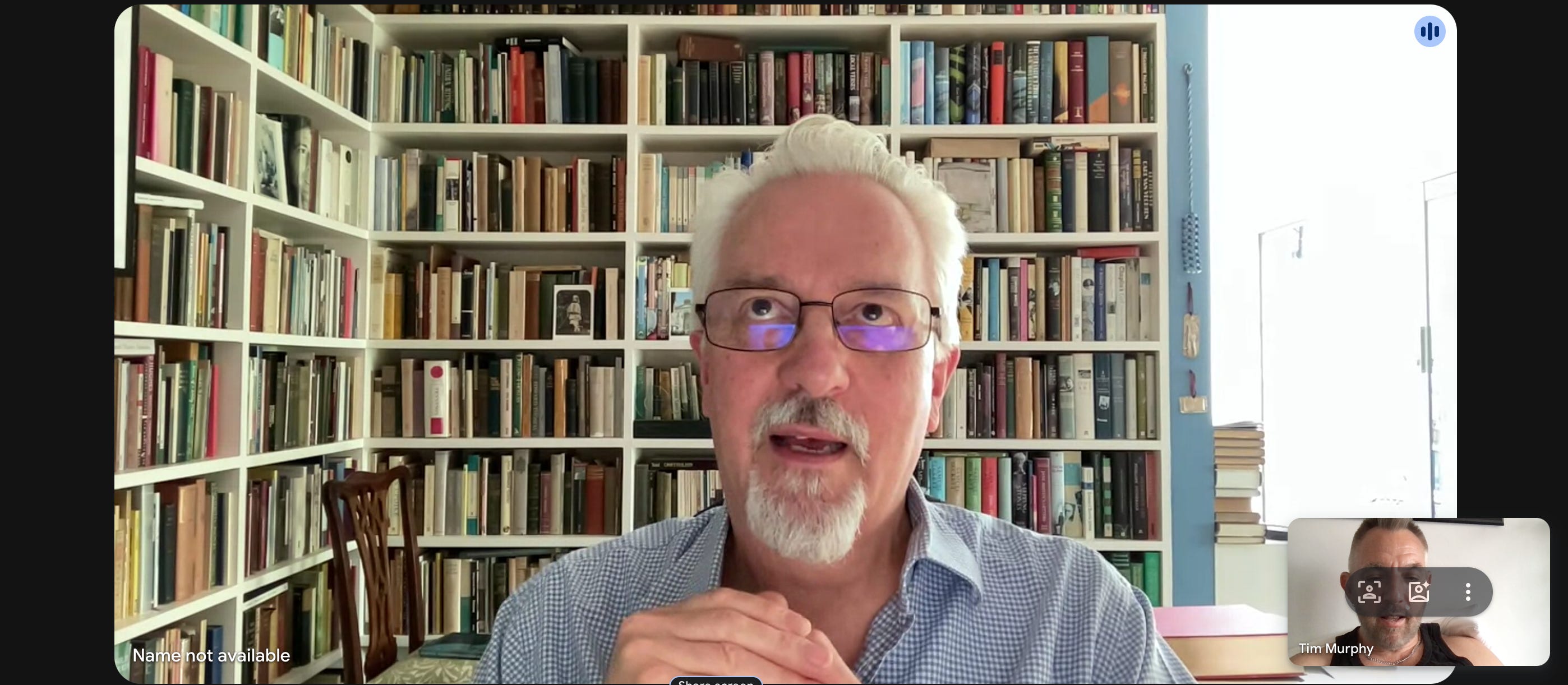
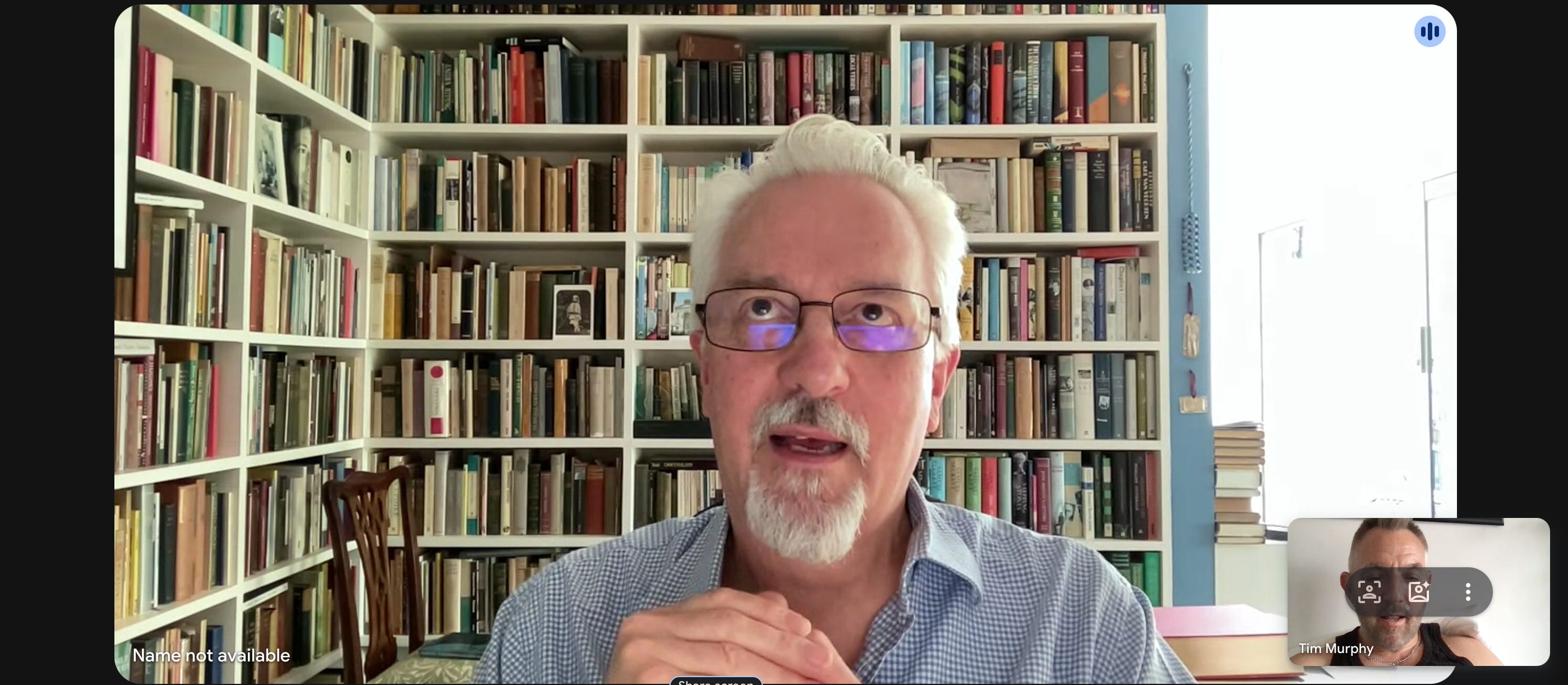
Un bug! Well, I’m glad you’re feeling better. And wow, look at your very impressive book collection behind you.
Look at mine! [I get up with my laptop to show him a portion of it]
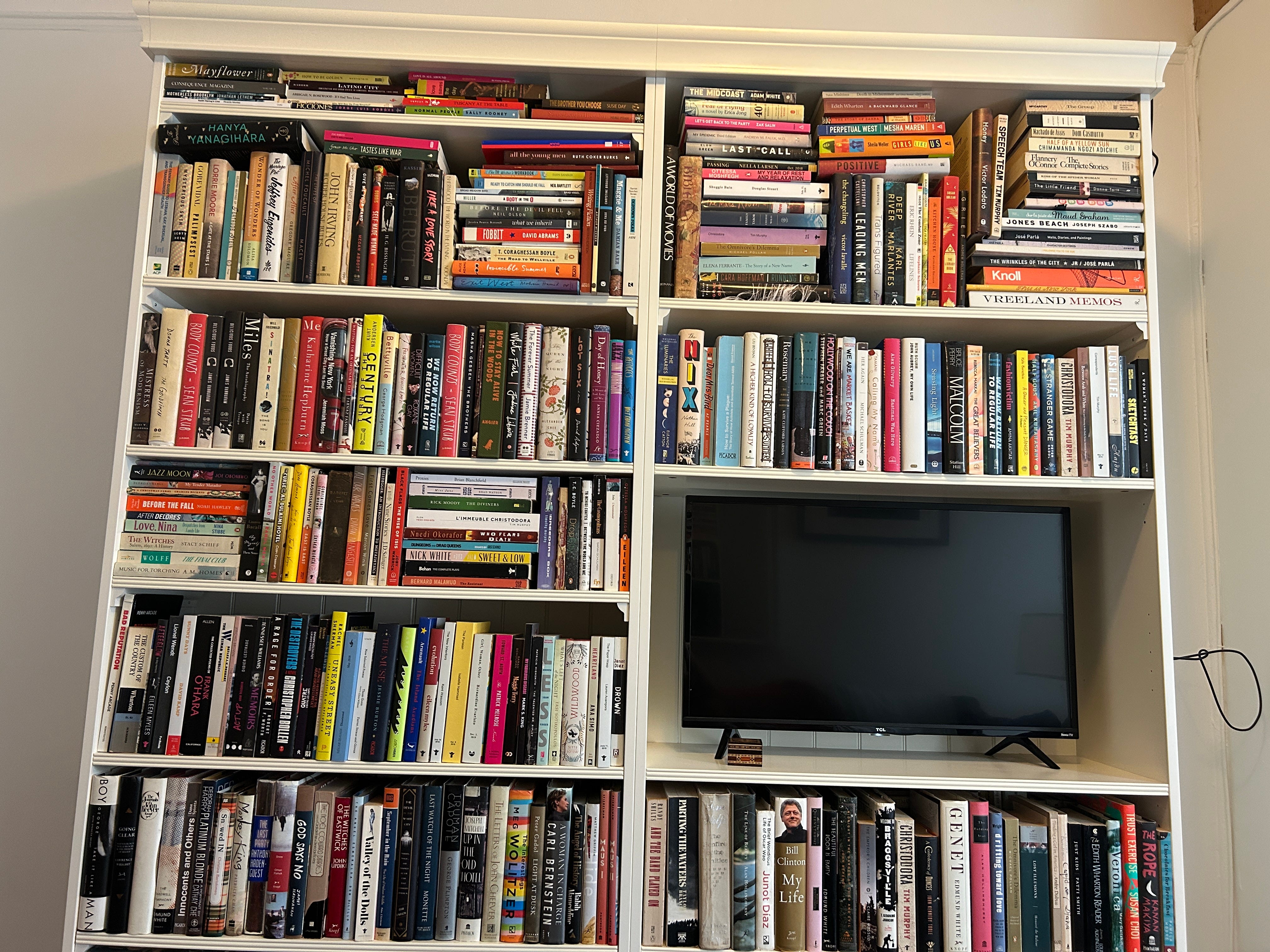
It’s messier than yours. Also, I’m in my tighty-whiteys, that’s why I’m not lowering my laptop on you.
So I read that your apartment in London is right next to Hampstead Heath. The first time I learned about the gay scene in Hampstead Heath was in your third novel, The Spell. Someone takes one of the characters there, to the men’s pond, for the first time. So last fall in London I finally went there. It’s so lovely.
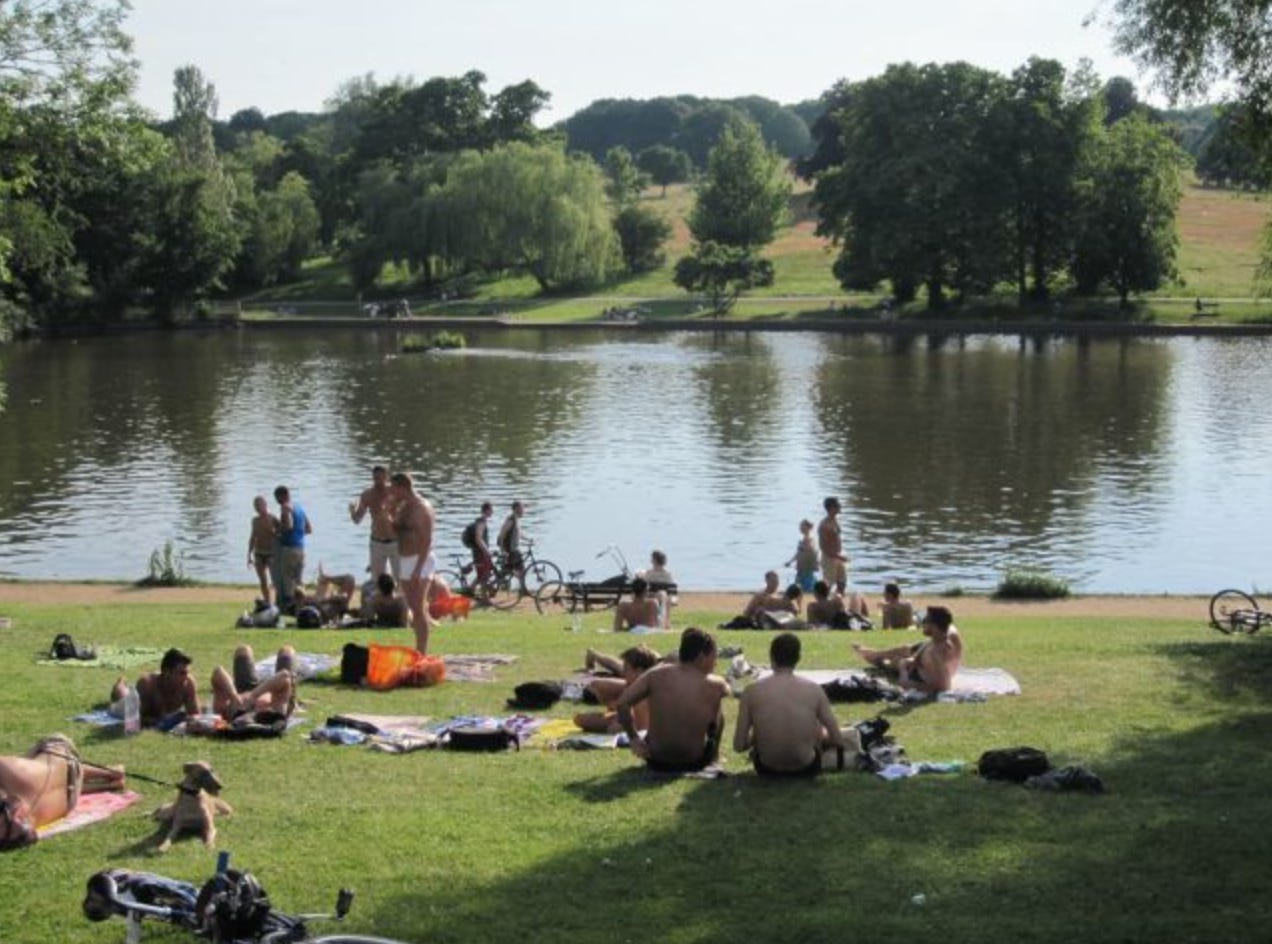

It was still warm enough to swim, and indeed men were swimming in the men’s lake, but I was so jetlagged I actually fell asleep on the wall along one end of the lake. Is the men’s lake still sort of a gay-ish hookup place?
It’s always been a bit of a gay place. For a century it had a nude sunbathing area fenced off at the end of the changing area. But a lot of North London Jewish men go there in quite large numbers. And the Polish men working on the flat below mine often go there after. So it’s always been a mixed crowd. I haven’t really been since the pandemic. But it is lovely. It feels like countryside.
These days, I romanticize London and Paris and anywhere that’s not here. Because we’re living through hell in the U.S.
You are.
We’re so trapped in hell that I can’t imagine what an outside perspective is. I know there are some corollaries in the UK with the whole Brexit narrative, which became shorthand in a way for left vs. right. But it feels like we’ve gone to a really dark place that the UK hasn’t. What’s your impression of what’s happening here?
It looks very bad and like it’s accelerating. I had to start screening some of it out because I’d find myself waking up too early and thinking about it and not being able to go back to sleep. It’s taking up a lot of my mental space—although I imagine not as much as yours. I subscribe to The New Yorker, The New York Times, Slate, The Guardian. So I feel fairly saturated in American news at the moment, and none of it’s good.
It’s weirdly consoling to hear that it’s occupied your mental state as well. Literally when I wake up in the middle of the night or first thing when I wake up, I think about it. My morning ritual of reading The Times with coffee is just one headline from hell after another. I say to myself, “If I were watching this happen in the UK or France—and France has come close with Marine LePen—would I feel that there were something existentially at stake for me or would I say, ‘Thank God it’s over there and not here?’” Is that how you feel as a Brit?
I do feel quite involved in it, then I take refuge in the sense of the ocean in between us and not being an American. But it doesn’t just impact the States—it impacts the whole world. So I don’t feel we’re in any way immune to it.
For me, there’s a lot of shame in it.
I’m sure there is.
I’ve had nothing to do with it and I’ve protested it since 2016. But it’s still this feeling of shame and embarrassment. The U.S. has done awful things, obviously, like Iraq, and yet was still the center of balance for the world in so many ways like in research and humanitarian aid. It’s a sense of shame of living in a place going that’s slashing and burning everything good, regressing into the Dark Ages and closing itself off.
They’re destroying the country under the rubric of making it great. What does Trump intend to achieve by destroying Harvard? It’s all gangsterish resentment.
I think he has some idea that educated elites have always scoffed at him—which they have.
Of course they have.
What do you think is the main difference between the USA and the UK?
We don’t seem to have the same capacity for extremism here. Our famous British moderation always prevails when there are threats from the right. The moment now is uneasy because of this wave of far-right success moving across the planet. It was a great moment when Labour was elected again last year after 14 years of disastrous Tory government. But Labour has also pandered to the right instead of bravely doing the things they were elected to do. It’s dismaying. We don’t have another election for four years. But the general cockiness of Nigel Farage and the right at the moment is quite disturbing.
Okay, thanks for discussing that. Now, can you describe a somewhat typical day?
It very much depends on where I am in my working life. Today, the builders downstairs woke me up at 8am with some ferocious drilling just under my bed. Then I make a pot of tea and drink a couple mugs and read for 40 minutes or so. It might something literary like the London Review of Books or the Times Literary Supplement, which I read in print.
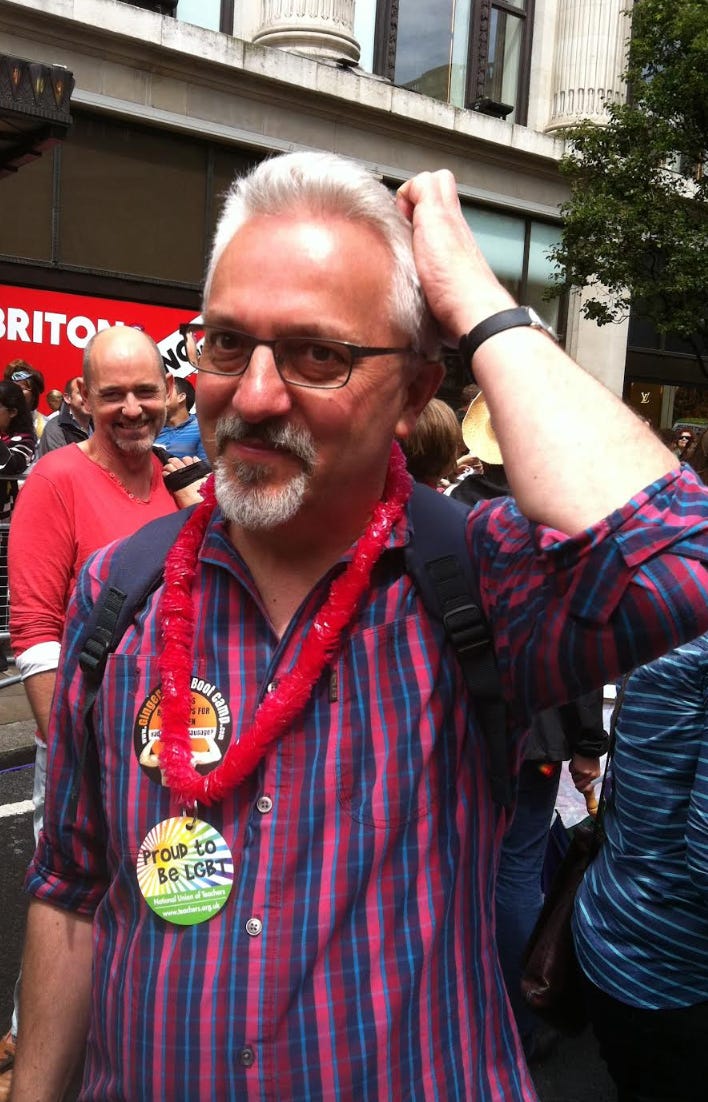
Then I have breakfast where I’m sitting now in my office. I have the top two floors of this house. After I won the Booker Prize, I suddenly had quite lot of spare cash so I acquired the second floor. I have a nice little balcony just out of your view.
Then I have a shower, get dressed, make some coffee. If I’m in the thick of writing a novel, my day would be focused on that early on. When I’m working best, I have no contact with the telephone or Internet before 6pm. It takes me back to writing my early novels when all I had to do was unplug the telephone to not be disturbed. That feeling of undistractedness is a beautiful thing. Your mind just relaxes and expands and you feel, as Henry James said, in “uncontested possession of the long sweet stupid day.” I’m terribly distractible normally, constantly checking devices and jumping up and down.
So you’ll write for up to six hours?
If things are going well and I’m having a good run, yes, six or seven hours. Of course I have days when nothing much happens at all. My morning is my great productive time. My #1 rule is never to refuse the urge to write something when it comes.
Are you working on something right now?
No.
I can go up to about a year not writing before I get antsy. What about you?
As you know, I have a very slow cycle of six or seven years between books. And the year after the book comes out I’m taken up with doing stuff about it and I’m happy not writing a book. But after a while, ideas start to accumulate and I start missing having that other place to go to. I haven’t quite reached that stage yet. I start one of these little notebooks when I feel a new book beginning. I put into it anything that might occur to me that could have some bearing on what at this stage is an incredibly vague concept. I hate that feeling of having had a good idea and not being able to remember it.
Do you work out structural plot stuff in your early notes?
No, that comes later on. The early stuff is building up the world of the book, a relationship or situation. The narrative structure emerges later on. I’ve never been terribly interested in narratives. I’m more interested in situations, atmospheres and relationships. The actual mechanics of conventional narrative interest me less and less. In my last few books, I’ve tried to not follow normal novelistic expectations.
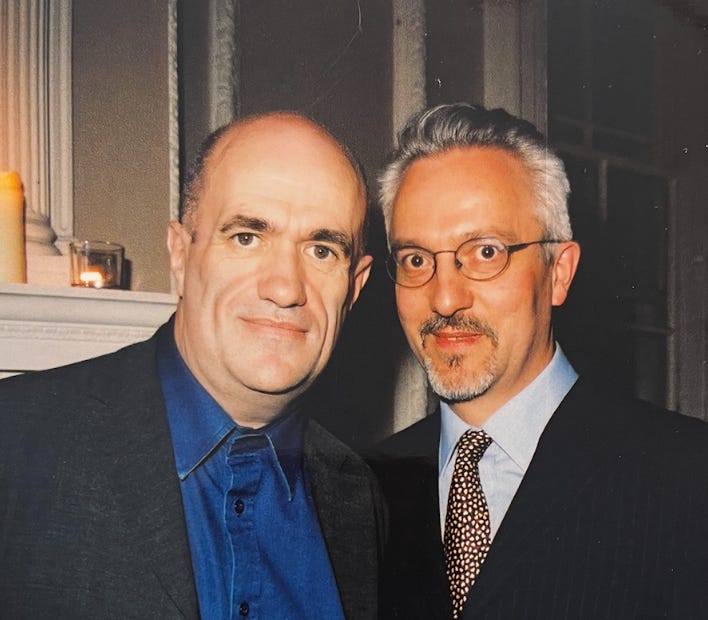
That’s interesting, because one thing I wanted to ask you about was my note that often in your books very little happens over long stretches of time and yet I still feel so compelled to read. To me, a book needs something that’s pulling you forward, and it doesn’t need to be plot or suspense. What do you think, in your books, creates that pull when not a lot is happening?
I don’t think I have any particularly kind of strategy. It’s just the way I do things. What I hope to do is to—is “seduce” the right word? Bring the reader into a pleasurable space where they’re interested in whatever I’m describing. I guess it’s about atmosphere, places and rooms, and something to do with the presence or charisma of the individuals involved. It’s quite a tricky question for me to answer.
My theory is that it’s very, stereotypically speaking, British in that you’re reading— if it’s an encounter for example, like in the new book, if it’s Dave, the biracial protagonist, visiting his liberal white benefactors, the Hadleys, I’m reading for all the subtlety and the nuance, which is so British and understated that you have to read between the lines. Like in this book, when we first meet Esme, Dave’s mom’s friend, it didn’t even occur to me that [redacted]. It was so subtle. I love that, because when it occurred to me, I was like, “Wow, I totally missed that.” Have others said that to you?
Yes, they have. I hope it’s a lovely surprise.
It was!
The idea of course is that young Dave himself doesn’t pick up on it either.
So, what was the germ for this book? The beginning idea? We’ll put it right on the table: You’ve had characters of color in prior books and this is the first one where the character of color is the storyteller, the protagonist, the interior voice and point of view. Do you remember your first thought about the kind of book you wanted to write?
I’d have to go back into that notebook from eight years ago. I think for a while I’d been thinking I wanted to write about the time I’ve lived through from a different racial perspective. I think having spent quite a lot of my own life in close relationships with people of color and having had a kind of education in racism through that…I’ve written quite a bit about interracial relationships, but always from the point of view of the white person.
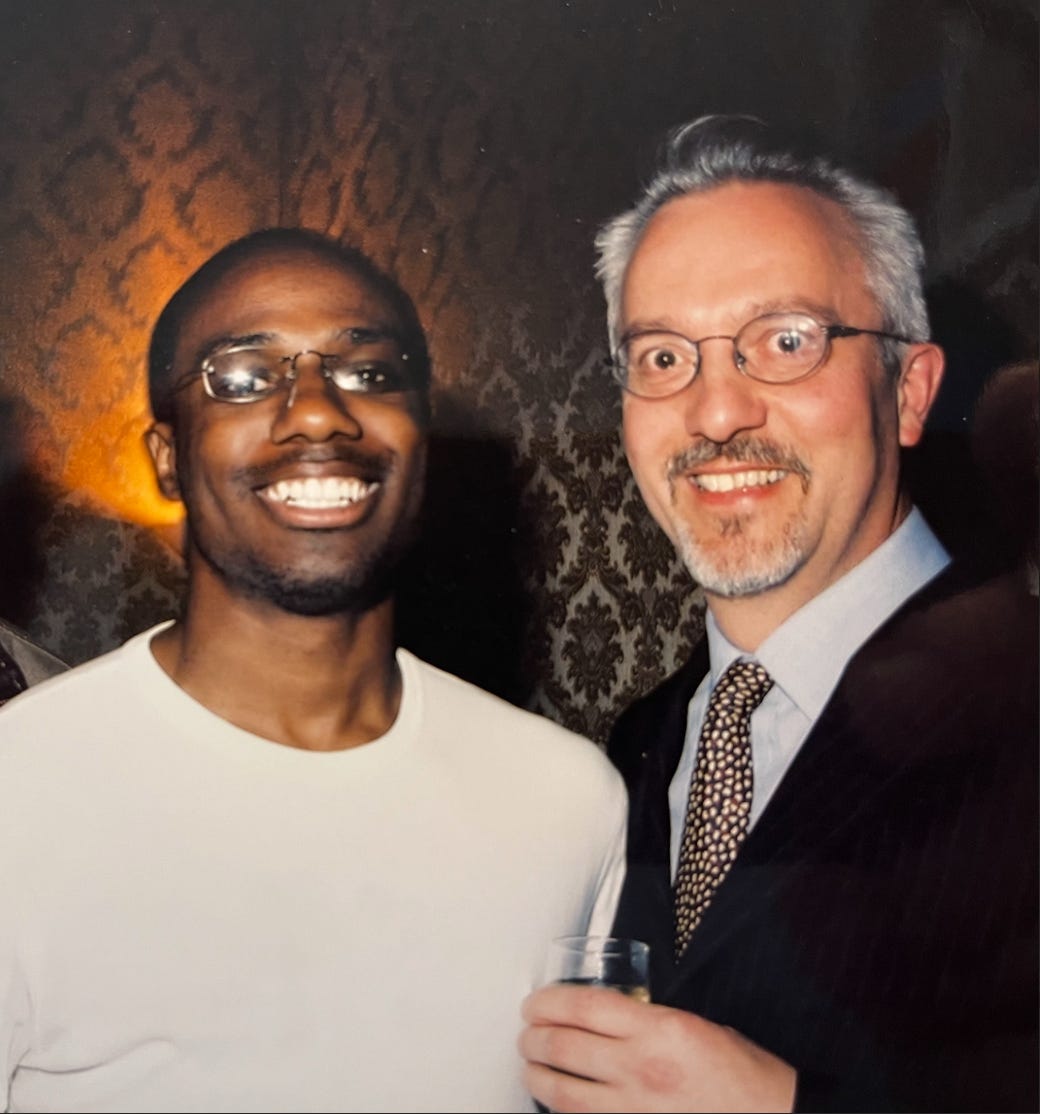
So trying to make that sort of empathetic leap and see the world through this mixed-race person who would have elements of someone like me but also this undisguisedly different thing. Our racial history is rather different from the American one, but racial discrimination is still going strong here. We had horrible race riots here only a year ago. So I felt this urgency—but I knew it was fraught with hazards.
That’s interesting. When Curt Weber and I were having a lively discussion about you and your books at Animal, the hot new gay bar here in Brooklyn, I said to Curt that I thought you wrote from Dave’s point of view beautifully. I never once cringed, as I often do. But as I noted to Curt, I’m also white and said I’d love to know—I think Curt, who is originally from Zimbabwe, agreed that you did it really well, by the way—but that I’d love to know what readers who are somewhat comparable to the character thought about it. But I couldn’t seem to find a review written from that perspective or lived experience or whatever. What feedback have you gotten from readers of color who are somewhat like the main character?
I’ve had no adverse remarks from any reader of color, including friends and old boyfriends. They’ve all given it a thumbs up. I had it read at a quite an early stage by my friend Tash Aw, the Malaysian novelist, a very fascinating and clever person. Happily, he didn’t have any sort of objections or comments to make about that aspect of the book.
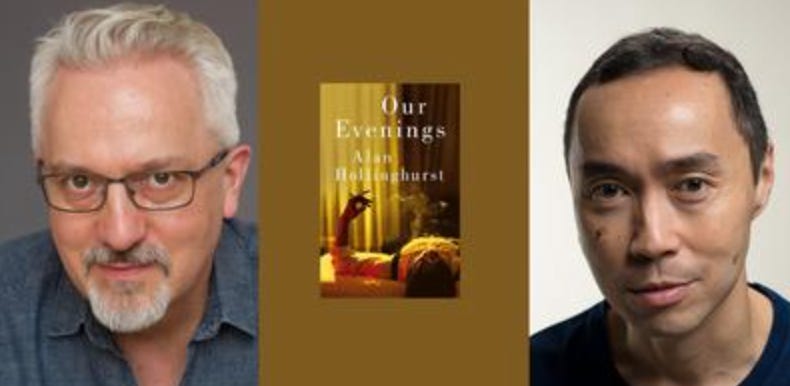
I wondered if maybe you kept Dave’s Burmese father out of the picture to make it easier to write a character who grew up in a completely white context, whereas if the father had been in the picture, you’d have to bring more of his culture into it. Was that a choice?
It was just how the story was going to be all along. It’s not really a book about Burma or Burmese culture. It’s a point of the book that Dave never goes to Burma or knows anything about his father. And the rather small role of Burma in British cultural memory made it easier.
I read where you said you wouldn’t have made the character of West Indian descent because that culture is so heavily represented in the UK, with a lot of writers of that descent.
It would’ve been pointless and probably rather offensive. Who needs that?
I think it would’ve been a much higher bar for authenticity.
A kind of technical challenge that I really wasn’t interested in.
Full disclosure: I loved the book from beginning to end. It completely engulfed me for the duration of reading it. However, I wasn’t crazy about the ending, even though obviously I won’t mention what it is. Not that that couldn't happen. I just wondered how likely it would be. And I know there were incidents in the UK, as well as here. But for a book that was so subtle, it felt like a sledgehammer at the end.
Well, that was rather the idea. That we can be as subtle as we like, but actually these brute facts assert themselves. I decided from early on that it would go like that, and I hope it startles the reader.
The jacket copy sets it up, saying that the book culminates with “a cruel shock of violence,” and as I read, I thought it was heading in a different direction. I thought it would be [redacted]. But instead [redacted] fades away. And yet there is a connection between [redacted] and what happens at the end.
So Alan tell me, what did you want this book to be about or to do? Did it have an organizing principle?
I had an idea but I can’t quite remember how it cohered. Very unusually for me, I wrote quite a lot that didn’t end up int he finished book, which I think has to do with it being a kind of memoir, especially of the area where I led my own childhood. I didn’t use a lot of that in the end.
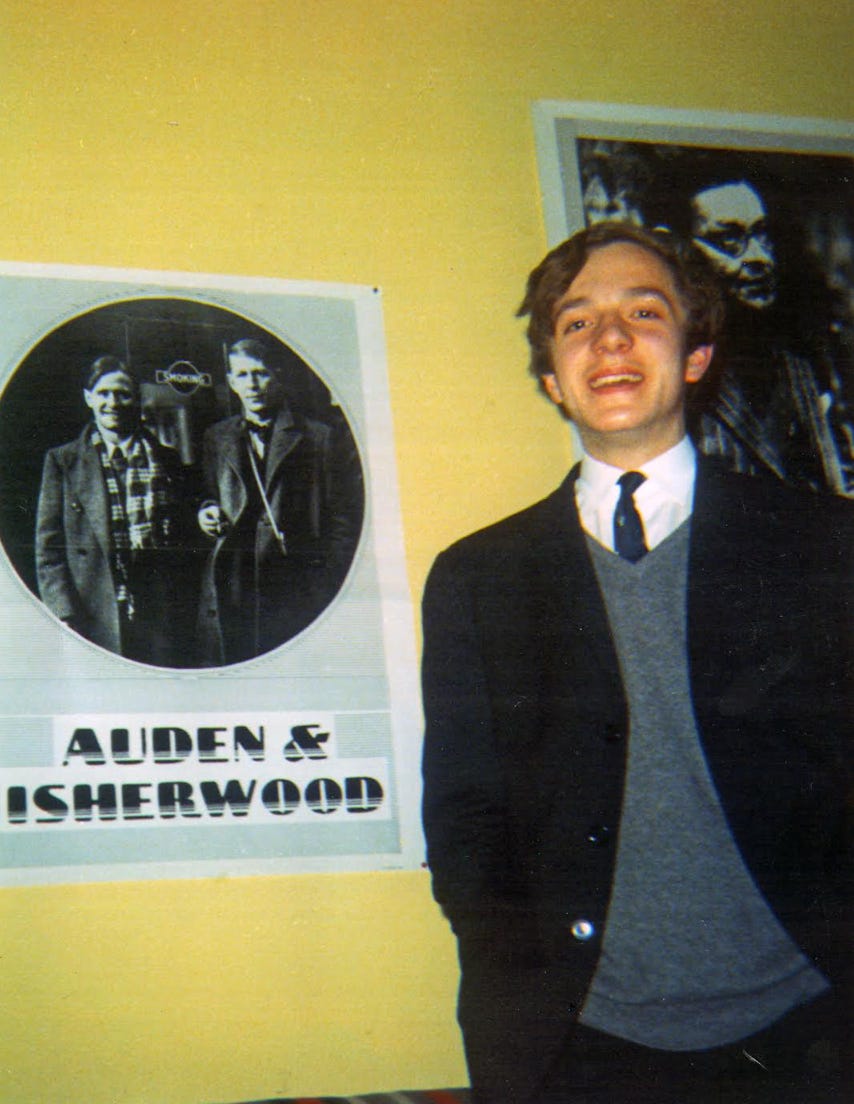
Did you feel sometimes you were grafting him onto pieces of your own childhood? And did you ever think, “I have to write it differently because it’s not me, it’s him”?
I think I grafted little bits of my school and university experience into this different character. But I always was quite clear that he was a distinct person with his own history.
What was the most ruthless advice you got about this book?
Early on, I considered oscillating between the past and the present. But it was very difficult to make that meaningful. So the clearest advice I was given was not to do that, but to run the narrative chronologically until the end except for a short framing device at the beginning. Behind where I’m sitting now, I once had this chart with different colored Post-Its on it to work out the time scheme, so it was beautifully simplifying to let that go.
Where does this book fit for you among your other books? On some level as writers, unless we’re hardcore genre writers trying to write to the formula of our success, we’re always trying to do something we haven’t done before, right?
I think it went to a new place for me, because I went back to writing in the first-person, as I did with the first two books. There was something more openly emotional and revealing and personal for me about this book. And I gather that transmitted to readers, because those who like it have a feeling of warmth for it.
I thought this was a really tender book. I think there’s lots of different kinds of feeling in your other books, but this one— I felt such tenderness toward Dave, his mom and Esme. Were you conscious of that?
I think I was. My mother died whilst I was finishing The Sparsholt Affair. Part of my early ideas for the book was that it would be a tribute to the relationship between a gay son and his mother. So I had all kinds of tender and personal feelings about the book from the start.
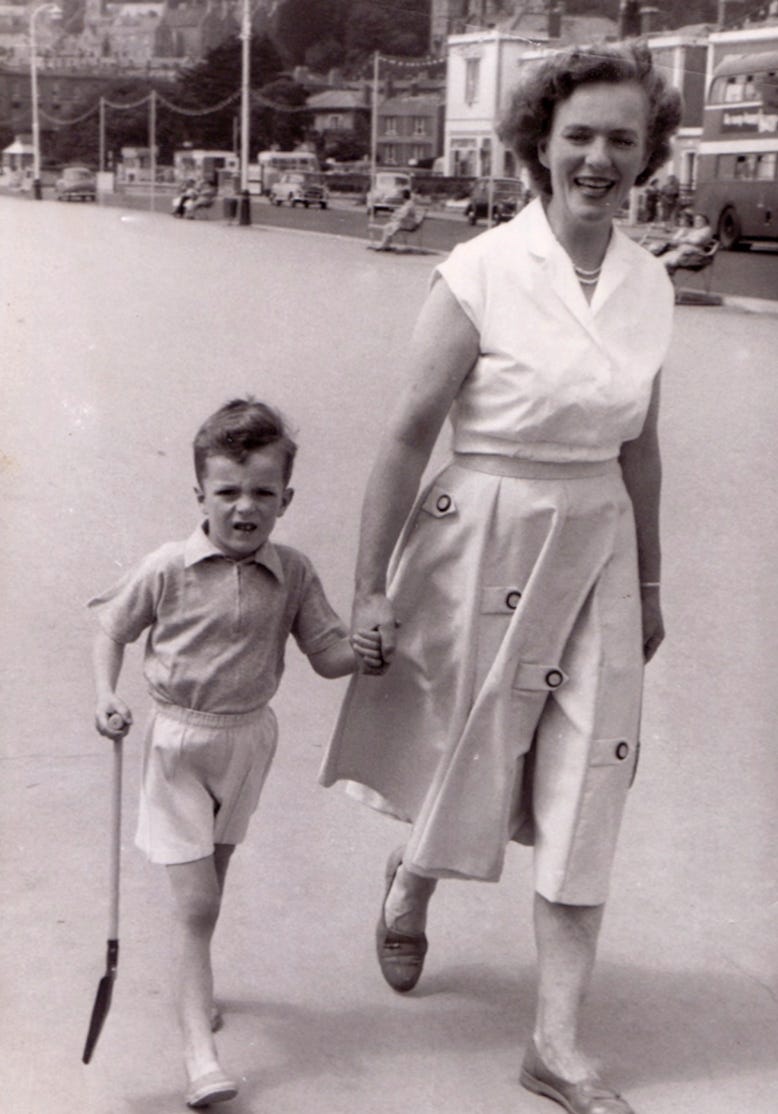
What did you feel after you lost your mother? I haven’t yet, thankfully, but my husband recently did.
She was 97, so I was in a way prepared for it. I think being an only child, which I’ve always loved being and felt was key to who I was as a person and a writer, it suddenly felt like deprivation. It was the first time I’d ever wanted siblings to share the moment with. And the loss was partly geographical. I was born in Gloucestershire, the west of England. In the latter part of my mother’s life, I was driving constantly between there and London. That part of the world is very dear to me. So there was this other, not quite anticipated dimension to grieving, which was, after I sold her house, saying goodbye to the whole landscape of my earlier life.
Will you go back there?
I could jump in the car tomorrow and drive there but I don’t actually. I have very little family. I have two surviving first cousins, but we’ve never been close. But at the time of my mother’s death, it was an intense dimension of grief, the loss of the earliest scene of my life. So perhaps this book was trying to recapture that.
Well, it’s a really, really beautiful, rich book and I hope anyone reading this reads it this summer. So now let’s talk about your first novel, The Swimming Pool Library, published in 1988. When I first read it in my early twenties, I had never in my life read sex scenes like that. I remember them vividly to this day. The one I remember is in the empty kitchen in, I think, the hotel, when [redacted]. And another when the protagonist and one of the boyfriends get home from the pub and the boyfriend really has to pee and [redacted]. One of the things about the book that really captured people at the time is that it was so Edwardian in language and tone and yet so graphic and sexual. What do you remember about writing those scenes?
No one had really written a book that joined up different sides of gay experience and history. You’d have to either be reading conventional literature or actual pornography. I thought it would be interesting to open up the whole terrain of the literary novel with all these different aspects of gay experience—admittedly through the experience of a young man who was getting a lot of sex. And I thought just it would be fun. It felt wonderfully secret, too. I had a day job at the Times Literary Supplement and I’d come home and pour myself a glass of wine and write the whole thing in a fountain pen in a big desk diary.
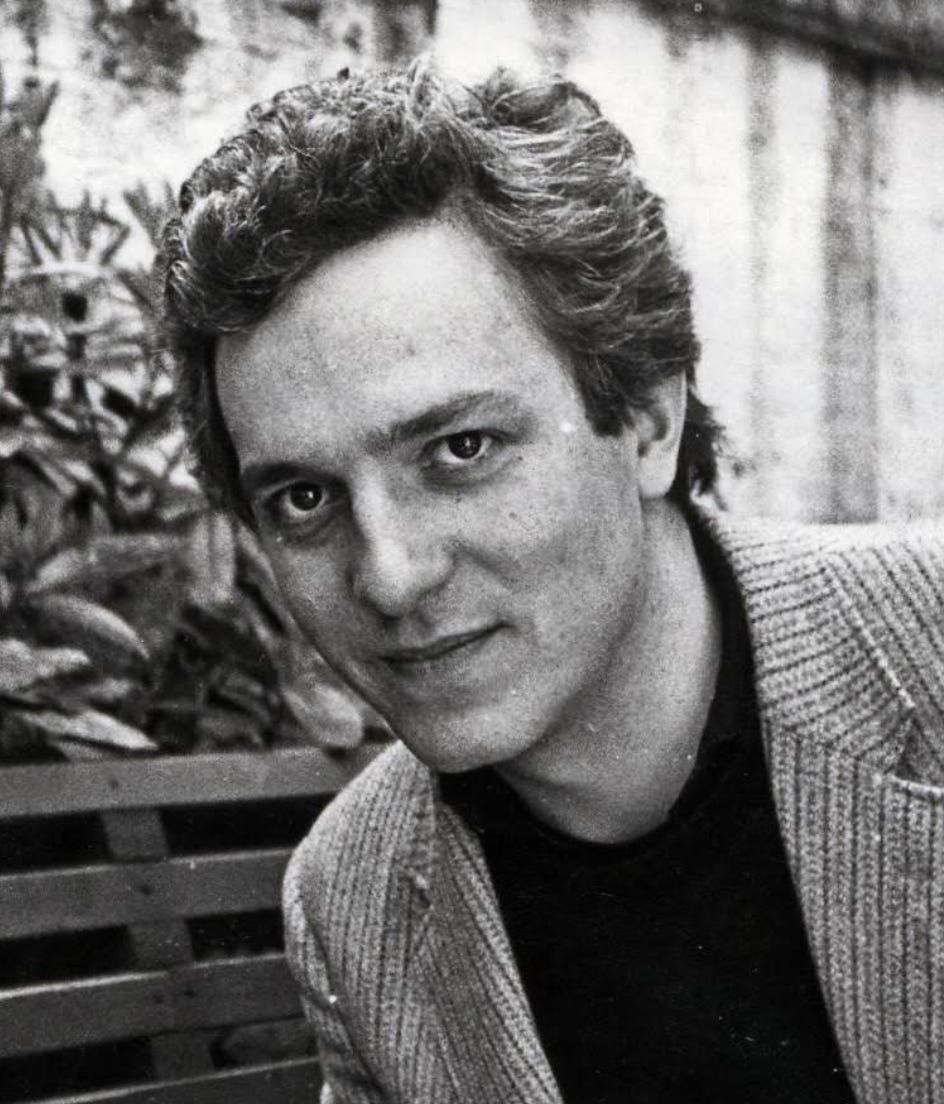
You wrote it in pen?
All my first four books.
Wow. Didn’t your hand get tired?
I used to be very poncy about the whole thing, making marks on paper. But then I started The Stranger’s Child by hand and switched to typing, and have typed since. But I miss the old way, getting the whole sentence clear in your head before putting it to paper. And then having the history of all your insertions and deletions on paper.
So I was writing on evenings and weekends in secret, with nobody having any expectations of me. I started writing it on January 1, 1984, in a big desk diary somebody had given me. I’d tried to write three novels before and abandoned them. But this time I said I was going to write a page a day. And that’s what I did, even though it took me two and a half years.
Here’ a segment from the first chapter: “My life was in a strange way that summer, the last of its kind there was ever to be — it was my time, my belle époque — but all the while with a faint flicker of calamity, like flames around a photograph, something seen out of the corner of the eye.” That is an incredibly haunting premonition of AIDS, even though the epidemic is never once mentioned again in the book, which is set in 1983.
I remember putting that in later on. In November 1984, a close friend and very important person to me got mysteriously ill and die. That was when this thing that we’d been reading about in America really hit home for me. And by the time the book came out in 1988, the whole world was being changed by AIDS. So I inserted that passage at the end, “The last summer of its kind ever to be,” because I knew that anyone reading it in 1988 would be looking back at 1983 through that lens.
But I also felt that because the 1980s were so anti-gay, I wanted to be all the more pointed about the sex.
So I have a very literary Black friend here in NYC who thinks that the novel is racially problematic. I said to him I thought it was about colonialism—the overt colonialism of an earlier period we see through an elderly gay aristocratic man and his love affair with his servant, but also about a kind of contemporary sexual colonialism. I said to my friend that I wasn’t sure if you were embodying that or critiquing that, or both. I’m sure you’ve heard critiques of the book. In retrospect, do you think it’s problematic in a way that you didn’t when you wrote it?
To me, the question is: What is your relationship with this narrator? Is he someone you think is adorable, attractive and charming or a horrible little shit? I hoped that the whole thing was not dogmatic but was opening up all kinds of moral and ethical issues. I didn’t want to write some finger-wagging book about colonialism. I thought it would be much more interesting to do it through the mentality of this rather unaware, privileged, entitled young man. There’s probably language in the book that I wouldn’t use now. But I think I stand by it as a kind of ironic fictional construct. It’s about racism in various respects but also this idea that gay life can jump over barriers of class and race, which is rather idealistic.
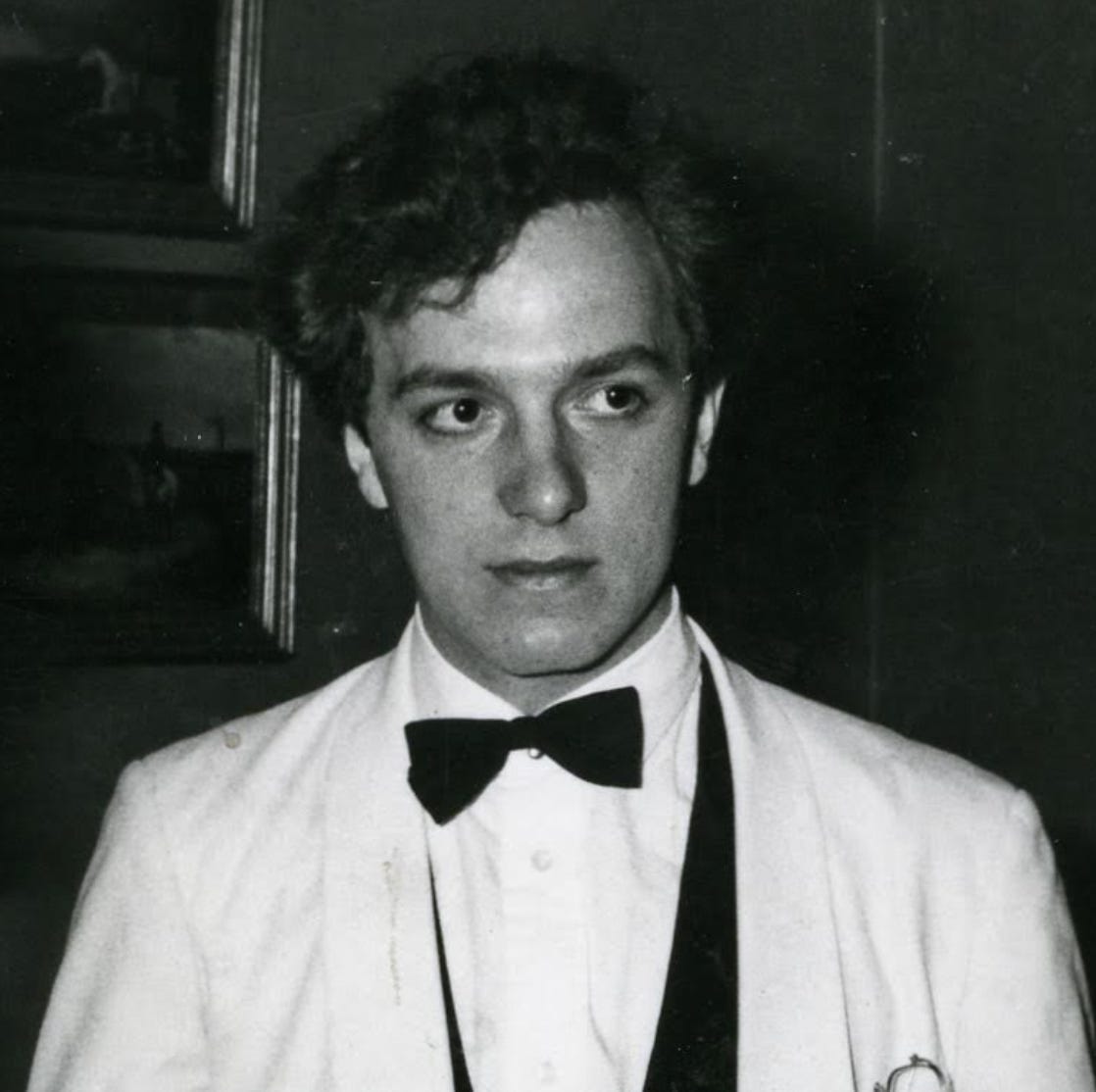
I think it’s interesting because these differences in privilege don’t disappear in the gay world, but I think it hits on a truth that I as a middle-class white gay man in NYC all these years have experienced, which is that because of sex, and even certain social settings, you are more likely to meet and become intimate with people of different classes, races, levels of privilege than perhaps you are in the straight world. The book caught that for me in a way that echoed my own experience in NYC.
Now I want to talk about another book of yours by teeing up a sentence for you to finish: “I’ve never been more angry by a book review than…” Do you know what book I’m referring to?
[laughs] Are you referring to John Updike?
Yes, his notoriously homophobic review of The Spell in The New Yorker in 1999. Did you read it when it came out?
Yes. It was in quite a prominent place. I remember various people, including Sarah Schulman, wrote a letter to The New Yorker about it. [Tim: But it appears the magazine published none of the backlash letters to the review.] But I thought it was quite funny that Updike, who was famous for being this analyst of sexual behavior, apparently never seemed to come across the idea of homosexuality before he read The Spell. “Apparently, [homosexuals] do this…”
What made me angry about it was there’s so much friendship and love in the book, so much illustration of the way that sex is often how gay men meet and form relationships and even family units, and he seemed willfully blind to it and saying something like, “Ultimately, this book proves that gay men are just sex animals.”
He must have felt exposed in some way by it. It touched something in him that must have made him feel uncomfortable. He’s a technically incredibly brilliant writer. He did say my book was well-written.
That’s right, I remember him saying that you wrote beautiful prose. Alan, do you have a favorite among your novels?
I’ve always been very fond of The Spell because it was the one with the least critical and commercial success. But I wrote it at a happy time in my life, and quite quickly. Also, I’m very fond of The Stranger’s Child. I think it’s my most literary book in a way and excavates all sorts of material out of my own interests in English 20th century literary history and the First World War. Again, it was the first time I went back to this little town where I spent my childhood. It was probably too long and digressive, but I feel great fondness for it.
Oh, I forgot a question about The Swimming-Pool Library: At the time of writing the book, did you in any way resemble your very privileged, handsome and horny lead character?
If only! No. I moved to London in 1981. I was having rather more timid adventures and felt a great sense of release and ability to be myself after Oxford. But the book was really a fantasy projection. What would it be like to be someone much better looking than me with a lot more money and opportunity to have fun?
I think it would be fun to write oneself as a fantasy hot young slut who doesn’t need to work and can seek pleasure every single waking minute of the day! I actually interviewed Ian Levine who was the DJ at the [legendary London gay club] Heaven at the time the book is set.
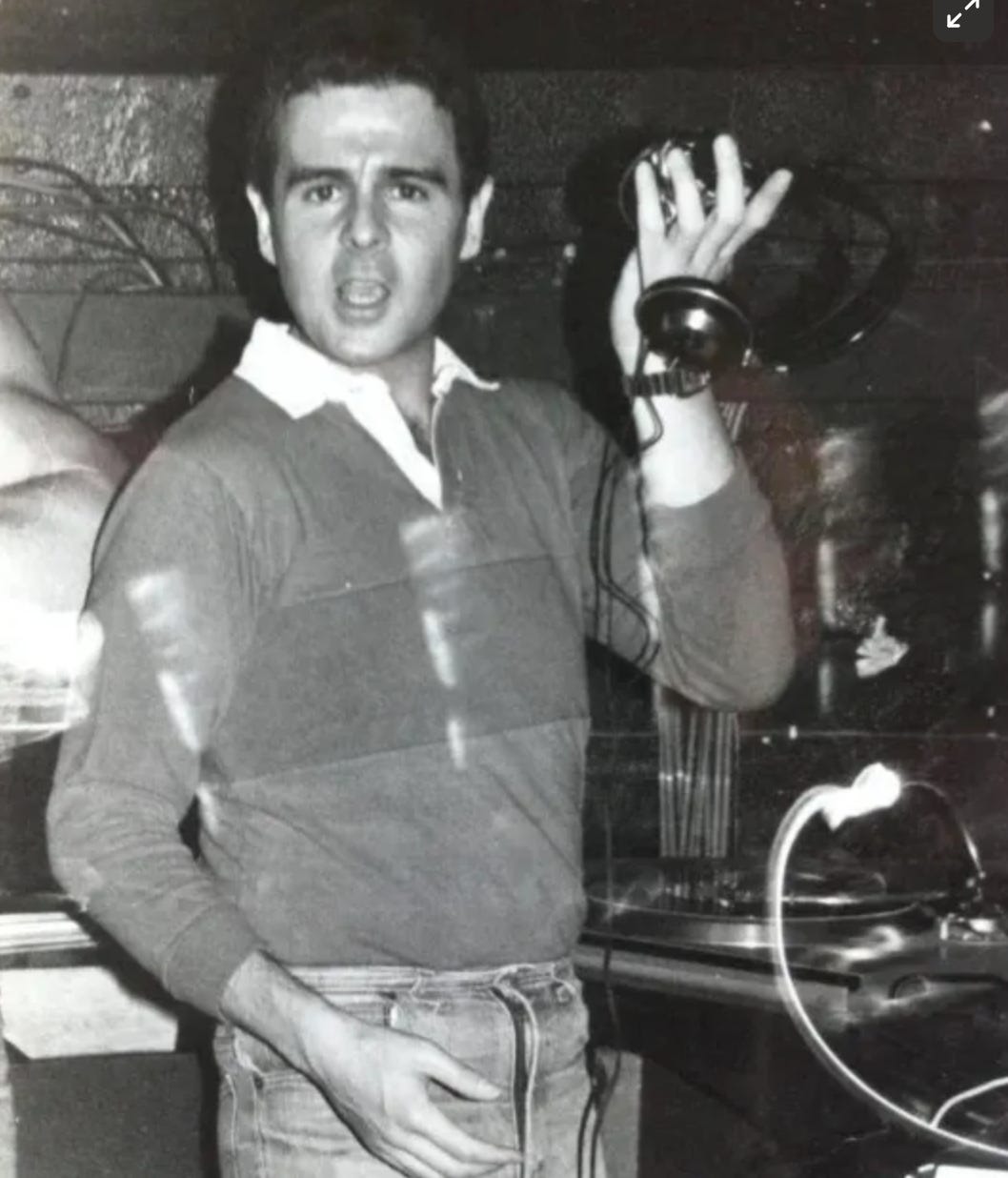
So when I was interviewing him, I was thinking a lot about The Swimming-Pool Library.
I still go out in NYC and see certain guys whose lives it seems are completely devoted to pleasure. I’m disgusted and fascinated by them, envious and judging, especially now in our kind of Weimar political climate. Did you know someone like the protagonist of TSPL or did you observe that crowd?
I think I was probably making one or two straight boys whom I fancied do all sorts of things I longed for them to do. [laughs] There was a little club in Soho based on a club I used to go to that played all sorts of bad music. I went to Heaven a bit in its early years. I had a very delayed clubbing life. I didn’t really get into it until I was 40.
Which is interesting, because in The Spell, you have the gay guy who discovers clubbing and the drug Ecstasy a bit later in life. Was that based on your own experience?
Very much so, yes. I’d become a rather kind of withdrawn and melancholy person and I met someone much younger than myself who was very much out on the scene. He immediately saw what I needed, what had to happen. So he took me out and filled me full of drugs. He knew every club and every DJ.
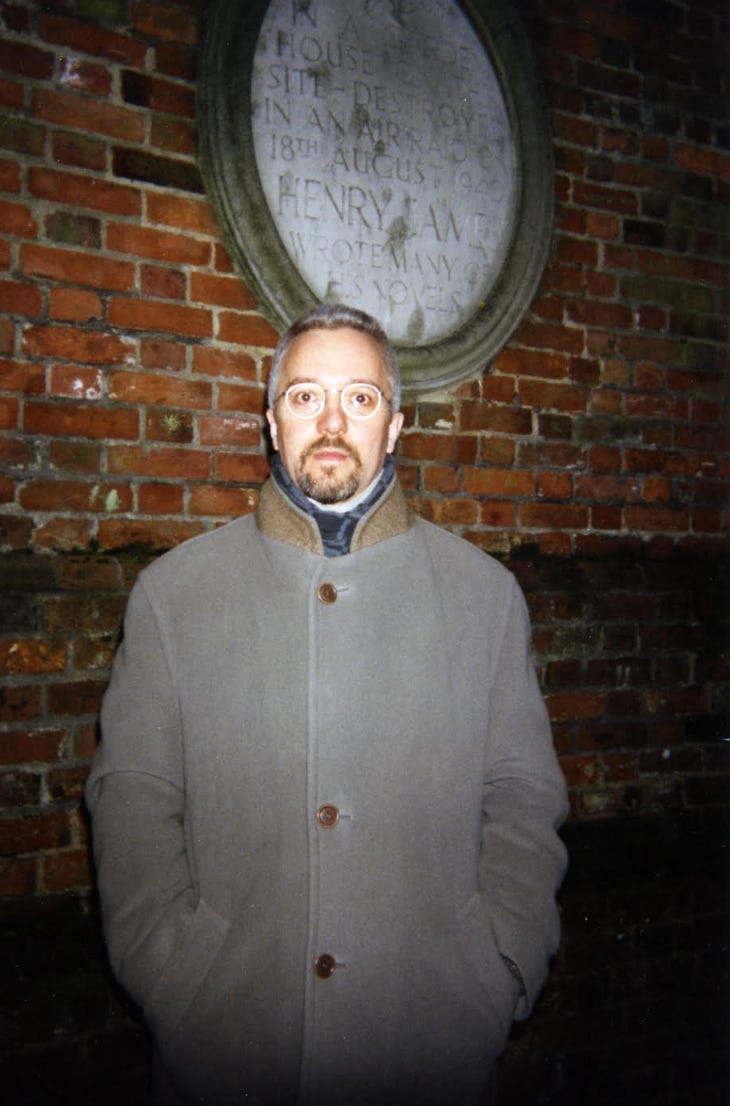
And it began a lovely period of 20 years. I hung up my dancing shoes just before my 60th birthday.
Why did you stop?
I’d thought I’d stop at 50 and then when 50 came, that seemed preposterously soon.
I’m 56. I’m still committed.
I had some of the most fabulous times of my life in one club or another. The London gay world seems very tolerant of older men, so I didn't feel all that conspicuous having a grey beard among all these hot young Brazilians.
It’s true that there are a lot of hot Brazilians in London.
It was lovely. My own generation retired so I had to adopt a rather young and younger posse over time. There’s a big clubbing scene at the end of The Sparsholt Affair when the 60-year-old guy goes out and meets a much younger man. But that scene was my nostalgic farewell to that world.
Why did you stop?
I think I was—there was a change in me. I don’t miss it at all. Just natural changes take place in you when you get into your sixties. I hope you carry on, though.
Well, what’s happening here—I have some close friends who are just determined to party on relentlessly and can’t bring themselves to go a protest. But for me, since January there’s been a huge crimp in my appetite for going going out. A few times, I’ve had to consciously say to myself, “It’s okay, you can go out and release for one night.” I protested so much during the first Trump term, that for me, in the Biden years, the reprieve felt unstable—the Trump energy wasn’t going away—but I was so grateful for the reprieve nonetheless, especially post-Covid. I really took advantage of it. But now that we’re back in it times ten, I’m struggling again with letting go and having fun.
And yet the atmosphere out there feels more and more hedonistic.
Well, it’s a Weimar effect. The reaction of many people to what’s happening—especially if you’re a hedonist in the first place— is “We can’t do anything about this. Why shouldn’t we just party? We could be criminalized in a year.” It’s a Cabaret mindset. Grab the final moment. Personally, I can’t do that.
I quite understand that.
If I had to choose these days between the best party and a protest, I’d go to the protest. But I guess I brought it up because: When you were still going out, what was pleasurable about it?
I’m actually quite a shy and inhibited person and I found that drugs were an immediately magical solvent for that.
Drugs are great! [we both laugh]
My inhibitions were removed and I became open and available to other people. I suppose it was a feeling of being validated, as well as feeling fabulous and meeting a whole echelon of club friends who weren’t necessarily part of my everyday life. I’d be rather startled to see them in the real world. But I also met other friends in clubs 25 years ago whom I still see all the time.
Did you find smart people who cared about politics and culture in club world, or did you find it a break from that?
I’d go out with writer and musician friends, but yes, it was a break. Sometimes someone would recognize me and say, “Doing some research?” [We both laugh] I’d be in a fairly altered state, and then they’d say, “I don’t know if you saw my paper on Shakespeare’s sonnets.” But I really wasn’t in any condition to discuss it. [we both laugh]
Do you think you’ll ever go out to a club again?
I think it’s very unlikely.
You would rule out even one more great night?
The urge to do these things actually diminishes. I spent so much of my time in the nineties in nightlife in Soho. Now I go to Soho about once every three months and it’s an alien world where I don’t feel I belong any longer.
What’s a good time to you these days?
Great friends. Friendship. I’m incredibly lucky to have a group of really longterm wonderful supportive brilliant friends. As Yeats wrote, “And say my glory was I had such friends.” I feel that more and more strongly. I’ve been single now for several years, which I found very painful at first, but I’ve sort of adjusted. I spent most of my life living by myself, sometimes having longterm affairs. Once a longterm transatlantic affair with someone I met when I was teaching at the University of Houston 30 years ago. But generally I’ve lived by myself. I haven’t closed the door on another late romance. But generally I think friendship has been the great sort of sustaining thing for me.
Right. Well, that leads into something I always love to talk about in these interviews. I’m not asking folks to describe in graphic Swimming-Pool Library detail their sex life, but I am interested in, what is your relationship to sex and intimacy at this point in your life?
Yes. [pause] I think I find it quite a difficult thing to talk about in a public way.
You mean you don’t want to?
[laughs] I don’t. It just feels too private somehow.
Okay. Well, what about singleness? Can you talk about it more—not necessarily sexually, but the existential state.
Yes. I mean, I love having the ability to invite someone into my singleness as it were and to have my world validated by the interest of someone else, and the mutual thing of that as well. But I suppose having to do with being a writer: I’ve never written something of significance when I had somebody else around. There is something very private to me about getting into the world of writing. Fairly recently, I lived for four years with another, young writer who was writing his first novel. [Tim: I didn’t think to ask, but I’m pretty sure this is Paul Mendez, author of Rainbow Milk. Here is a video in which Mendez discusses their favorite books…including Alan’s The Line of Beauty.]

I loved the fact that a book was being written in my flat, but not written by me. At that time, I was making early sketches of Our Evenings, but that book didn’t really take off until we’d split up. So there’s something consolatory about the business of writing. It’s a way of compensating for your singleness and creating another kind of company for yourself.
It allows you to go as deep into an inner space as you possibly can and want to. But I don’t think I could date another writer. I think it would bring up too many issues for me—competitiveness being one. What was it like for you?
He was a debutant, so I didn’t feel at all threatened by his presence. I felt interested in what he was doing. I can imagine it might be difficult to settle down with another experienced old stager. [Tim: I had to look this word up; it’s British for “someone with experience” lol]. It would be quite nice to be able to share writerly problems and questions, I suppose—if you were more of a sharing person than I am.
I have a friend who’s, like me, a journalist, and at one point he was dating this very young, ambitious journalist who he felt was sucking the lifeblood out of him—every bit of wisdom, every tip, every contact he had. Did you ever feel like that with the guy you were with?
I didn’t.
Okay, I’m wrapping us up, Alan. Speaking of Our Evenings, what are going to do with your evening?
A friend of mine who’s a Henry James expert and scholar has arranged a little evening at a fellow writer’s house—a dramatized reading of a Henry James story, which I confess I read for the very first time this afternoon. It’s called The Third Person. It’s a very strange and not very satisfactory ghost story. Two spinster ladies, cousins, who inherit a house from a maiden aunt and move into it although the don’t know each other at all. And one sees the ghost and the other doesn’t. So it has all sorts of interesting potential that James doesn’t go into.
That sounds really fun, actually. So I’ll end with a question I often ask, which is what do you want to be rest of your life to be about? What do you want to prioritize?
I feel that the world is becoming so terrible, so it’s very important for me salvage something personal and beautiful from all that. Going back to the beginning of our conversation, I can’t have my whole inner life destroyed by all these appalling things that are going on. I want to write something else of worth—I don’t know quite what yet, but I have a sense it’ll be some more personal response to being in this late phase of my life. And perhaps it’ll be that short novel that I’m always trying to write but end up writing something three times as long.
Do you think you’re capable of writing a short novel?
I just don’t know that I am. I start with the best intentions, but then they dilate. •
Thanks for reading all the way through, Caftaners…see you soon. xo Tim