

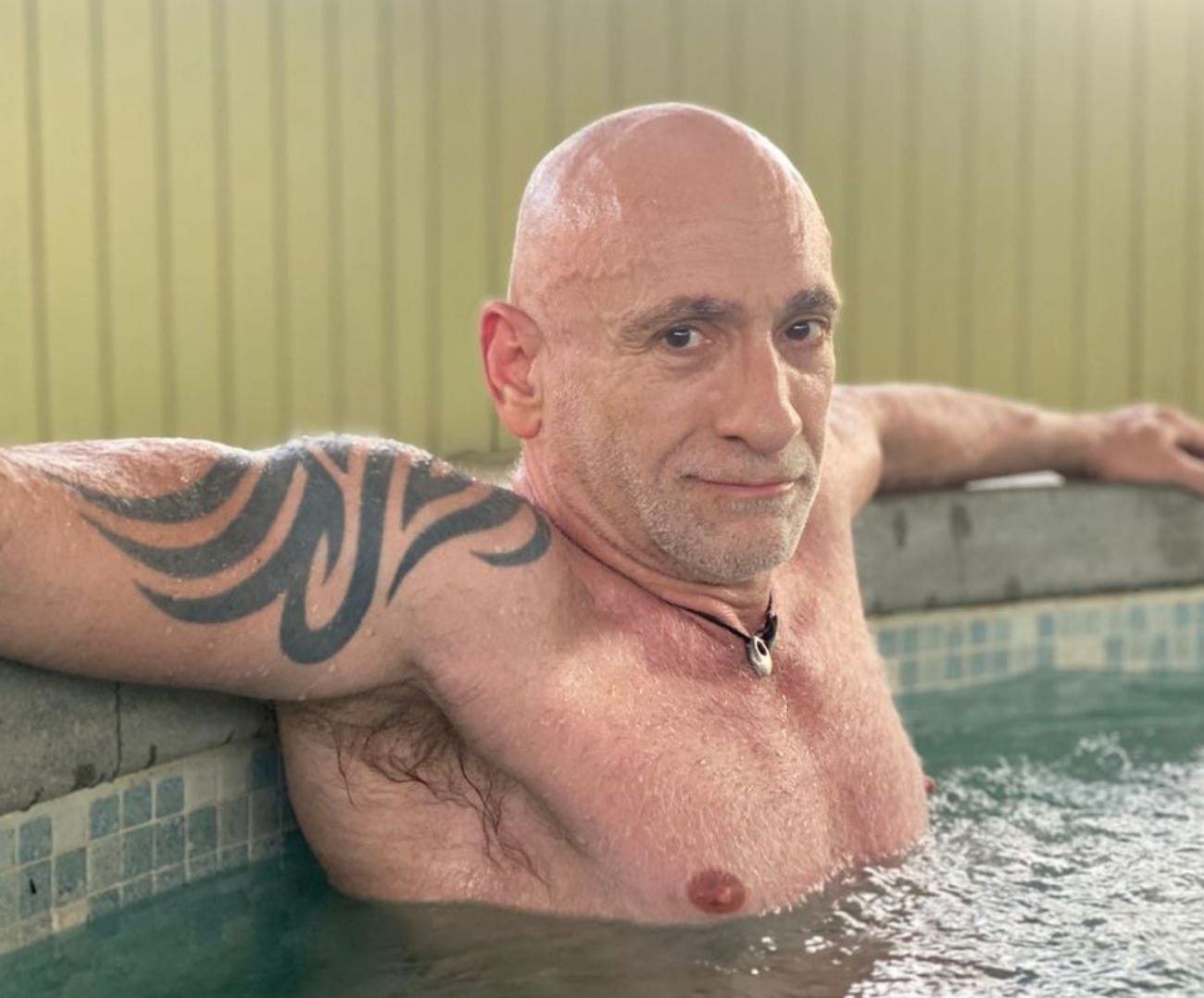
Happy Labor Day Weekend, Caftaners! Are you having a good one? (Hell, it may be Tuesday before I post this…who knows?) I’ve been having an unusually productive writing weekend as of this Sunday afternoon—and that includes putting together this latest Caftan chat. It’s with Dudley Saunders. He’s a Kentucky-born, L.A.-based singer-songwriter-performance artist whom I’ve known for several years now, mainly through our Facebook network, but I also saw him perform with John Kelly in NYC several years ago and wrote them both up for T magazine.
Recently, Dudley put online an excerpt from a novel he’s recently finished called The Whore Artist. Here’s an excerpt from the excerpt, which is very spicy. It’s about a closeted Hollywood macher who hooks up with a hot daddy artist type…a bit like Dudley!
Who said that? But Gideon’s face was suddenly up against his. His beard just touched Leon’s, moved by his lips, and it felt suddenly like some drunk straight man accidentally getting too close, not meaning anything erotic and so all the more erotic, and then his lips grazed Leon’s, an accident the straight guy started to like and he realized his shirt got pulled up somehow and Gideon’s nipples were just touching his, flicking it, chest hair commingling lightly, and his breath was warm and close on his cheek and his hand was on his cheek, it was like a buddy being friendly and then more than that and his tongue was in Leon’s mouth and Leon made a little cry, a little helpless cry, and what were they going to do, there were no signals about where this should go, and he wanted him to take control and he was scared what he might do and he snorted the poppers again and it didn’t bother Sergeant, didn’t break his concentration, and then Sergeant broke away but kept an arm around his neck to lead him into the bed. He snorted more poppers, he left them at his nose so the room reverberated and he had no body except where he was being touched.
And believe me, it gets raunchier from there.
Dudley posted about this excerpt on Facebook, saying in a video “Yeah, there’s gay sex in it…a lot.” He also went shirtless in the video:
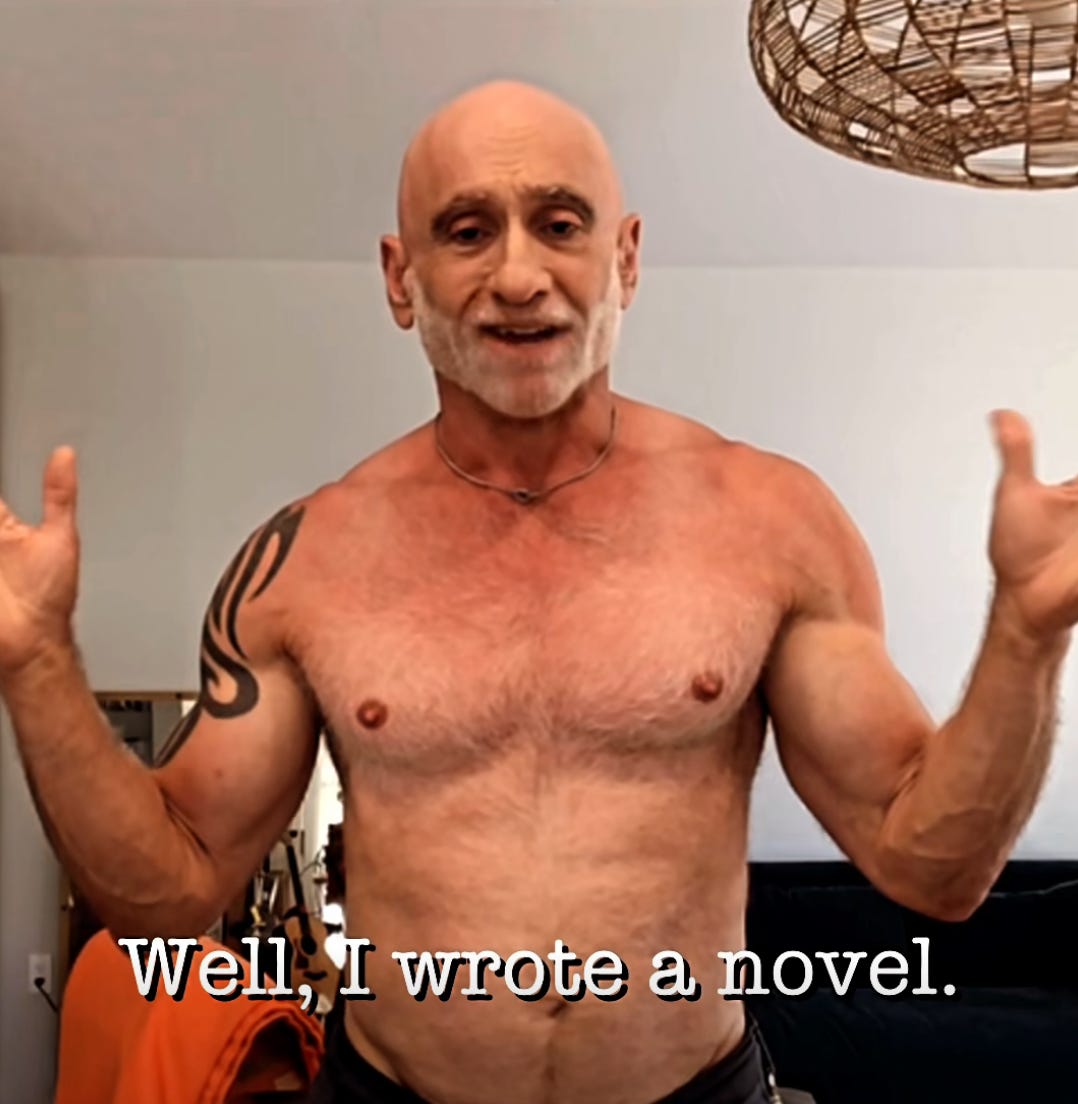
Damn, Daddy Dudley looks good! I thought. Studley Dudley!, as someone commented on Facebook. So I reached out and asked him for a Caftan chat, and literally a few hours later we were on the phone. I had no idea where our chat would go, but I love it and I hope you do too. I’ll introduce you to some of Dudley’s work and music.
There is a boyish innocence to how openly and passionately Dudley talks about his life and work. What I love about the interview is that Dudley reveals himself as a true artist in the sense that everything he says feels as though it comes entirely from his unique head, as though he’s externalizing deep thoughts he’s nurtured privately for a very long time. And I love that. I love what he shares here about his father and mother (her trajectory is Mad Men-level fascinating), about his arrival in gritty 1981 NYC and discovering performance art and his subsequent 20 years of making art amid the AIDS crisis (including his own diagnosis) before moving to L.A. after 9/11 and meeting his now-husband, Barry.
I also love his thoughts about his own masculinity and sexuality, whether he and Barry have an open relationship, how and why he maintains that hot-daddy look…and what he wants to accomplish creatively going forward.
Like porn entrepreneur and DJ Boomer Banks, who was my Caftan chat last week, Dudley can sometimes hop around in his thoughts. Roll with it!
Folks, I am in the middle of a very expensive move. If you continue to appreciate Caftan as a free subscriber, please consider helping me out by upgrading to a paid one.
I would appreciate it so much! OK now, I’ll stop groveling and bring you Studly Dudley Saunders…
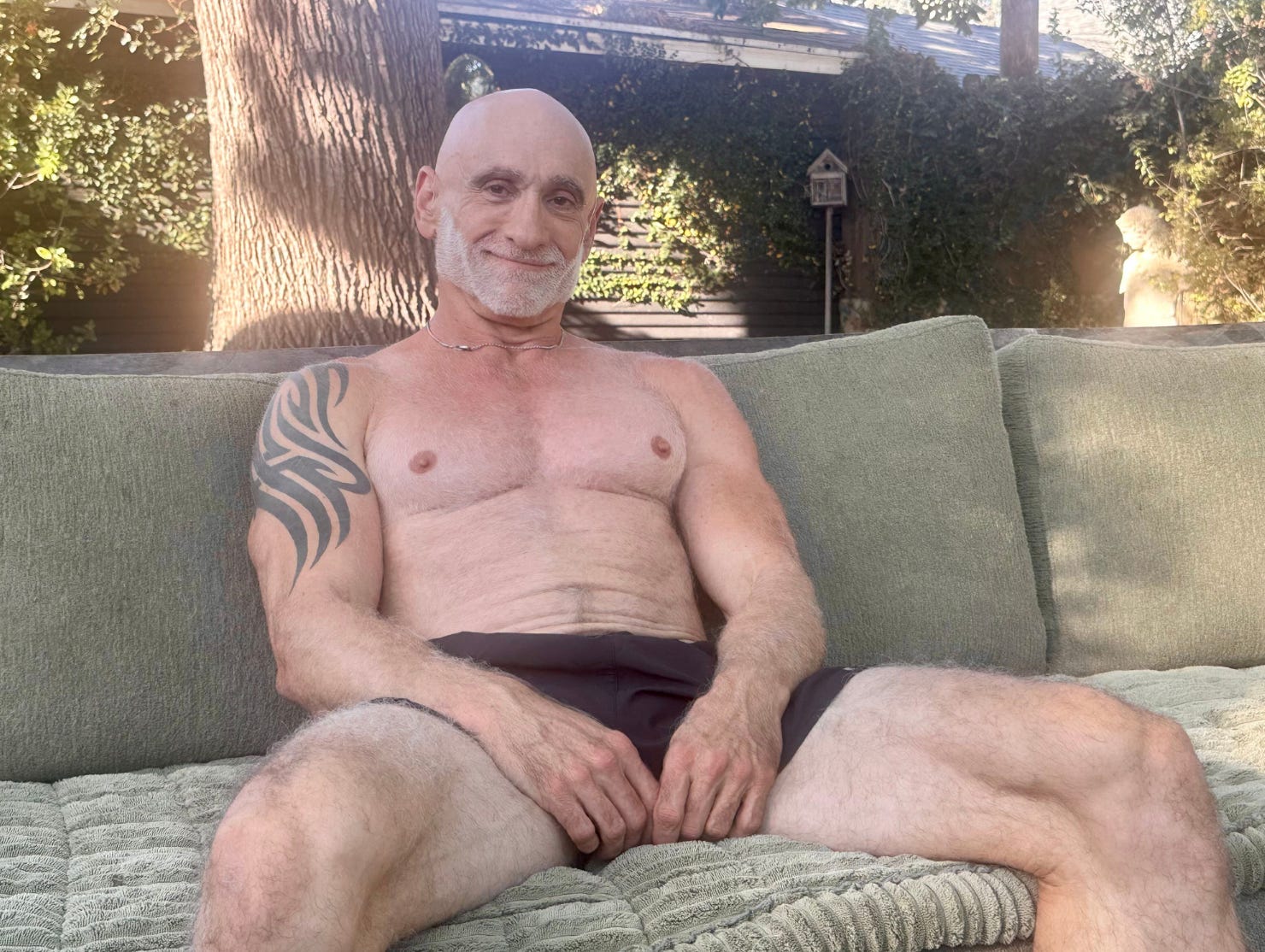
Dudley, thanks for getting on the horn with me on such short notice. So…you live in L.A.
On the edge of Koreatown. I live with my husband, Barry, whom I’ve been with for 22 years. I was someone who never had a relationship longer than three months. I was very happily single. I’m a weirdo. No one can stand to be around me for too long. My dad had said to me at one point, about relationships, “When it’s right, it’s not that hard.” And it was weirdly easy with Barry.
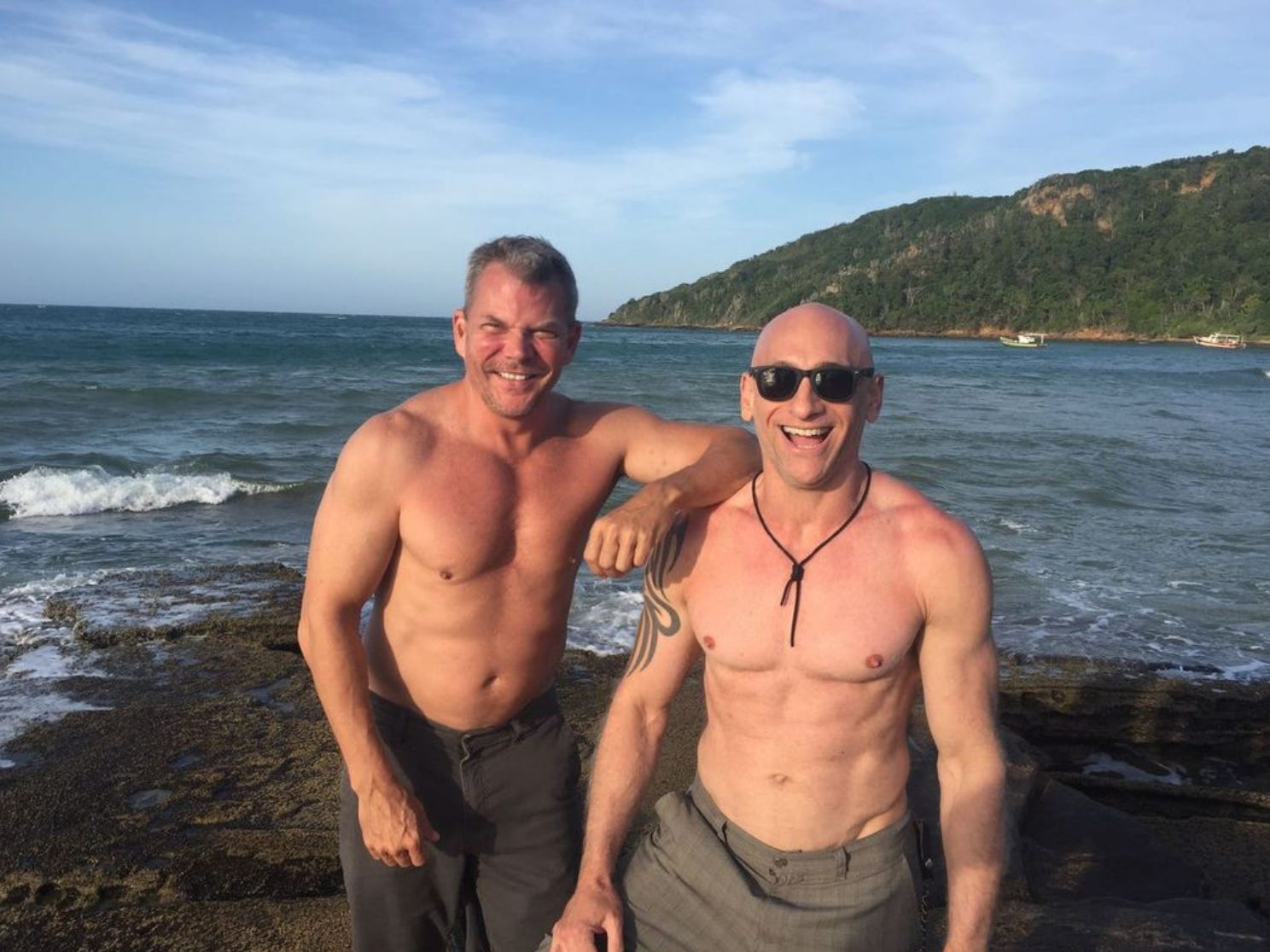
So we live in a house we bought 14 years ago. I never thought I would own a house in my entire life. I’m white trash from Kentucky. The house is a one-story neocolonial built in 1917 by a female architect. There’s a gigantic oak tree in the backyard.
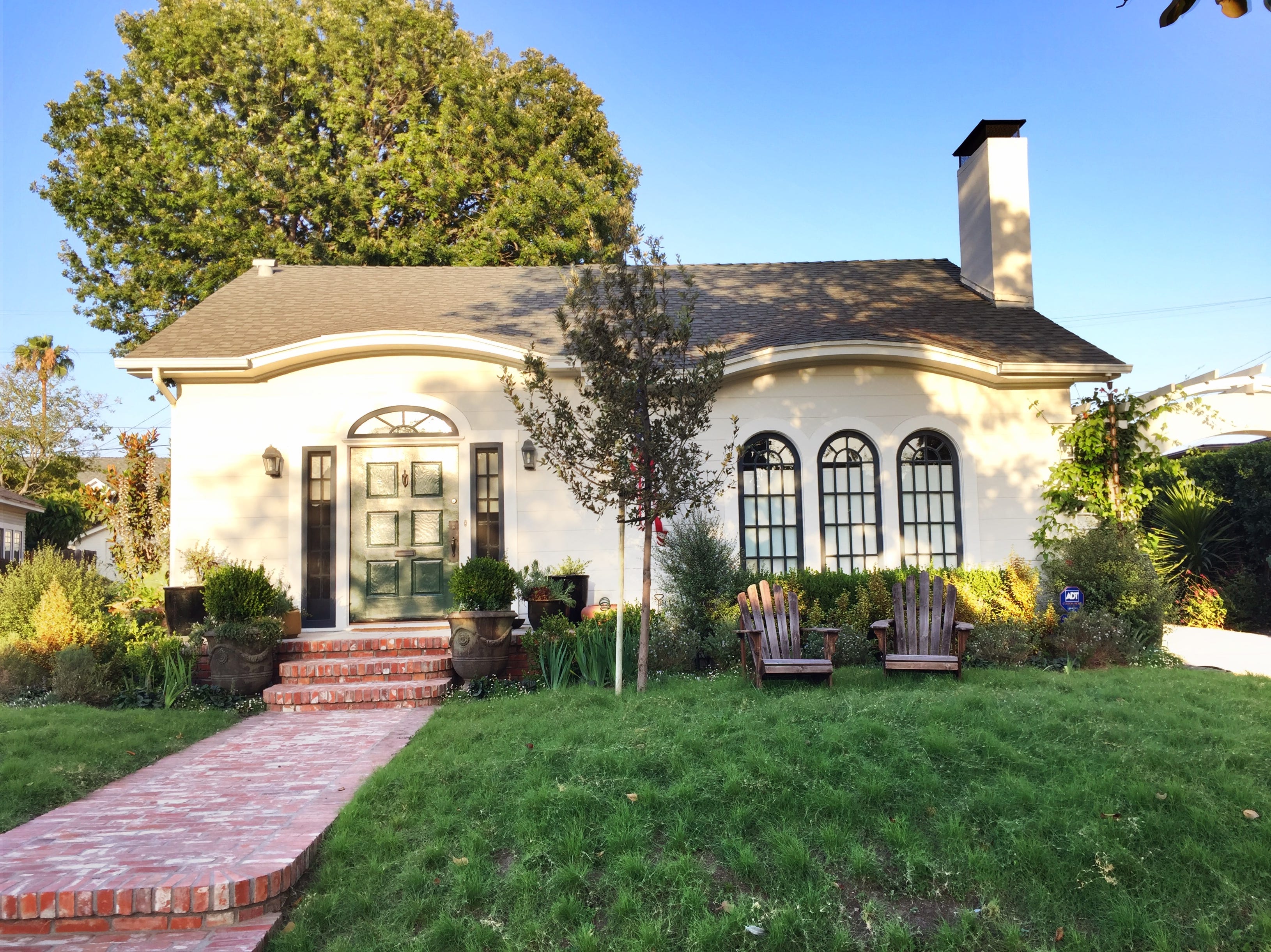
In the 1960s, the gay couple who owned the house would have parties in the backyard, one circle of gay men and one circle of lesbians, with someone up front to watch for the cops. If the cops came, the men and the women would pair up to look like straight couples.
When one of the two guys in the gay couple died, the other wanted to pass on the house to another gay couple. I was working for PBS as a producer/writer/editor, which qualified us for a mortgage. So Barry, who’s a realtor, said, “We’re buying this.” And I did the wife thing and just signed the papers. The house was $570,000—the very bottom of the market. A year later, we wouldn’t have been able to afford the house. But now, our mortgage is cheaper than what we’d pay for an apartment in L.A.
And you have a dog, right?
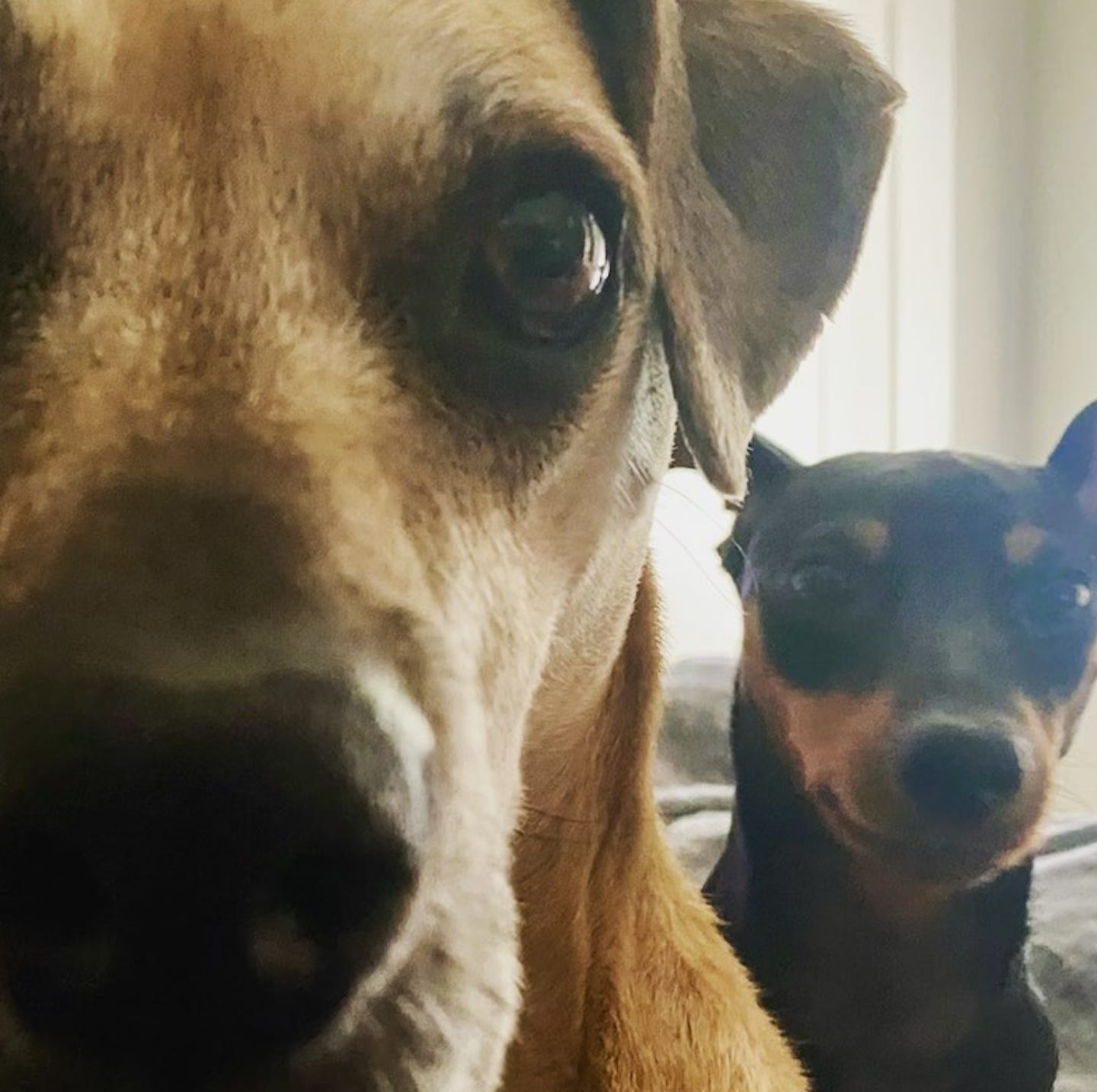
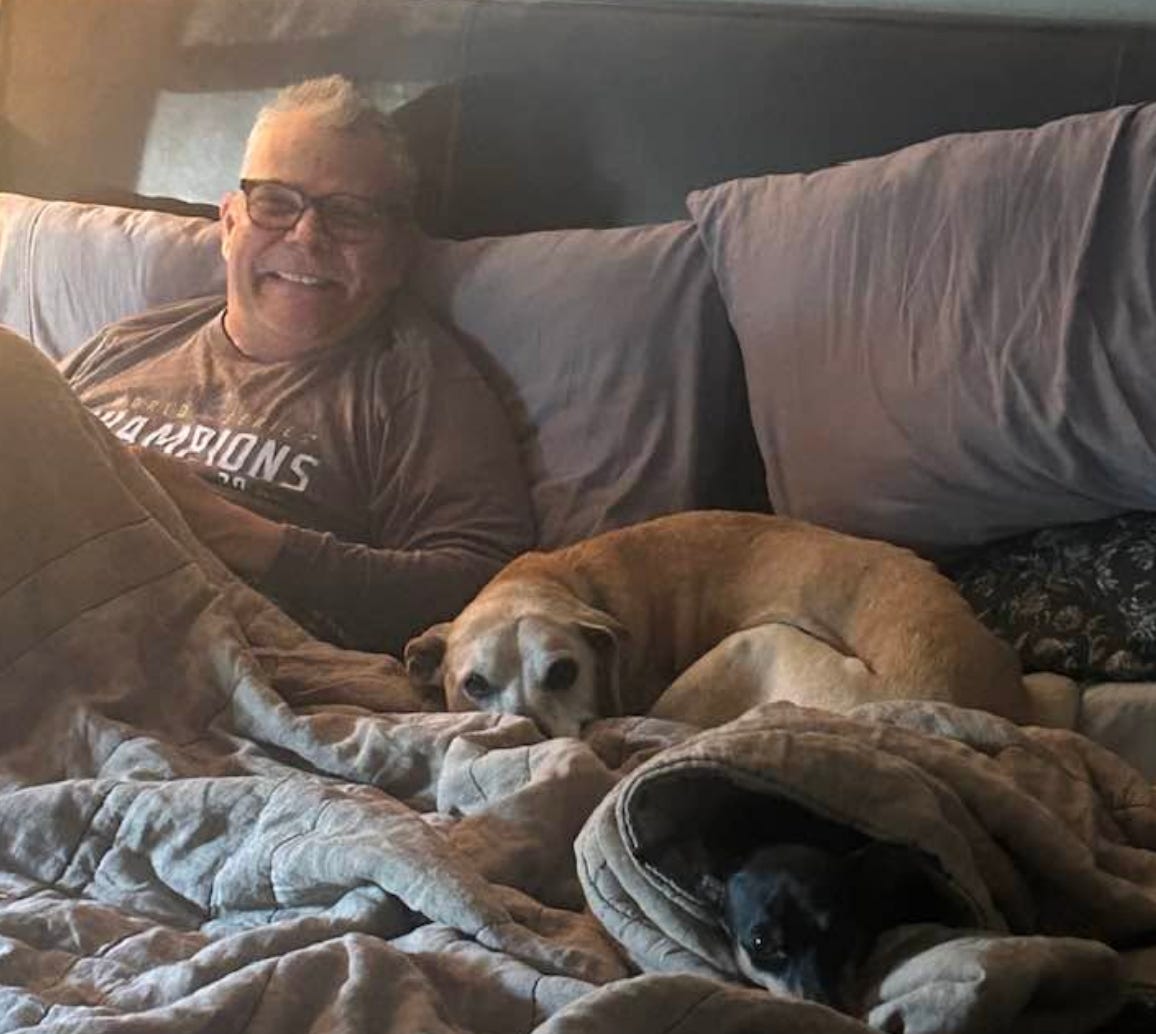
We have two—Addie is named after Tatum O’Neal’s character in Paper Moon. She’s Italian greyhound and Vizsla, a Hungarian hunting dog. And Kobe is a Mini Pinscher. We got him the day Kobe Bryant died.
Dudley, you’re a…singer-songwriter-writer? How would you describe yourself?
With great difficulty. [laughs] I’m kind of a multimedia performance artist. I’m a writer. I’ve worked as a journalist for Rolling Stone and Interview magazine, mainly writing about music. I got pigeonholed in that and it drove me crazy.
How long have you been a singer-songwriter?
I think 42 years or so. Initially it was all part of the performance art. I’d go in and out of speaking and music.
OK, here’s your YouTube page for folks who want to get acquainted with your work. But let’s take a few of your songs and talk about them.
I grew up in Kentucky. In the 1980s, at [the long-defunct gay bar] Badlands, at the end of Christopher St., I met a guy who grew up in what’s called Pennsyl-tucky, that central Appalachian part of Pennsylvania. He realized, as a teen, that if he went to the highway, he could get truck drivers to stop for sex. So after he told me this, I wrote this song called “Truck of the Rising Sun.”
It’s an amalgamation of him and me, interpolating “The House of the Rising Sun.” As gay men, we sometimes have this tendency, which drives me nuts, of shying away from the corporeal reality of desire. The world comes to you and says, “This is who you are and it’s a disgusting thing.” Instead of “This is who I am and let me go down this road” into what, I also believe, is this horrible disgusting thing, but coming out the other side of it.
That’s what the song is about?
That’s what it embodies. “It’s been the ruin of many poor boys, and me, Oh God, Oh God, I’m one.”
Okay. What else?
I wrote “Love in Crystal,” a little more drug-related. Is that more fun?
Oh! Yes, here it is.
The first line is “I’m so full of crystal meth I could shoot my load into the stars.”
Oh, my! It’s very catchy. It could almost be a nineties Sheryl Crow song except for the lyrics. Was this based on a period of your own using?
Um, well, I used it. I didn’t really have the stamina to get addicted because I’m such a wreck afterwards. And I’m too attached to everything else I’m doing in my life. This may sound perverse, but I regret I couldn’t do more crystal meth, because I had such a great time. But you have to be willing to go too far to get anything. There’s an old East Village ethic that if anything frightens you or makes you uncomfortable, that’s exactly what you have to jump into. That’s kind of exhausting because you spend your whole life scaring the shit out of yourself.
Well, speaking from my own experience with crystal, it’s hard to balance it with other aspects of a meaningful life.
It’s a commitment of its own. And it’s a short life. I did a lot of stuff I loved when I was younger. But I didn’t get command of my gifts such as they are until I was almost 50. So at this point I can’t fall apart because I’ve only been capable of doing my best work the last 14 years.
Why?
Because I was creating my own kind of bespoke form. I’m lucky that I landed in the East Village when I did, because that world supported what I was trying to create, even if it wasn’t what most of the art world wanted.
A lot of people quit making work. But if you have OCD about art, you’re fucked because you have no choice. Someone once said to [soul singer] Bettye LaVette, “You must have had a lot of faith in yourself to keep going.” And she said, “No—faith will not sustain you. You just have to decide, “This is what I do.”
But, yes, there were people out there who said to me, “You’re a great singer even if the world doesn’t recognize it.” So if you’re one of those people can’t stop doing this work, you have to hold on to remarks like that. When I’m not working, I disappear.
I kind of feel that way about writing. I’m not really sure who I would be if I didn’t write. So I always hope I don’t have a debilitating stroke or something that would keep me from doing it. But do you feel there was a period when you gained some success or recognition?
When I gained success?
Well, you said you felt you didn’t hit your stride until you were 50.
For a big chunk of my life, I was assuming I was going to be dead in a few years.
Right. When were you diagnosed with HIV?
When I was 25. But I knew for a couple years before then that it was likely. I only got tested because there was a drug trial for people who were positive but asymptomatic. But perversely, my T cells were too high so they wouldn’t let me in the trial. It was early 1987.
What was the drug?
I have no idea because they didn’t let me in the trial. Obviously it was one of the many failures. Maybe they’d have given me something toxic and I’d be dead now.
Right. Well, in reference to your new novel, is the “Whore Artist” of the title based on you?
[laughs] Well, yeah. I’m a much happier person than the character, though.
OK. So you grew up, quote, white trash in Kentucky?
Yeah, in Louisville.
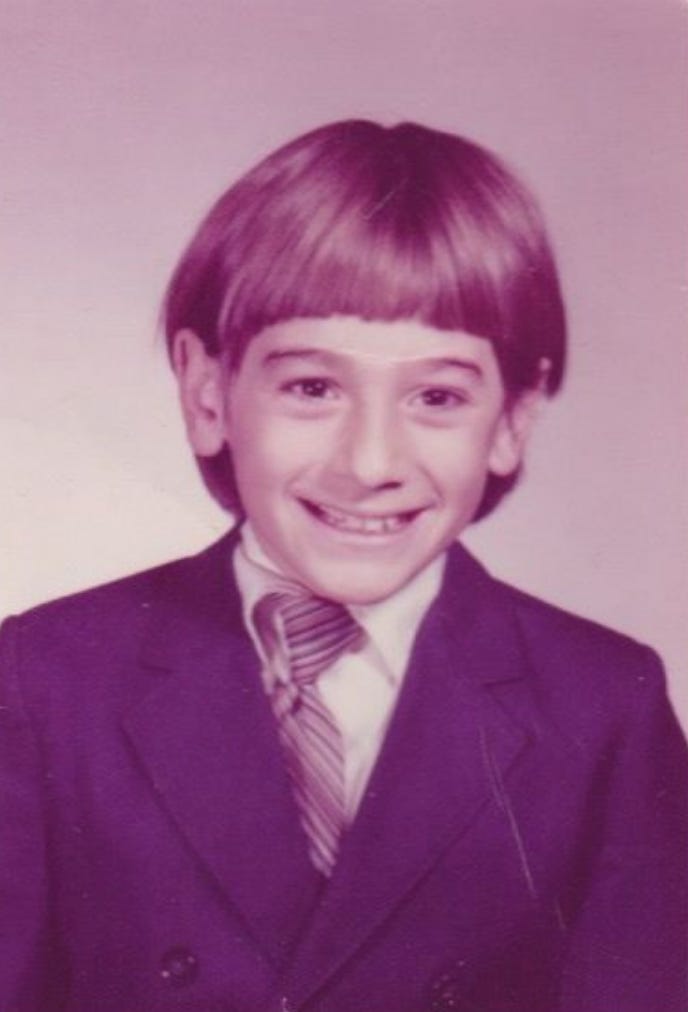
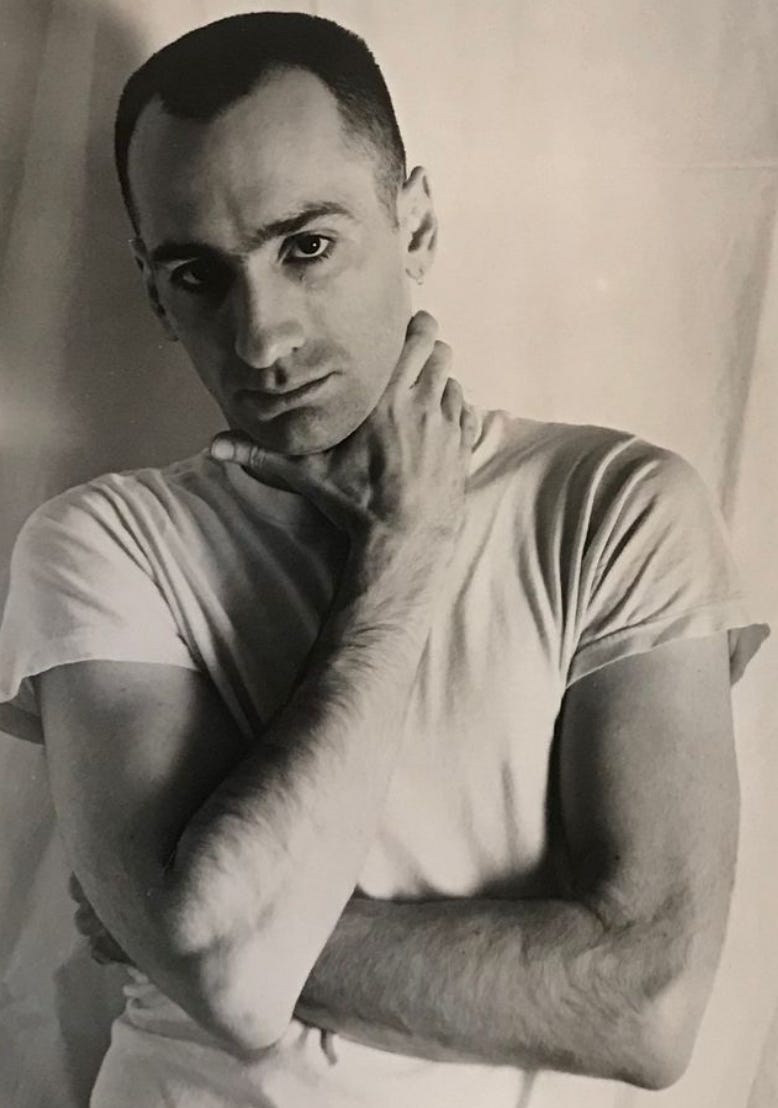
Yes. My father was from the foothills, first in his family to go to college, and then became the film and theater critic for the Louisville Courier Journal. He’d fly to New York once a year to cover Broadway and to L.A. once a year to cover the movies.
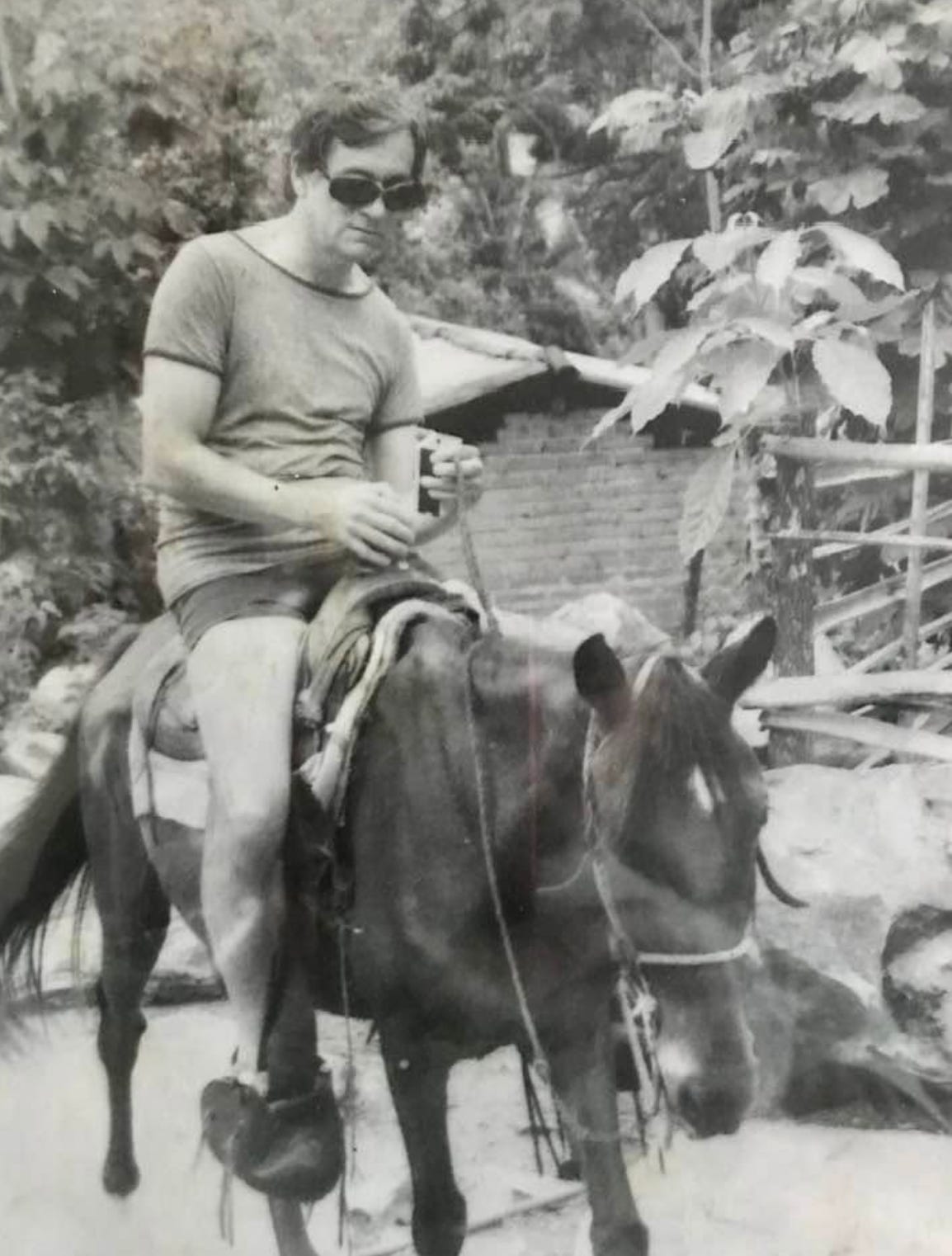
What a cool job. Did he like it?
He did. It was not what he’d dreamed of for himself, but it gave him a certain measure of respect that nobody in his family had ever had.
Working in proximity to entertainment, was he open-minded about gayness?
He was fine with me when I finally come out. But before that, at one time, he warned me to “watch out for the butch boys, ’cause they can get you into trouble.”