

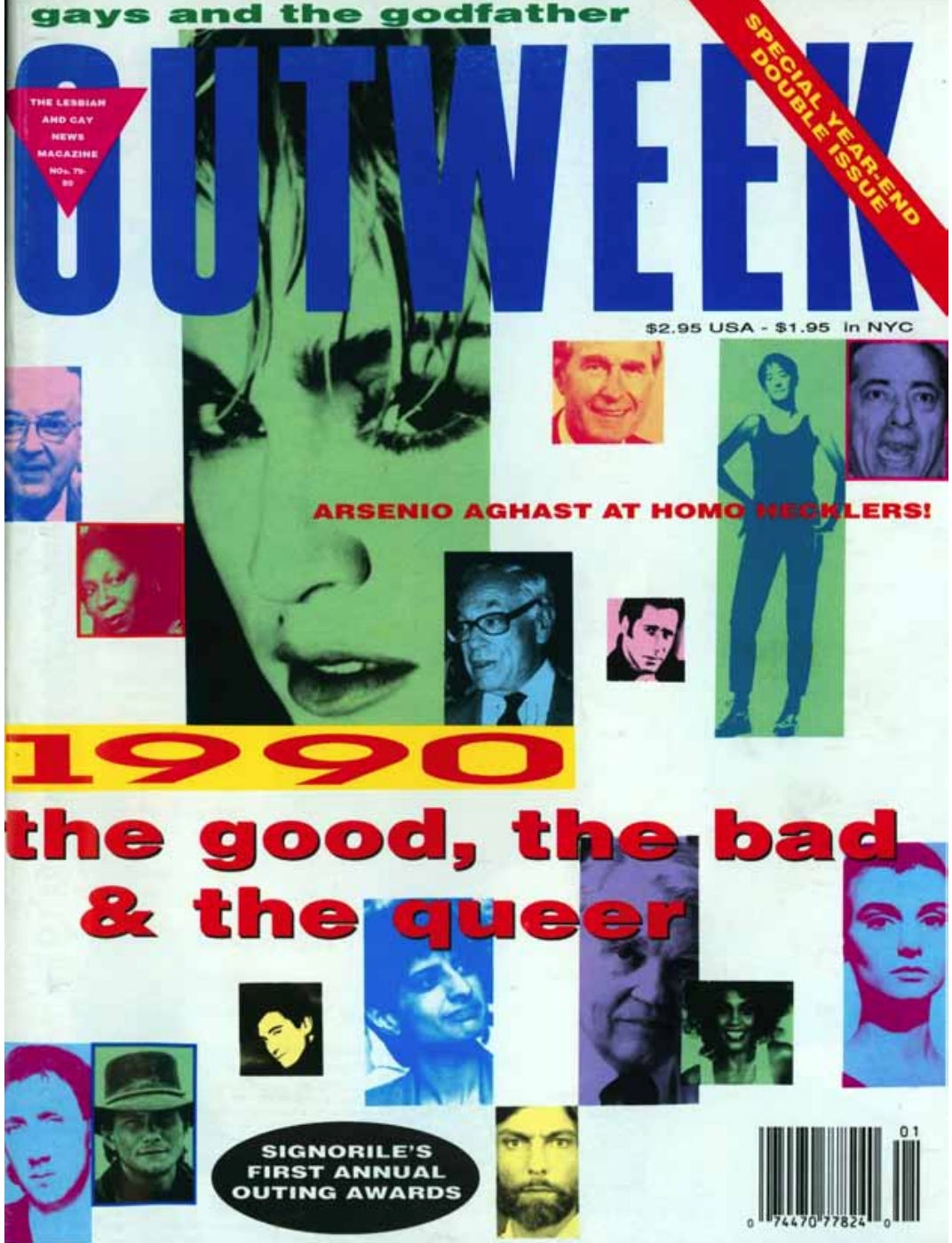
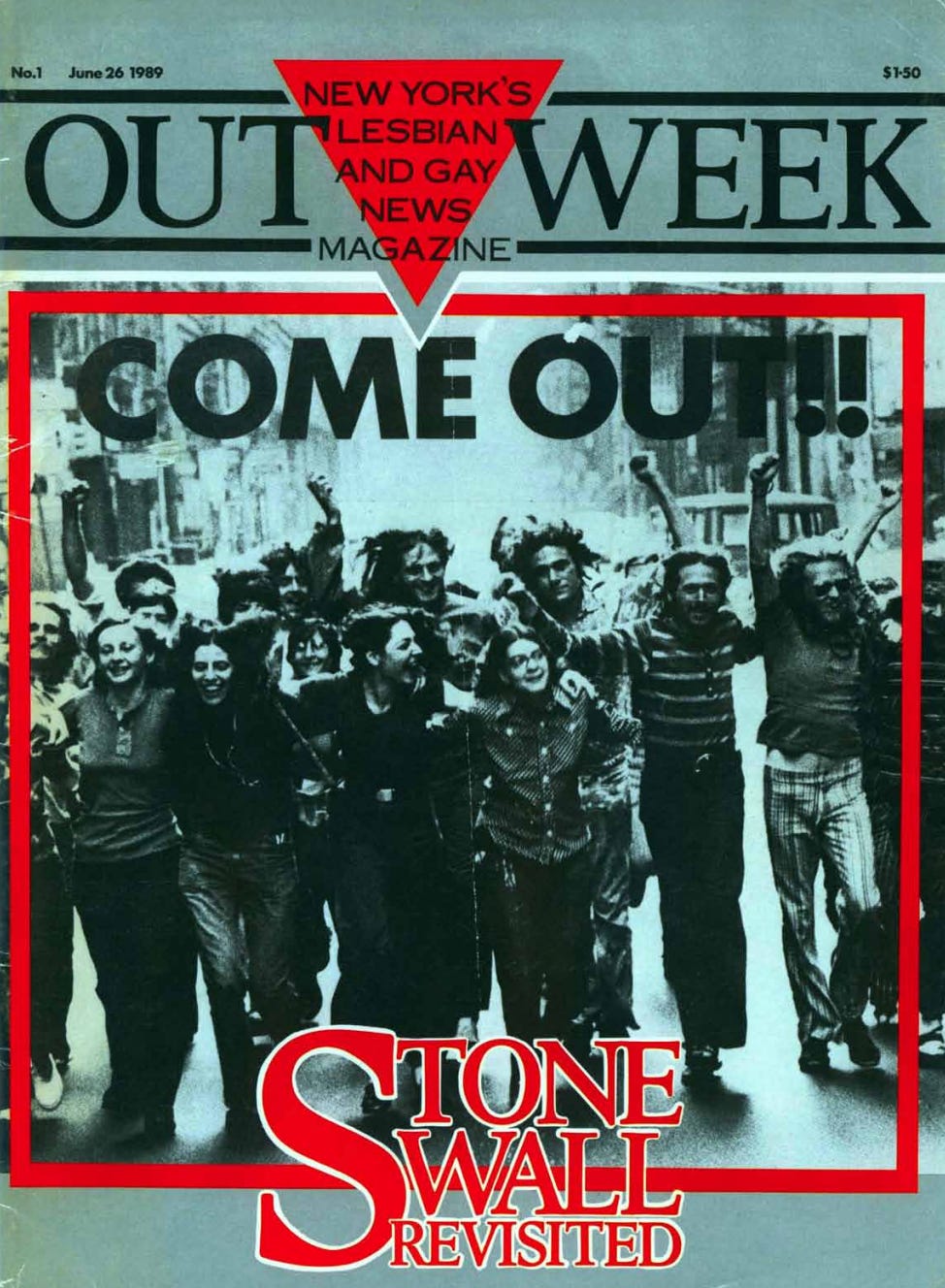
Happy mid-September, Caftaners. I hope you’ve all been well. I can’t think of much to say by way of preface so I’m going to jump right in: Do any of you remember OutWeek? It was a post-Advocate and post-New York Native but pre-Out queer weekly out of NYC that only lasted two years (1989-1991) but very much reflected the we’re-here-we’re-queer ACT UP/Queer Nation moment and shoved both gay and mainstream society forward in terms of being unapologetically out and vocal about visibility and rights. When I worked in the early 2000s at the (still existing!) HIV/AIDS magazine Poz—another outlet that was very much influenced by OutWeek, and that used a lot of the same editors and writers—I found a huge stash of OutWeeks in our office. It was like stumbling on a time capsule of a micro-moment during which I was in college and not even out yet, and I had a hard time tearing myself away from the stash. Luckily, OutWeek’s entire archive is digitally accessible.
I spent a lot of time in that archive the past week as I prepared to interview OutWeek’s founder, Gabriel Rotello, 72, which I did on Saturday for more than two hours.
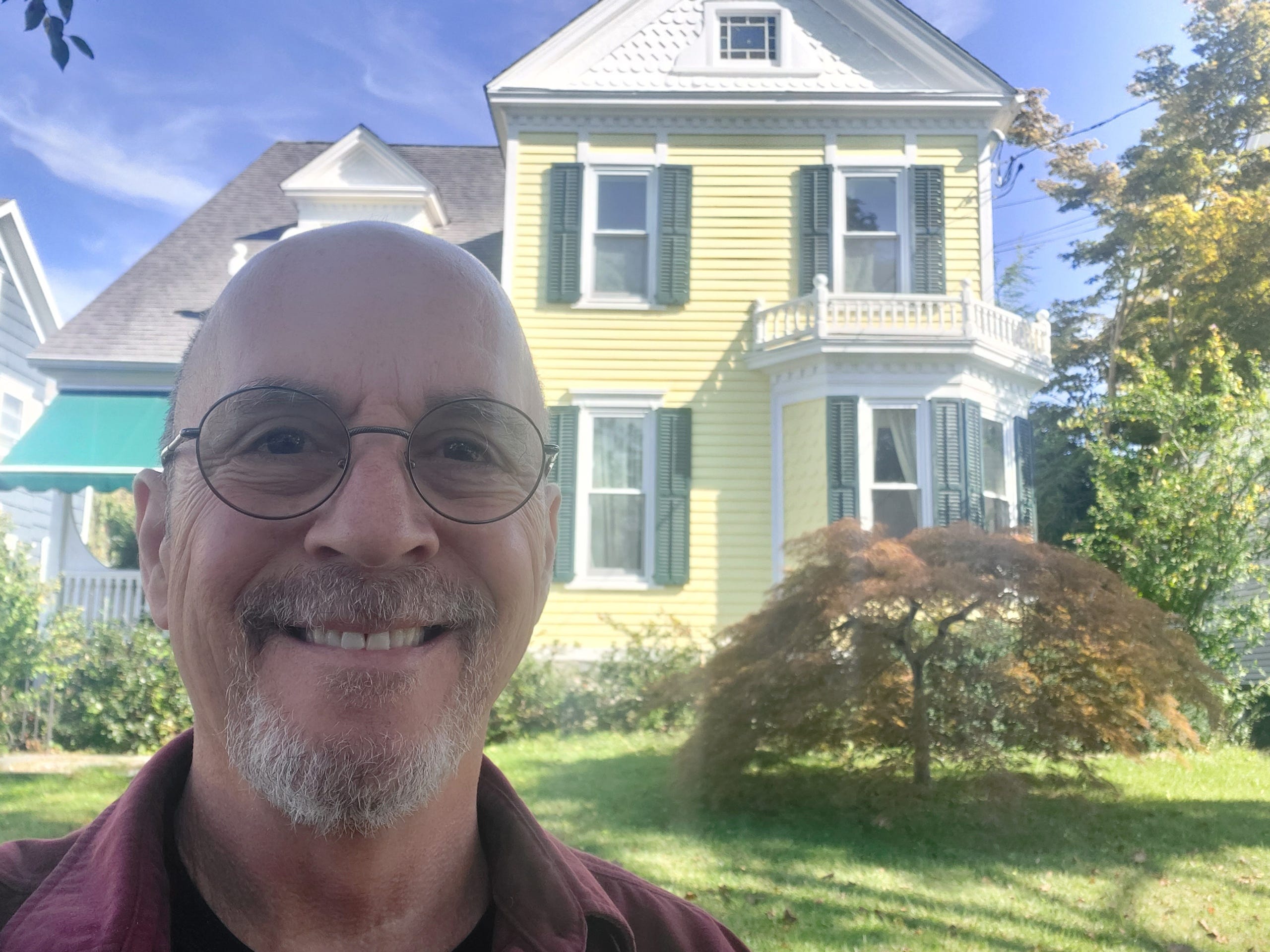
Gabe is one of those BIG queer names I’ve heard (and whose work I’ve read) for decades but somehow never got a chance to meet, despite sharing with him countless friends. Gabe was gracious, a flawless raconteur in that way that people who’ve told stories in words for much of their life often are. I loved our conversation. AND…Gabe has a debut novel coming out in December called The CBGB Conspiracy…
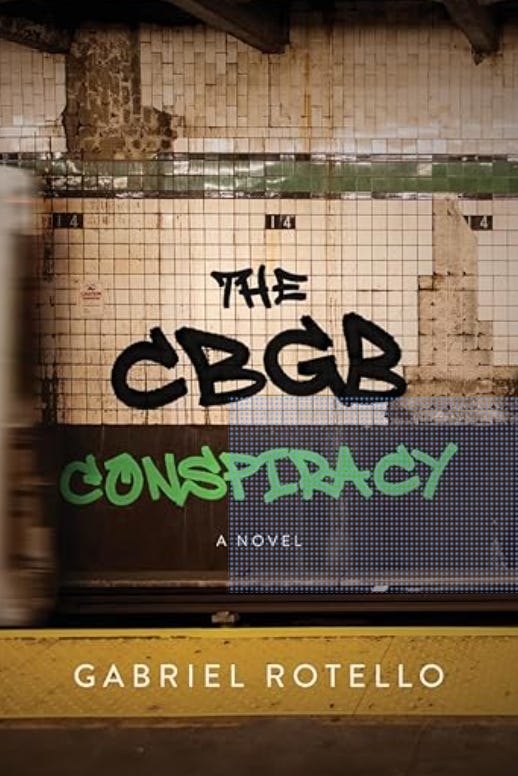
…about, in his words, “a murder in downtown NYC in 1977, the year of the blackout, the Son of Sam and the Everard bathhouse fire.” (I have a copy on me and I can’t wait to dive into it, being endlessly obsessed with that time and place.)
Finally, as ever: If you are a longtime free subscriber to Caftan and continue to enjoy it, please consider becoming a paid subscriber for $5/month. The paid subscriptions really enable me to keep doing this amid my other make-a-living work. And if you are a paid subscriber, THANK YOU as ever.
And now here is Gabriel Rotello and the story of a short-lived magazine that had a very long reach.
Gabe, thanks so much for talking today. Can I start by asking where you live and with whom if anyone, including a pet?
I recently moved to the house I grew up in Danbury, Connecticut, my hometown, after living in NYC for 25 years and L.A. for 25 years. My mom died and I inherited some properties here including this house. I’d never thought about moving back, but when I came back here, I realized that the house I’d grown up in, an old Victorian, was quite spectacularly beautiful. But the main thing was that when Covid struck, the company I work for in L.A., which does docs for The History Channel, sent us all home to work from home and we never went back from the office. They discovered it was easy to have producers working from home. So when I inherited this house, I called my employers and asked if I could work from the East Coast, and they said fine. So that’s what I did. And I really like it. It’s a much slower pace of life and much easier to get around. I still have a lot of friends here I’ve kept up with.
What’s a typical day like for you?
I get up early. Nothing starts in L.A. until 12:30 my time, so in the mornings, I research my episodes and make calls to Europe. Then I start getting calls from my assistants in L.A. and coproducers. And then around 6pm, I go to the beach on Lake Candlewood, the largest lake in Connecticut. I never realized when I was growing up here how beautiful it is. I have a lot of friends who come up from New York to stay with me and they’re wowed by how pretty it is here.
Do you ever feel bored there compared to L.A.?
Quite the opposite. I have too many things I’m doing. I do music also and I have a novel coming out. And I go to New York a lot. The one thing that is different for me is that I’ve never lived in a place where most of my world wasn’t a gay world. In NYC and L.A., of course, I had lots of straight friends, but generally speaking my world was gay, with a whole culture of gay restaurants and bars. And here there isn’t that at all. I really only know one other gay person in my town and a couple in the towns around here. People here in the 12-step program say there are gay 12-step groups, which has caused me to joke that I should become a drug addict or alcoholic so I can join. [laughs] But it would be nice to have a little group of gay people I could shoot the breeze with.
Okay, Gabe. So locate yourself before the start of OutWeek in 1989.
I moved to New York in March 1974 and became a rock musician, a keyboard player.
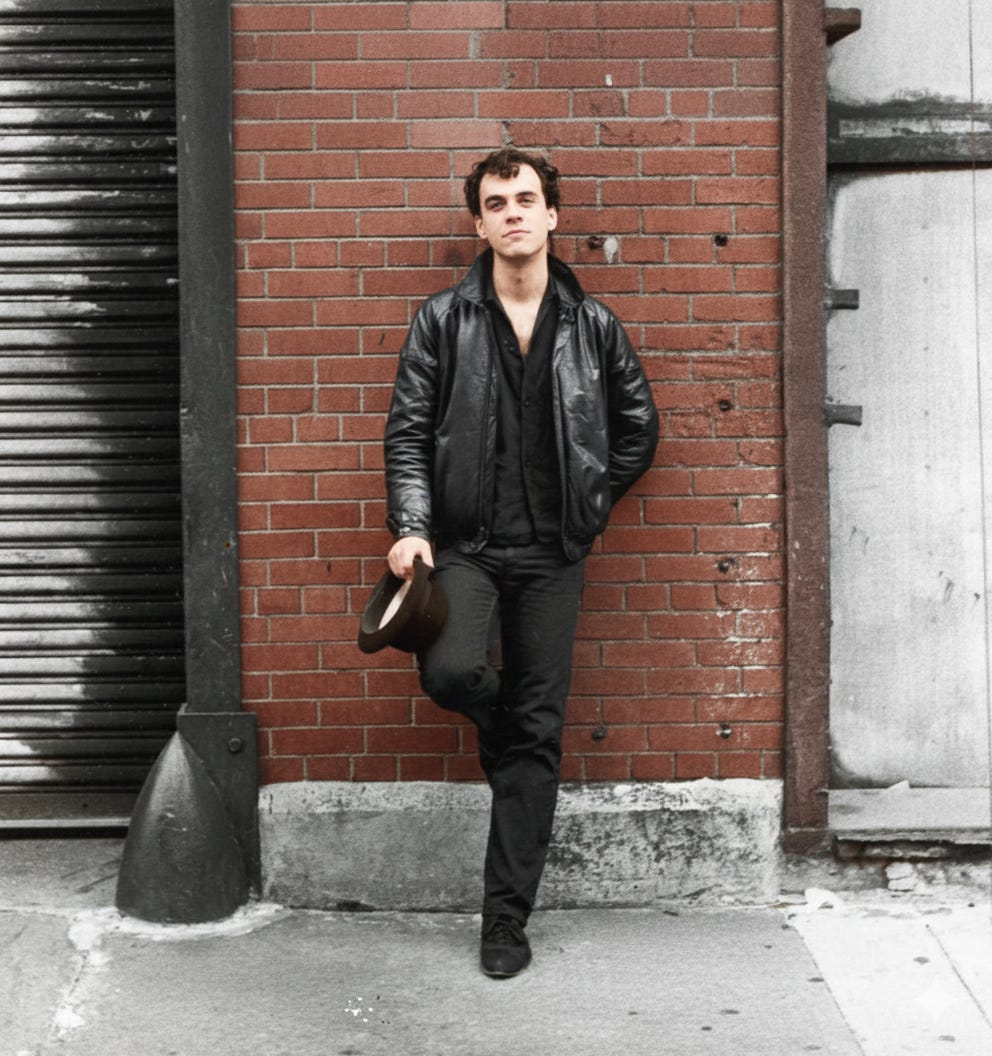
The city then was amazing. Stonewall had happened five years before, after which there’d been an explosion of gay life centered primarily in the West Village around Christopher St. Every other storefront was a bar or a gay restaurant. Cruising was the whole world. Everybody was out all the time, young and gay. It was an absolutely amazing scene and got more and more so as time went on, as more and more discos, bathhouses and sex clubs opened. It was an absolutely wild time to be young. We were doing drugs and having multipartner sex.
Do you mind me asking if you became HIV-positive?
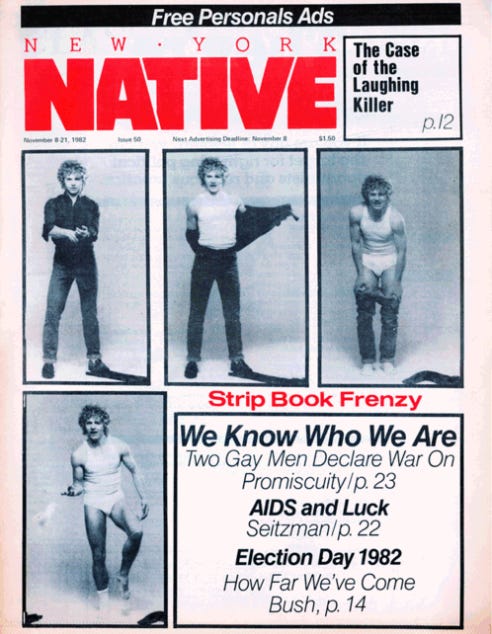
No, I did not. I figured out what was happening with HIV very early on and just completely stopped all activity, thinking that it would be for just a few months. And that saved my life. Thanks to The New York Native and Dr. Larry Mass, who wrote about AIDS even before the famous New York Times piece in 1981 ….in the seventies though, nobody had any idea that was going to happen.
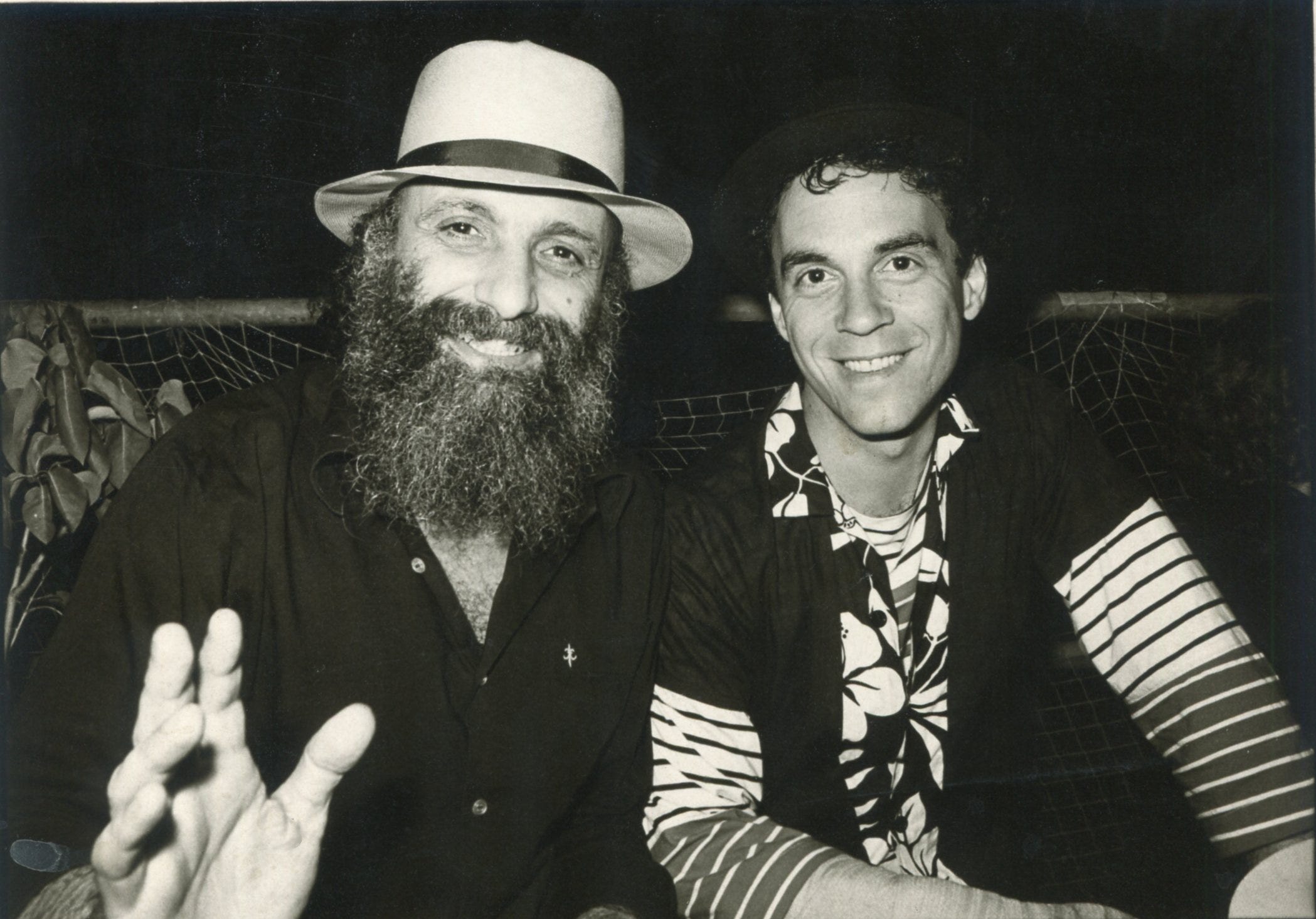
But I lived a very dichotomous life between my gay friends and the CBGB scene, where there was a gay subculture. One of my best friends was Richard Sohl (d. 1990), who was the keyboardist for the Patti Smith group, and the designer Stephen Sprouse (d. 2004), who was one of my best friends. I also had a lot of straight hippie friends who’d go back and forth to Goa, Kathmandu, Bali and Ibiza, so I went and stayed with them a bunch of times.
But one scene I was most emphatically not on was the disco scene. I was a real snob and very dismissive of the whole disco thing and the whole clone thing. I had a real problem with what seemed to me the sort of superficiality and party-party aspect of gay life, disco drugs and Fire Island and that mindless music. By the way, now I love disco, now that it no longer has any cultural meaning for me as something frivolous and silly. Now the music stands alone and is just fun to listen to.
But at the time, a friend of mine even facetiously started a group called Fags Against Facial Hair—the clone type who wore a moustache with a jean jacket and a hoodie sweatshirt underneath, plaid shirts.
Okay, so what’s happening in the 1980s for you before you start OutWeek?
Well, in 1981 I first heard about gay cancer. I was in the Ninth Circle with a bunch of friends, where we basically lived when we were in the West Village. That was the punk rock bar.
Really? I always thought it was your classic disco clone bar.
Oh, no, no! It has an unfortunate reputation today of having been a hustler bar, which it really was not. Maybe there were a few of them. But it had the best rock n roll jukebox in town.
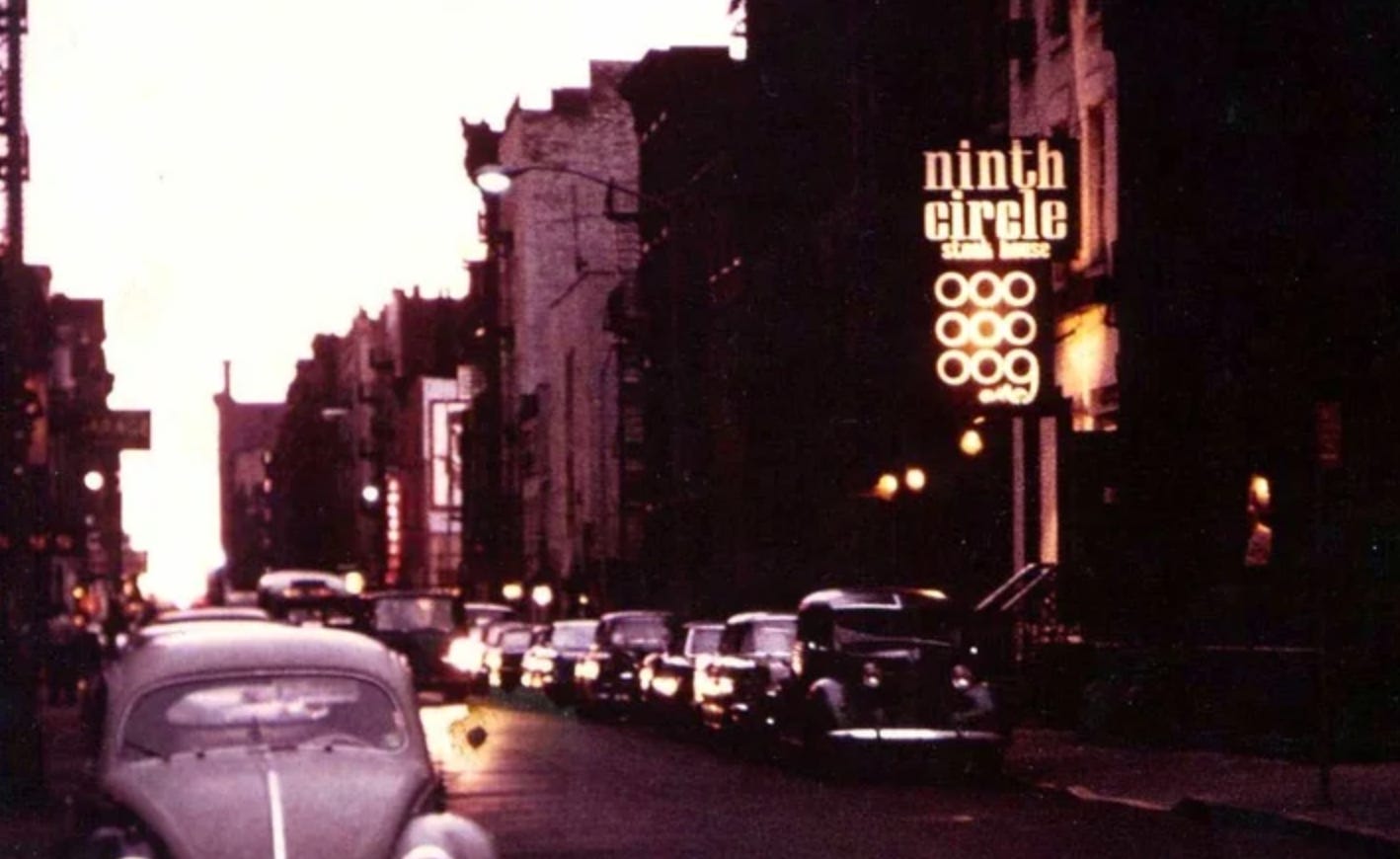
People like Warhol, David Bowie, Allen Ginsberg—that was the gay bar they went to. So our crowd lived there. You could just walk in and find friends. So one night I was with Danny Fields and Stephen Sprouse and one of Danny’s friends was talking about someone who had gay cancer. And I thought he was joking. I laughed, like, “Great, we even have our own cancer now.” And he was like, “I’m not kidding—there’s a bunch of gay guys who have this cancer.” And it struck me so much that I went home and wrote about it in my journal. This was early 1981.
Then everything began to change really quickly. Larry Mass started writing about the disease in the Native, then the famous first New York Times piece. For about six months, I wondered what it could be and concluded that it was either a sexually transmitted virus—because if it had been a bacteria, you would’ve been able to see it in a microscope—or it was poppers. I clung to the latter idea, because poppers had become so ubiquitous by that time that you could walk into a bar where people were dancing and the smell of poppers would hit you like a brick. Meanwhile, I never saw straight people sniffing poppers. So maybe I thought they were carcinogenic.
But by the end of 1981, they began to announce that hemophiliacs, Haitians and IV drug users were also getting it, so I thought, “Oh, it’s a virus.”
Something blood-borne like hep B, right?
Yes, it was following the same epidemiological trajectory as hep B, which many gay men had. And people were beginning to die. So I stopped having sex.
Completely? Would you make out or jerk off with people?
That didn’t happen at first. It took a while for people to figure out what safe sex was. But people had never thought of that before. Also, nobody had ever used condoms in the gay world. They didn’t even know how to use them. But it was hard for me because I stopped having sex early while everyone else continued. So you wouldn’t even be able to find someone who only wanted to jerk off with you.
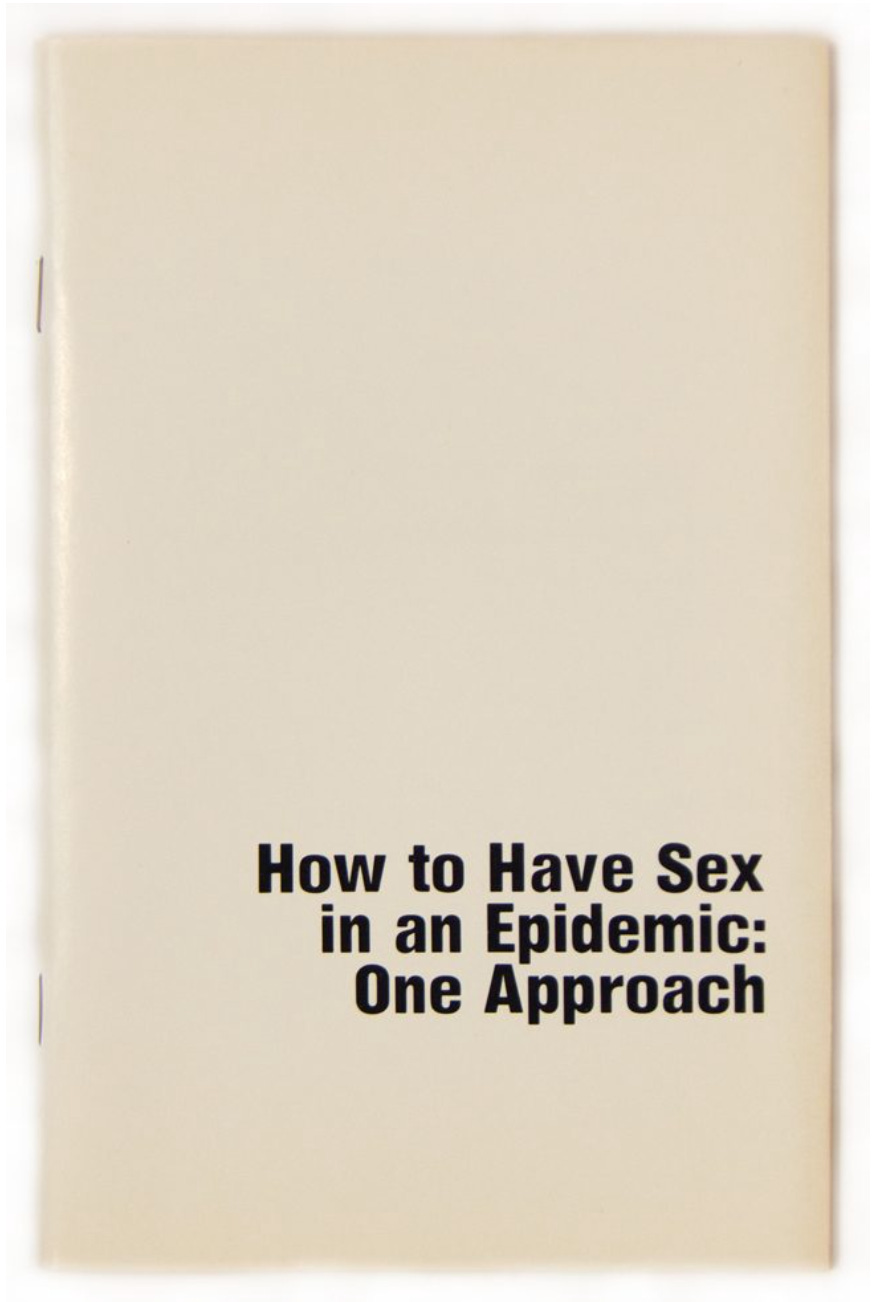
Did that make you feel alienated and separated from the rest of the gay world?
Yes. I would still continue to go to bars and watch the people around me hooking off and waltzing off into the night together. And I’d think, “Wow, this is not good.” And I became a proselytizer about it and that was not appreciated at all in the early years. People became very angry at me. I actually got thrown out of a dinner party one night. Everybody was planning to go to the baths after dinner and I said, “No! You can’t! Those days are over.” And it turned into an argument and the host called me into the kitchen and said, “I’m terribly sorry, but I’m going to have to ask you to leave because you’re upsetting my guests.” And years later, I think in the late 1990s, the host came to my book signing for Sexual Ecology at Barnes and Noble…
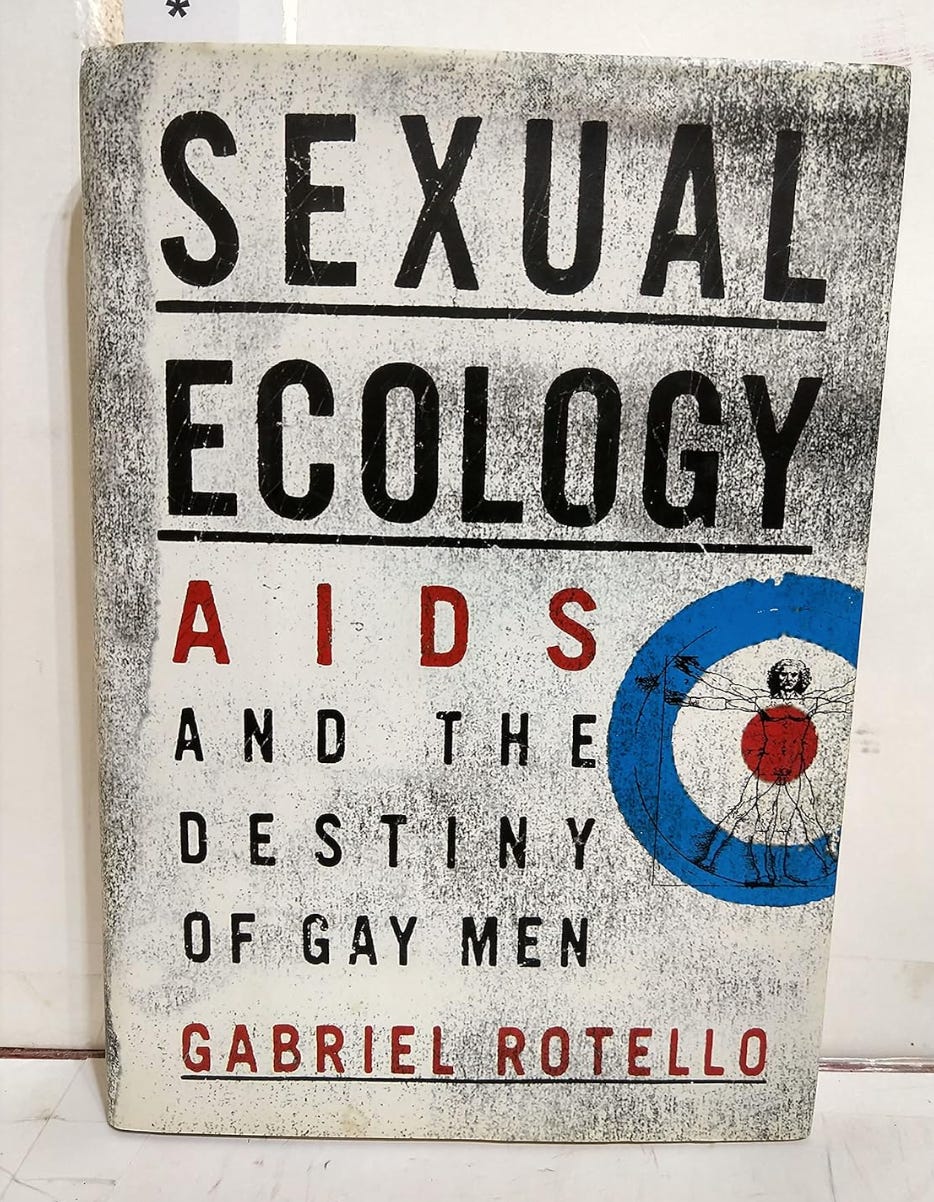
…and told me that I had saved his life. That he’d thought about it afterward and then also recused himself from that lifestyle and stayed HIV-negative. While most of the people at that dinner party did not survive.
So anyway, I was a musician and I started a series of shows in the mid-1980s called Downtown Dukes and Divas, these large-scale revues that I held at the Limelight and Palladium clubs.
And then my partner, Hap Hatton, got AIDS in 1986 and it became very bad very quickly and he lived for two more years and then died. But while he was still sick, I heard about ACT UP and started going to meetings, even though I didn’t get that involved because I was consumed with taking care of him. But after he died in June 1988, I started becoming a really active member. And then I never missed an ACT UP meeting for years. If I were out of the city, I’d come back for the Monday night meetings.
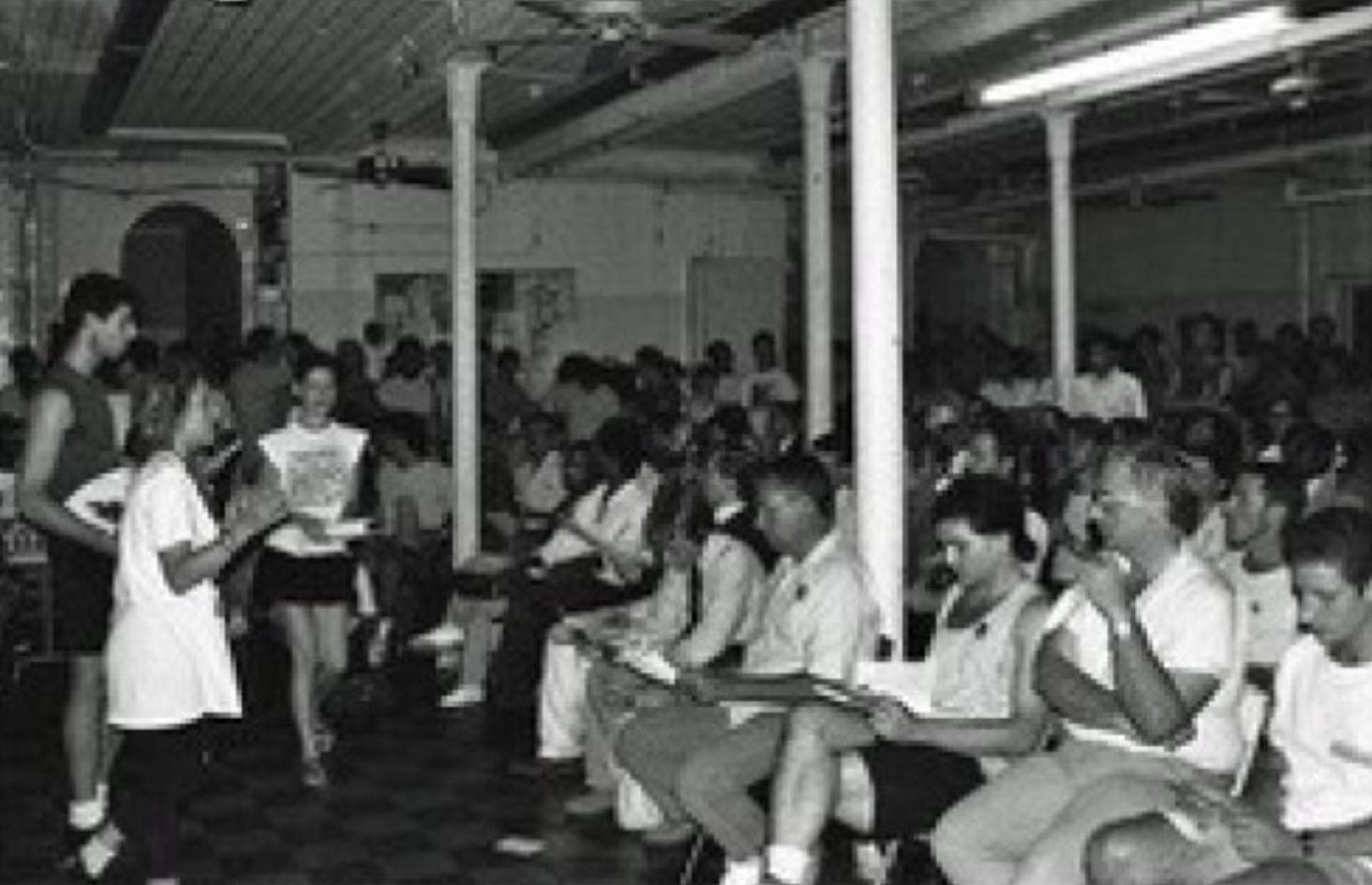
Even though it still exists today, ACT UP’s really high-profile years were from 1987, when it started, until about 1992-3. What was it like when you came in in earnest in 1988?
It was at its peak. It was everything—the entire center of gravity of the serious gay and lesbian world. It was the focus of all attention. It was going to save our lives and the most important thing that ever happened in gay liberation. And the way it was structured as this raucous democracy—anyone could come, vote, speak at a meeting. Normally one would presume a structure as open like that would not last very long, but it held together beautifully for several years. It was made up in part of a brain trust of lesbians and gay men who understood science, medicine, pharmaceutical companies and looked for things we could do to put pressure on the establishment. But the other component was the shock troops—the people who actually did demos and chained themselves to the walls. There was an amazing amount of talent in that group. It’s still breathtaking to me to think about. People who were just normal people in their daily lives, but they had this charisma—”rizz” as the kids would say today—and would get up on the floor and deliver extemporaneous speeches that were so powerful. People like Bob Rafsky and Maria Maggenti. And ACT UP gave them a venue for their talents they otherwise might never have found.
I was in such a state of devastation at that time. Many of my friends who only a few years earlier were scoffing at me about being alarmist—they were now either extremely ill or already dead. ACT UP was an antidote to that. It gave you an outlet for your anger and your grief and gave you something constructive to do to make a difference.
On some kind of cellular level, can you describe the loss of your lover in 1988, when you were in your early thirties? What did it feel like to witness so much illness and death at such an early age?
If you were to ask me that in the absence of videotaped evidence, I would say that I walked around with my head hanging down 24 hours a day. But in fact, I hung out in a scene with Nelson Sullivan, the famous downtown videographer of that time.
The last video Nelson Sullivan made before his death in 1989:
So a while back someone alerted me to one of his videos that showed up on YouTube. And there I am, laughing and having fun with my friends. I saw one the other day where I was showing up to play keyboards for an album RuPaul was making. I look really disheveled—big bags under my eyes. But I’m like, “Hi, everybody! How’s it going!” I’m making everyone including Ru laugh. And I remembered that I was coming to that recording session from the hospital where I’d been with someone who was about to die. So I think how I dealt with it, which I wouldn’t have remembered if it wasn’t for this video, was that I compartmentalized. You dealt with AIDS when you had to, and otherwise, when you were with your friends, you were trying your hardest to live a normal life as a young person in NYC.
Wow. So tee up the start of OutWeek. Did you have any prior editorial experience?
No. None. I’d been very active ACT UP for a year after Hap died and was wondering what more I could do. It just didnt’ seem like things were moving fast enough. So I was walking down 6th Avenue and I passed a magazine kiosk and saw The New York Native. And I groaned as usual, because the Native was a total worthless piece of shit by then.
And to be clear, this was because over time it actually started to espouse the idea that HIV was not the cause of AIDS.
Yes, it had become an HIV-doesn’t-cause AIDS cult. It was kind of like anti-vaccine people today. No amount of scientific evidence could penetrate them. But the Native was the only publication in NYC for the gay community in the peak of this health crisis. So this lightbulb went off in my head: “Oh my God, someone could start a new gay magazine that would reflect what’s actually going on both with the epidemic and this new spirit of activism that was manifesting in ACT UP. Okay, I’m going to do that.”
So what came next?
I made a list of all the smartest gay men and lesbians in NYC who I could think of, most of whom I did not know or had just met briefly. I called them all up: “Hi, my name is Gabriel Rotello.” People recognized my name from my music shows. “Can I pick your brains about this idea?” Everyone said yes. One thing I discovered was that many other people had had the same idea over the past several years and all of them had failed. I talked to people in publishing, like Adam Moss, who was then the editor in chief of 7 Days.
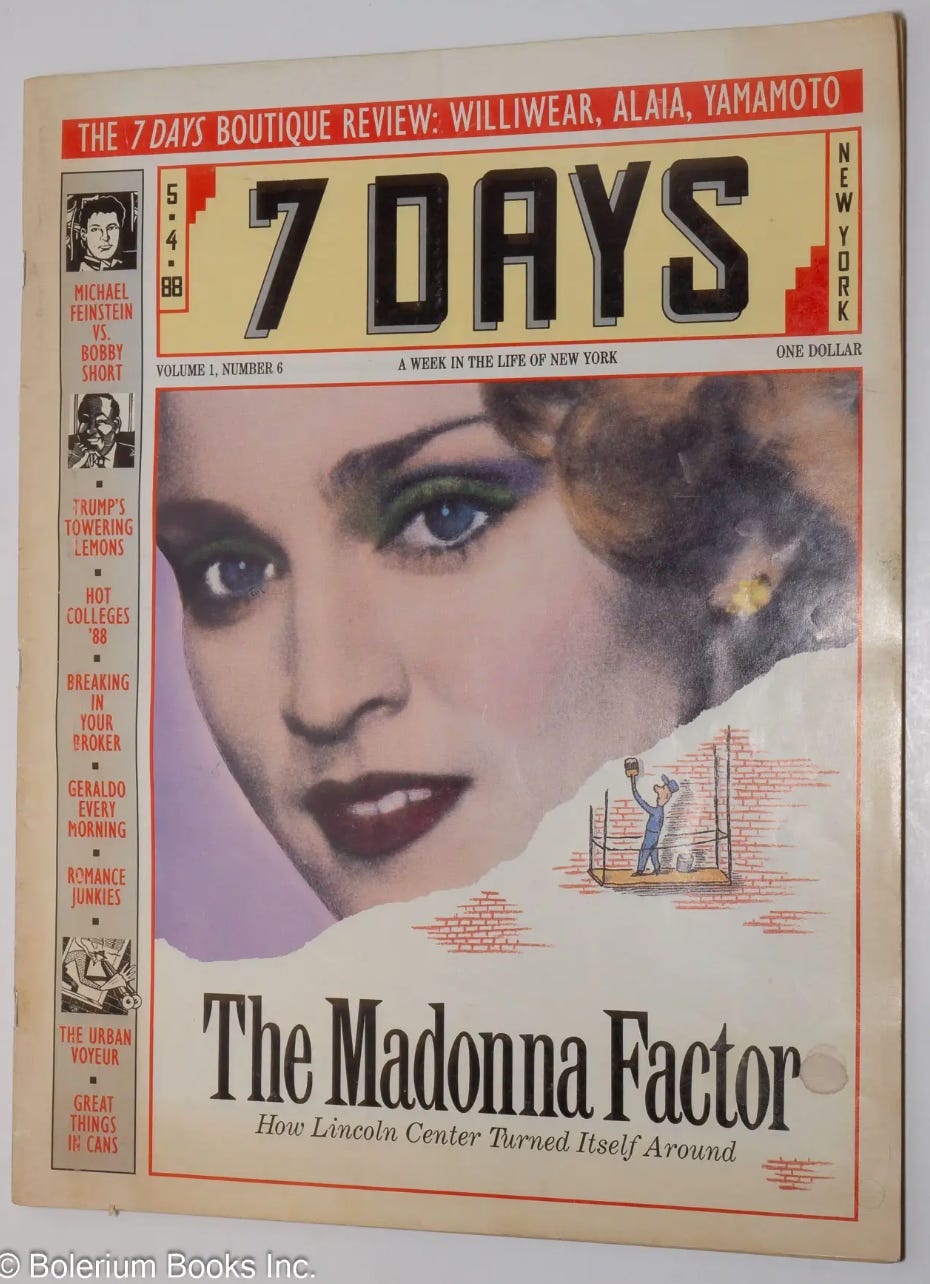
They all told me to be secretive so nobody would steal my idea. But i decided not to follow that. I did the opposite and told everyone. I handed out a questionnaire at ACT UP of what they would like to see in a gay and lesbian publication. So it very quickly became, “Oh, Gabriel’s starting this publication.” And I lined up people to be in it, particularly Michelangelo Signorile, who was a publicist…
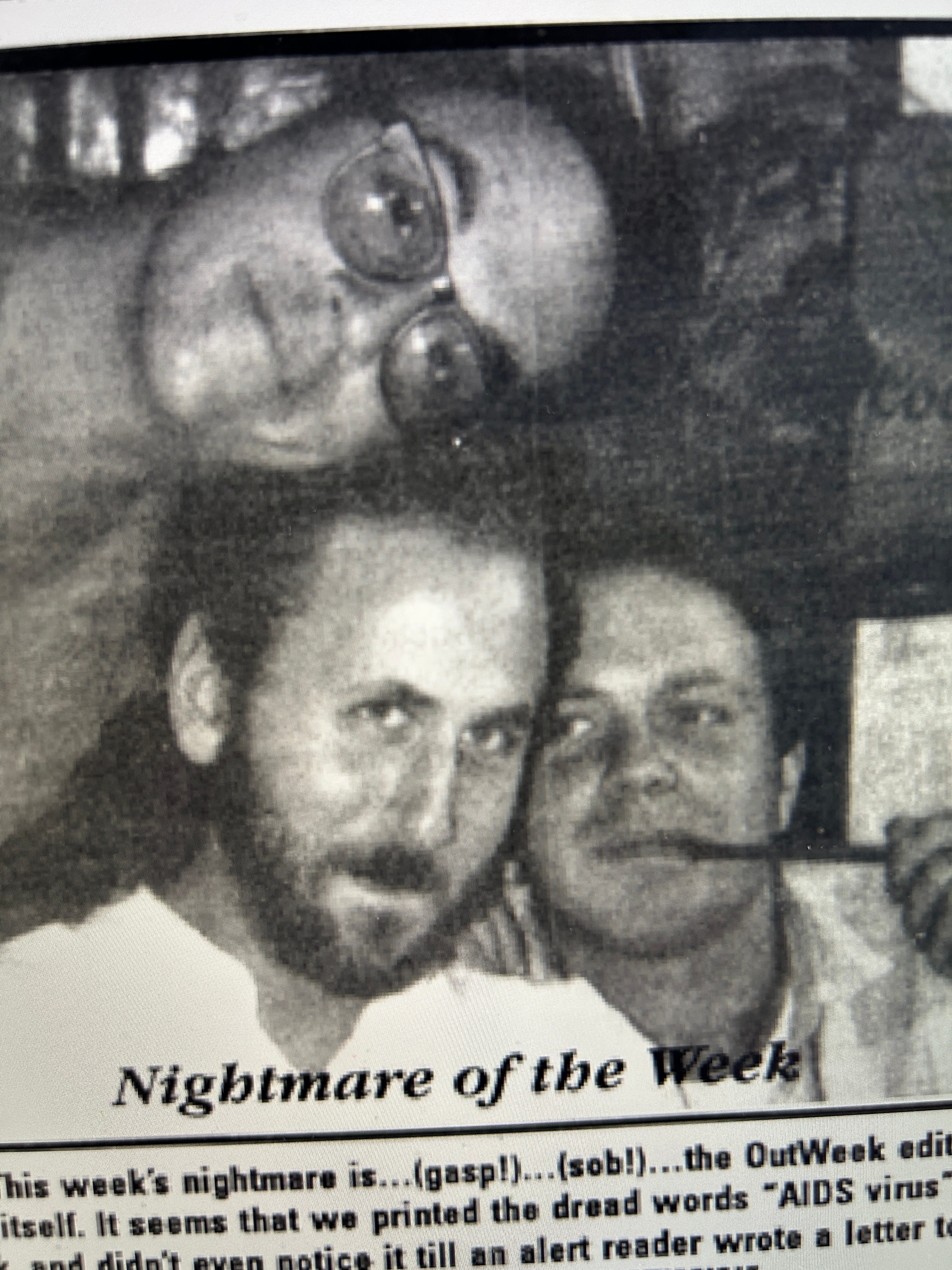
…which gave Michael an invaluable insight into how popular culture is generated in our society, which ended up helping OutWeek a lot.
So I put in a bunch of my own money I’d earned from my music shows that I’d saved but still needed to raise $600,000. I started asking a lot of rich gay people. But then I realized that the people who were investing were thinking of it as a profit-making thing. I knew that wasn’t going to happen, if we did what I wanted it to be. We were going to make a lot of editorial decisions that were going to actually cost us advertisers.
Meaning you weren’t going to hesitate to out famous people?
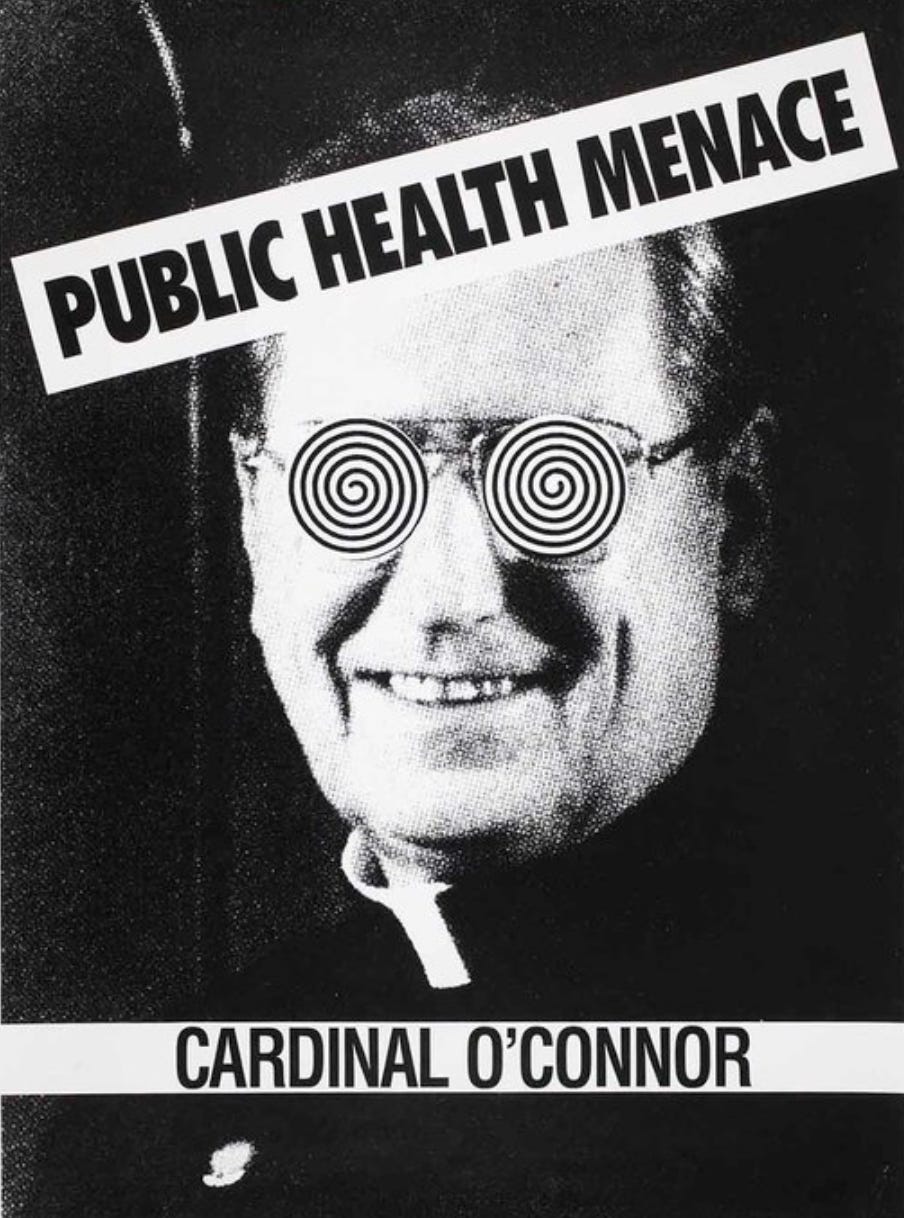
No, that hadn’t occurred to me at that time. More like calling Cardinal O’Connor a pig, doing what ACT UP was doing. That was not going to sell with Absolut Vodka.
So then I met Kendall Morrison, a businessman in his late twenties and a little tech wizard who’d kind of invented phone sex—a wonderful form of safe-sex, by the way. But they had no place to advertise their sex lines in NYC. So a friend called me one day and told me that Kendall, too, was trying to start a gay mag. So I went over and met Kendall, who was unbelievably gorgeous.
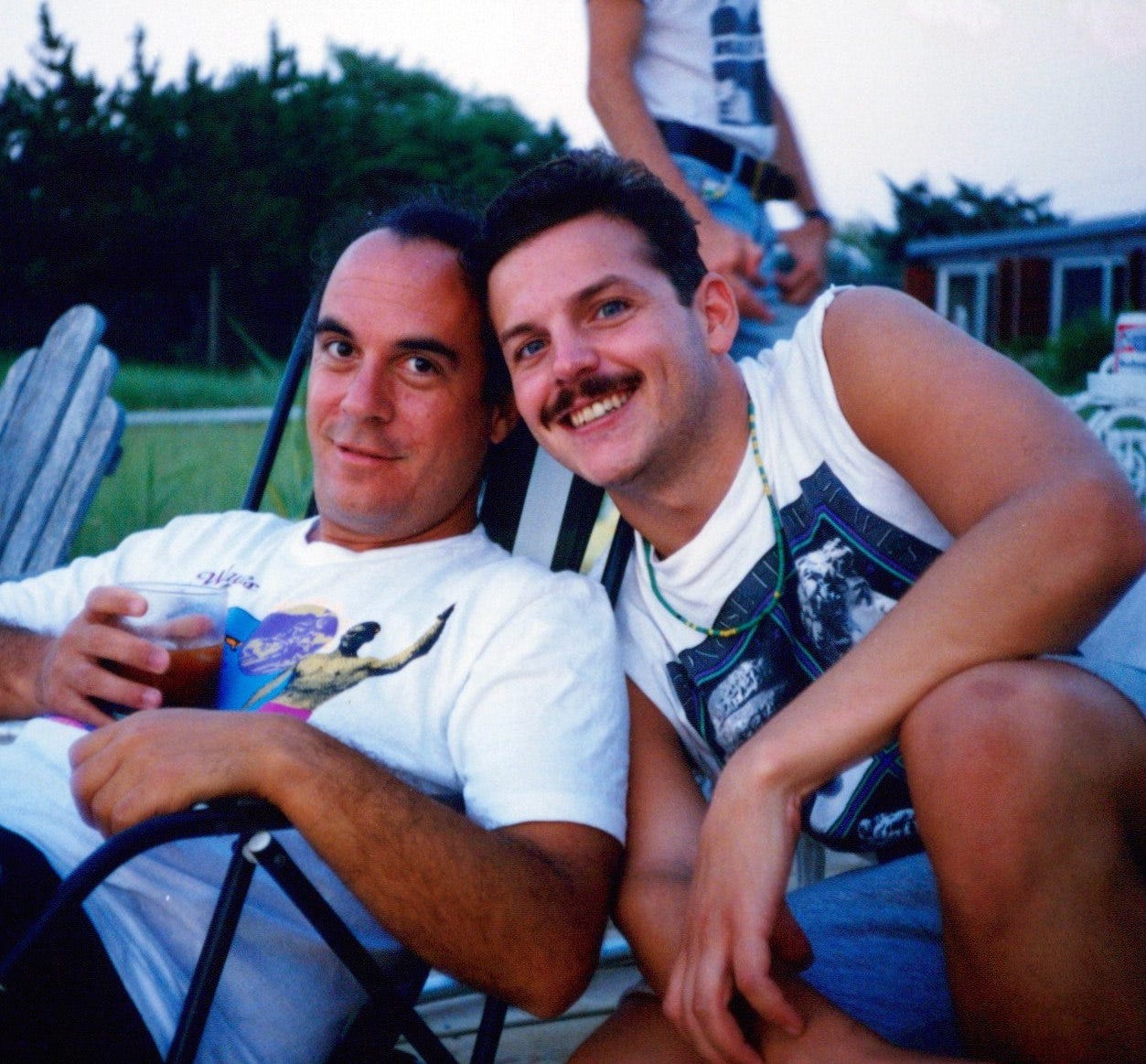
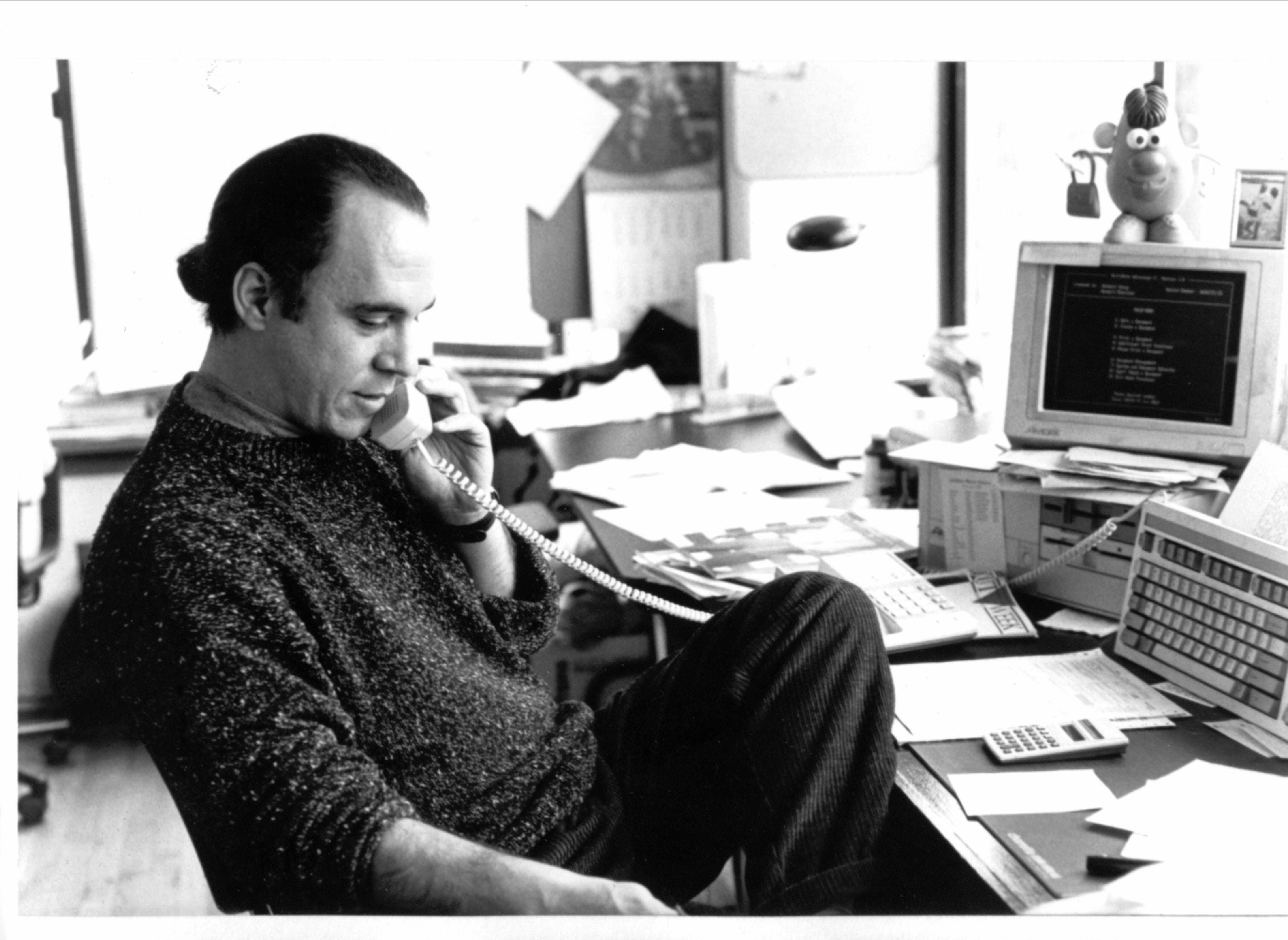
And it also turned out that he had AIDS and had already been arrested in a bunch of demos with ACT UP. I don’t know how I missed him at the meetings. So he told me he was going to do a gay party rag with party listings that would be filled with ads for his phone sex companies in the back. So I had a second lightbulb moment: “Oh my God, Kendall, we have to join forces. Let’s create an activist magazine with your phone ads in the back.” He immediately said yes. And he had the money—a lot. So I went to my earlier investors who were seeking a profit and declined their money. So between Kendall, me and some of his investors, we did it. I moved into an office that Kendall had already set up and hired Michelangelo and a whole staff—and the magazine came out Gay Pride weekend of 1989.
It took only three months from conception to the magazine stands. And it became a huge cause celebre in just a few months.
As I was reading the archive, it seemed like the magazine was a hybrid of a kind of house news organ for ACT UP—all very serious—and the sexy and the fun. Some of the cover ideas are so fun, like “Old Clone vs. New Clone.”
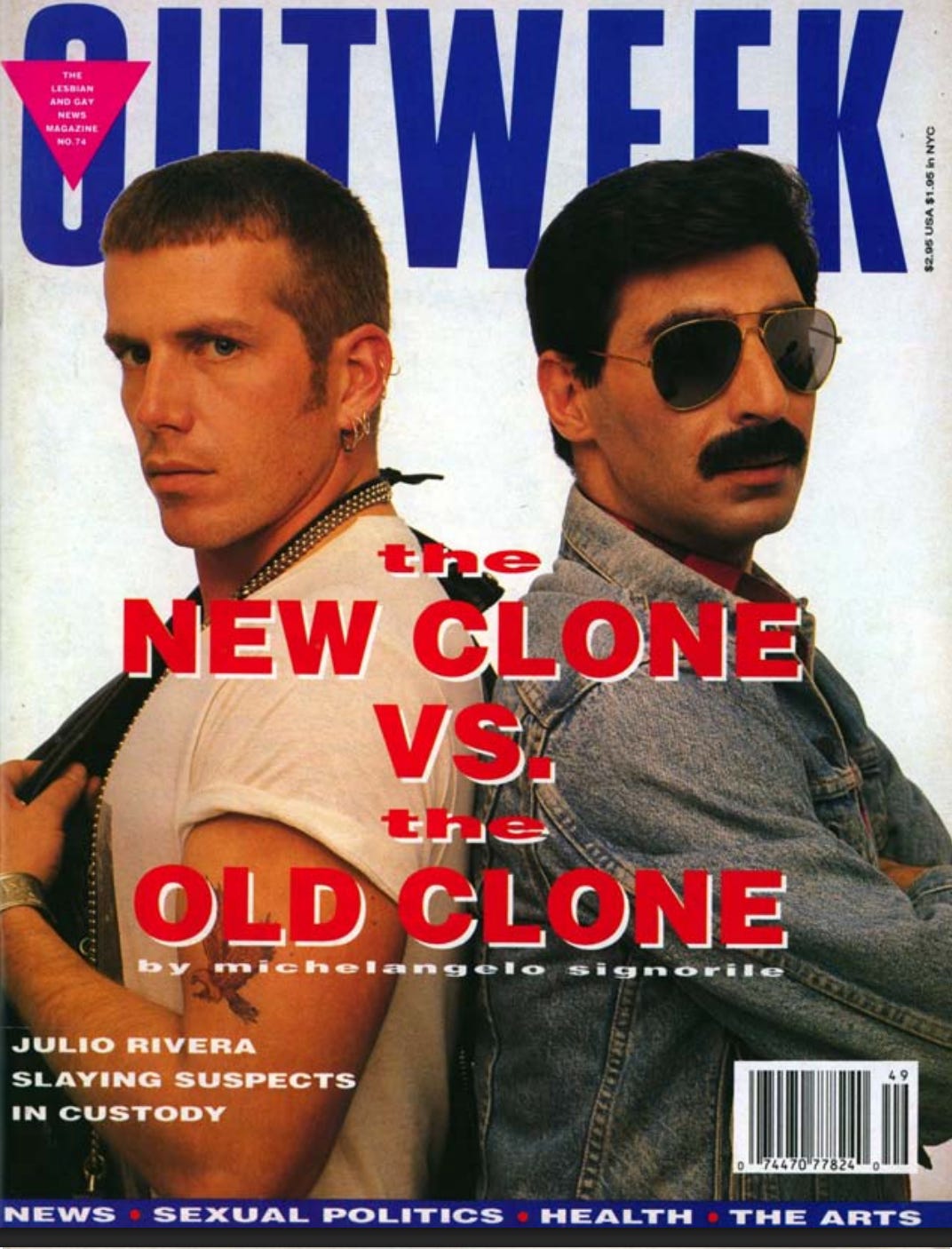
It reminds me of New York magazine in its earliest post-1968 Clay Felker years and then when Adam Moss revived it and made it really highbrow juicy again in the mid-2000s.