
Frank Maya, One of the First Openly Gay Comics, Died of AIDS in 1995. A New NYC Live Show Through Sept. 13 Brings Him Back to Life
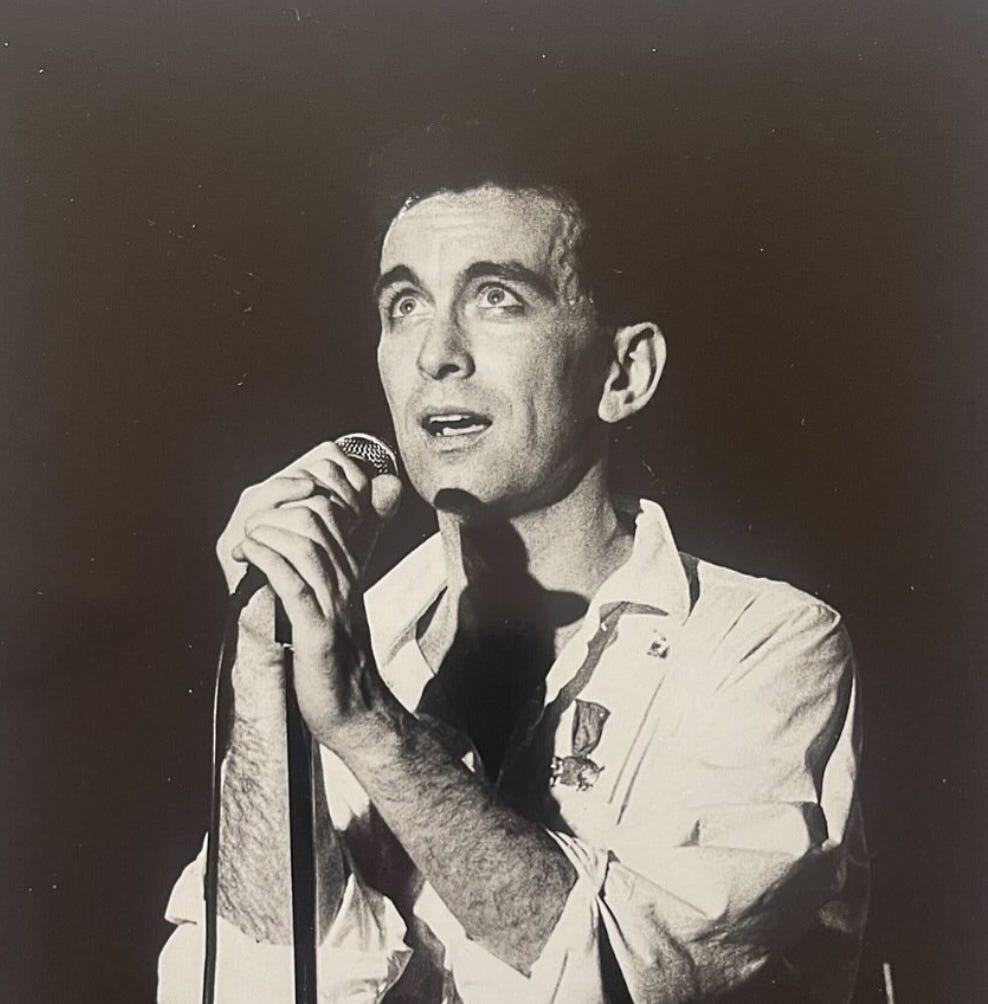
"I became obsessed with him," says perfomer Morgan Bassichis, 41, on their Soho Playhouse show that both channels and honors the handsome, biting Irish-Colombian Maya, who passed at age 45.

Hi, Caftaners. Hope you had a good weekend. A few quick items: First, here is a piece I wrote for The Marshall Project about my experience (thus far) this summer being part of a wide network of people who are trying to mitigate the worst damage of ICE’s cruelty by showing up at immigration courts here in NYC, warning immigrants who show up as required for court hearings that they could be taken away by ICE, asking for their vital info and emergency contacts, and then, if indeed they are snatched away by ICE after their hearing (even if they get a continuance), passing on that info to their emergency contacts and possible legal assistance.
Please consider becoming a court watcher if these ICE apprehensions are happening at immigration courts in your city. I don’t know what groups are organizing this in every city, but I’m sure if you google “Court watching,” “ICE” and the name of your city, you should be able to find something.
The other item is that, in partnership with RuPaul’s book-club platform Allstora, I’m going to soon be launching a Caftan Chronicles Book Club, which will focus on books old and new by, for and about older gay men. I will post the link for you to sign up once it’s ready to go, probably by next week, but basically the deal is, if you sign up at a certain monthly rate, which I think is like $20-$25, you’ll get a book every month of my choosing, a chance to discuss the book with other readers online and—at least when I can get the author to join us—a chance to join a Zoom that I’ll moderate where we discuss the book and can ask the author questions about it. I intend to make the first book Tramps Like Us, the thrilling and moving recently reissued 2001 novel-memoir of being young, gay and bohemian in New Orleans and SF in the 1970s and 1980s by Joe Westmoreland, whom I recently interviewed. (And Joe has agreed to join us for the Zoom chat.) So keep an eye out for the sign-up on my next Caftan or two. I really hope you’ll join.
Finally, as ever, I’ll make my usual plea to free Caftan subscribers: If you continue to like these posts, please consider becoming a paid subscriber at $5/month. It really helps me continue doing this.
And if you’re already a paid subscriber…I truly thank you. Your collective subscriptions really keep me afloat.
OK, now for this week’s Caftan interview, which I think is really special. It’s with Morgan Bassichis, a NYC- based performer who’s a millennial but who currently has a one-man show at Soho Playhouse here in NYC through Sept. 13 (tickets are still available) that’s a hybrid homage/recreation of the work of Frank Maya.
Maya, if you’ve never heard of him, was one of the first openly gay stand-ups to get some mainstream attention (MTV, Caroline’s Comedy Club, Comedy Central, ABC) before he died of AIDS in 1995 at age 45. Here is a whole reel of Frank’s weird and hilarious work that was uploaded by the choreographer Neil Greenberg, who was one of Frank’s boyfriends:
I actually saw Frank perform early in my time in NYC, probably 1992 or 1993. The only thing about the show I remember—other than Frank’s sexiness and his Long Island accent—was a long joke he told about how a typical New Yorker would see Anne Frank’s attic apartment and be like, “Wow, this is great real estate!” But I’ve thought of him from time to time through the years—about how he was one of the many brilliant, talented people we lost to AIDS before the Internet era and hence have so little archive or memory of them.

That’s why I was delighted when I heard that Morgan was staging this show, which I saw last Monday, amid a packed house of primarily younger people who certainly never saw Frank perform before he died. I was touched that someone as young as Morgan, who is 41, would not only have heard of him (they tell that story below) but would devote an entire show to him.
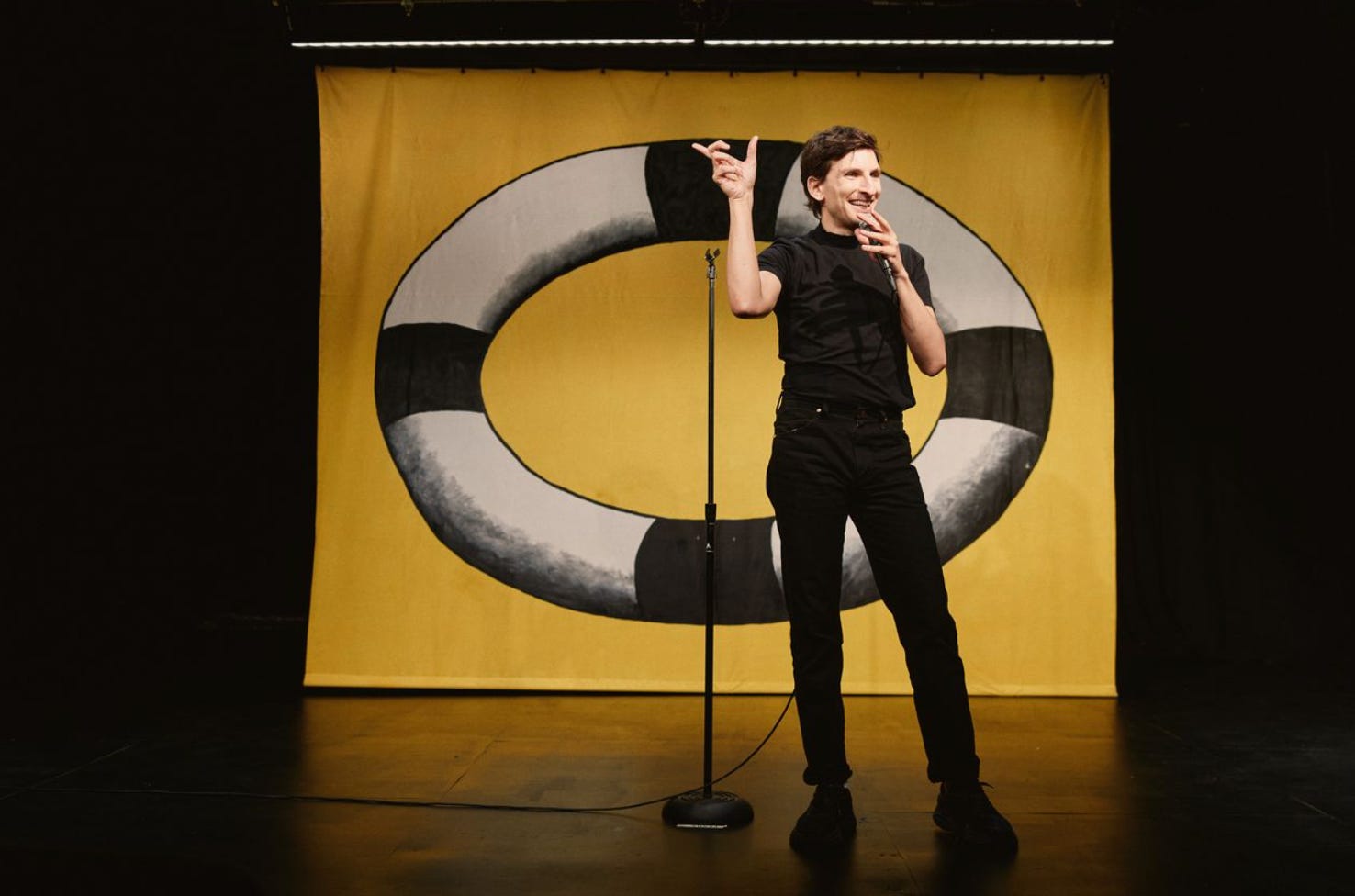
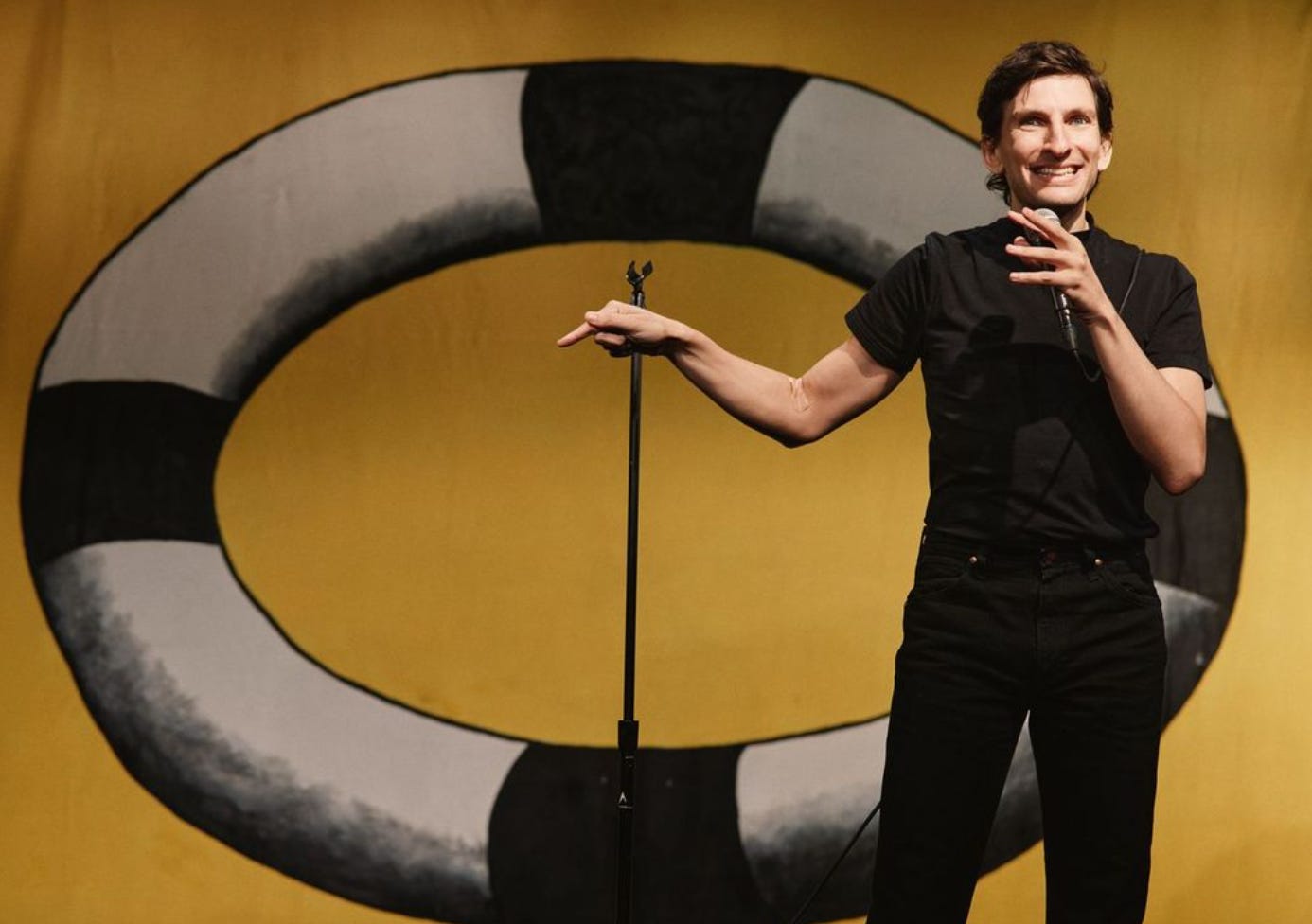
It’s a show that begins hilariously, with Morgan’s own twitchy and (perhaps faux) solipsistic stand-up persona, then segues into Morgan—wearing all-black just like Frank often did, and with the same painted life preserver that Frank used as backdrop for his shows—reviving some of Frank’s own bits and songs, then morphs unexpectedly into a serious and touching meditation on queer collective memory, and how important it is that the work of people like Frank—who never attained that generation-bridging iconic status of, say, Keith Haring or Freddy Mercury—be exhumed and known by younger queer generations. Especially now, in our own perilous times for LGBTQ folks.
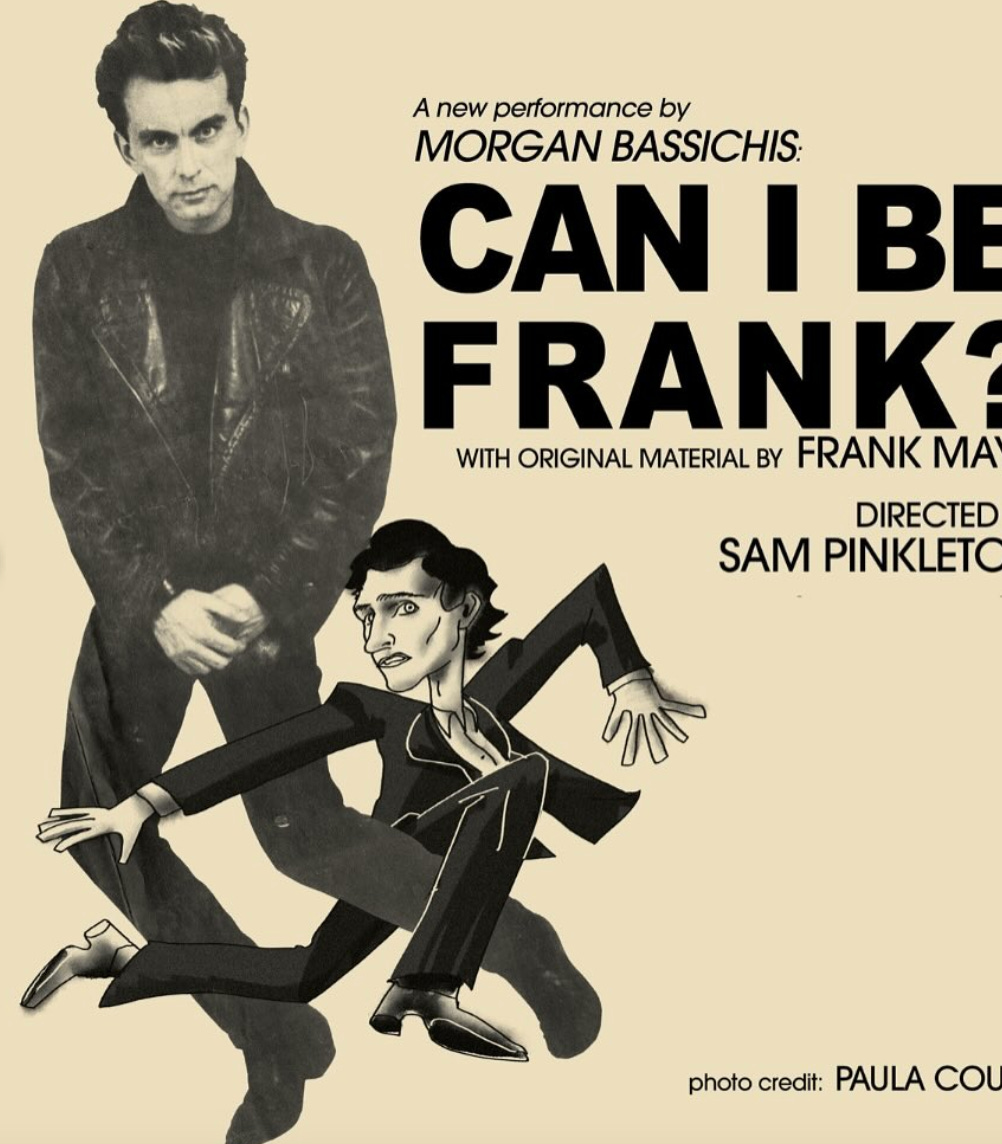
So without further ado, let me introduce Morgan—who is also a pretty committed political activist here in NYC, and, um, YES, we get into it about that stuff (Trump 2.0, Gaza) toward the end of the interview. But mainly we talk about Frank. I hope his ears were burning in heaven. (In fact, one of his best-known bits was reading aloud on stage “letters from celebrities in heaven”—like Bette Davis complaining about Joan Crawford; talk about old-school gay.) Seriously, I hope Frank knows that he’s “having a moment” right now thanks to Morgan. See the show if you can!
Morgan, thanks for talking today. I loved the show! I remembered the Anne Frank bit! Can you talk a bit about your performance history up to now?
I grew up doing theater but I got politicized and did HIV/AIDS work in Boston in high school, graduating in 2002.
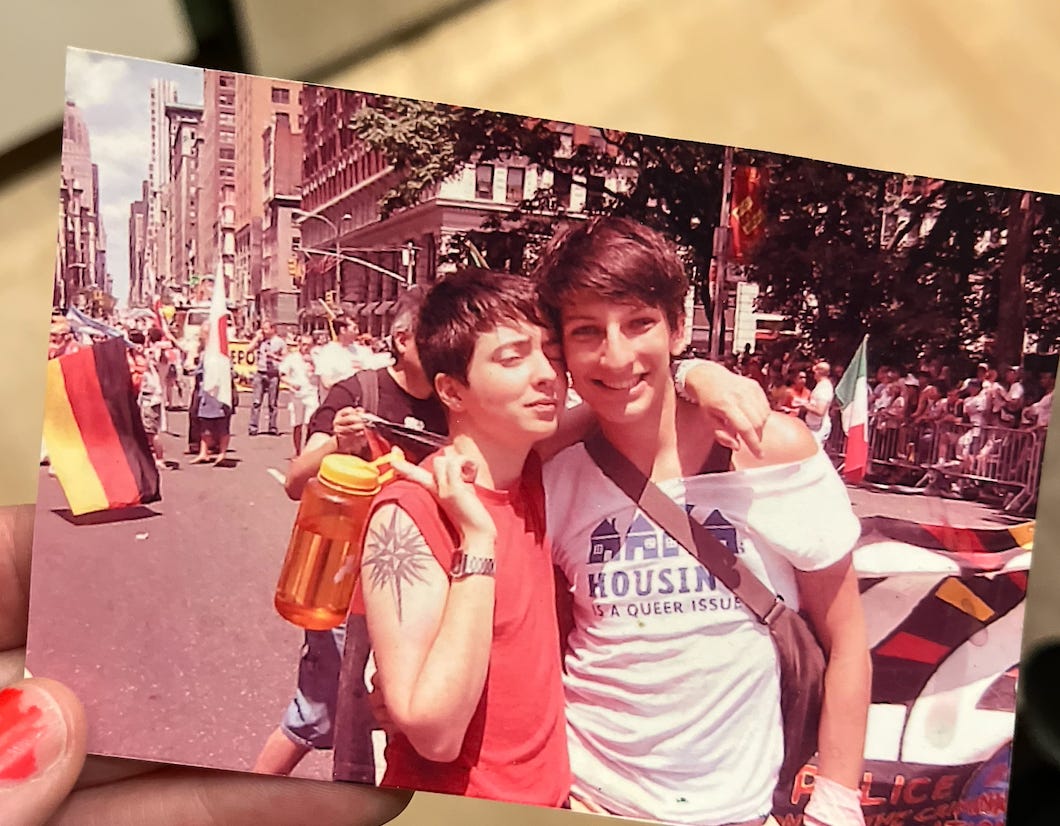
I then spent many years in San Francisco as a political organizer, doing among other things prison abolition work. But if you need to be on stage, you can’t hide it for that long. So I moved to New York and got connected to performance art and got gigs to develop what I do.
What’s one piece of yours prior to the Frank one you can tell us about?
One was based on this book The Faggots and Their Friends Between Revolutions.
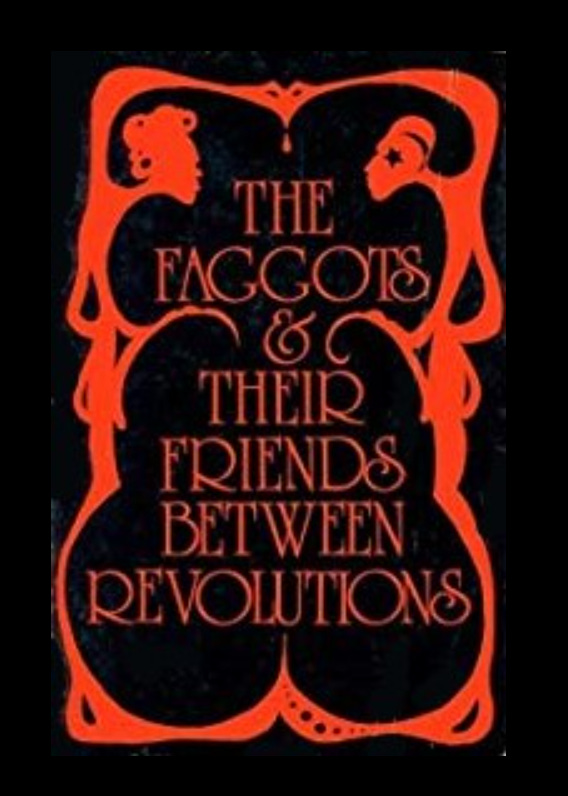
Oh yes, Blair Fell brought up that book when I was talking to him about his new novel Disco Witches of Fire Island.
It’s a special book that’s been passed around among friends for four decades. It’s part fairy tale, part manifesto. It starts, “It’s been many years since the last revolution, and the faggots and their friends are still not free.” It speaks to our current moment, with a dictator targeting everyone who’s vulnerable. The New Museum asked me if I wanted to make a piece for their 40th anniversary. And their first year, 1977, was the year the book came out. So we made a piece from the book with some music. And then I was able to get the book reprinted with Nightboat Books via my friend Gregg Bordowitz, an ACT UP alum and a great mentor of mine, and now it’s their bestselling book ever.
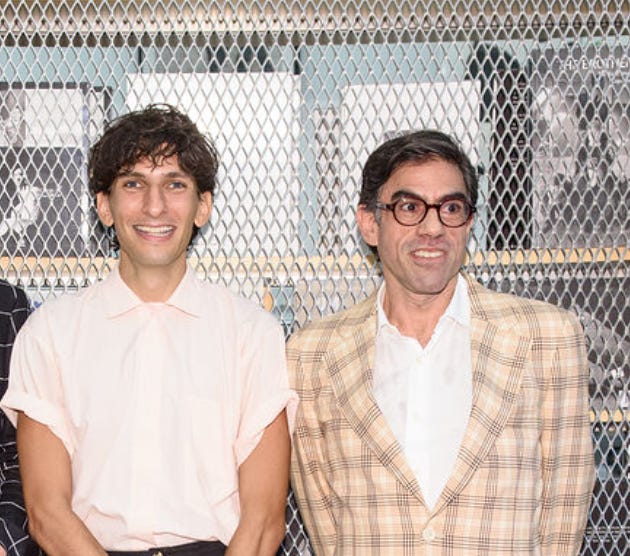
And I just recorded the audiobook. But for the show, I got to use humor and music to activate our queer and radical past.
That’s very cool. So let’s talk about Frank. I know you talk about this in the show, but you can talk again about how you discovered him?
I literally met his brother while I was on an art residency in Sag Harbor, Long Island. I was working on a show about how Zionism has appropriated and misused all the Jewish holidays. I brought my rabbi to Sag Harbor and interviewed her. And Frank’s brother walked into the art residency gallery one day when I was there. He asked what kind of an artist I was and I said, “I’m a performance artist but I also do comedy and I sing,” and he said, “That’s so weird—my brother was all those things before he passed away. And I guessed that maybe he’d died from AIDS. It was like a ton of bricks hit me, discovering this sort of artistic ancestor. I became absolutely obsessed with him.
And you found Frank’s work online that Neil Greenberg had uploaded?
Yes. Neil had painstakingly digitized hours of Frank’s footage. If he hadn’t done that, this show wouldn’t have been possible. Like a crazy person, I reached out to Neil and asked to talk. He immediately became my guardian angel. He said he’d been hoping that someone would pick up Frank’s work.
He must have been very touched that someone tapped into Frank. Since Frank died, I can’t think of a moment when he was memorialized or revived until now. I hadn’t even thought of him much until I got the press release from your publicist. When you first started watching his clips, what were your impressions?
I was like, “How the fuck do I not know who this person is?” Just baffled. I thought, This show is about Frank, but it’s also about so many people who were brilliant and died and nobody knows about them. His humor is really biting and smart, and also he’s doing these songs that are super funny and neurotic. Songs like “God Is Busy” and “Too Nervous.” I write songs like that! Our sense of humor is extremely similar.
Some of his songs remind of The Talking Heads. Also, he was really sexy. He had almost had the two versions, his more twinky cute eighties self and this more buff and, as he says himself, “butch” version of himself in the nineties. It also seems like in the eighties he was more of a weird performance artist in the sense of Spaulding Gray and Laurie Anderson. And then he becomes a more mainstream stand-up comic as he edges closer to mainstream recognition.
He had three chapters. The first was music—he had a choir called the Maya Choir. Then he migrated into the East Village performance scene, like at the Pyramid Club.
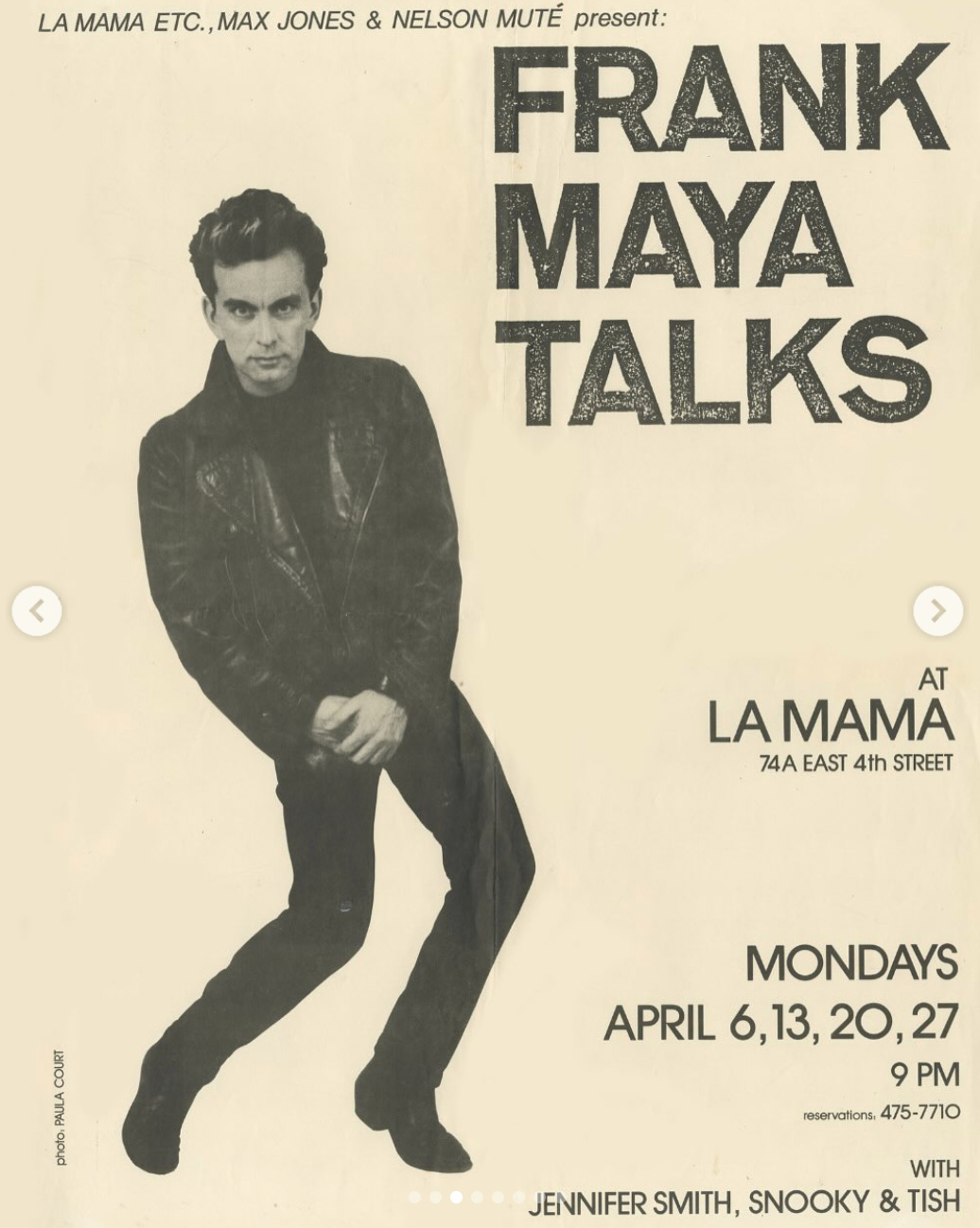
And the last chapter was his trying to be a stand-up, performing at Caroline’s and doing TV sets.
Keep reading with a 7-day free trial
Subscribe to The Caftan Chronicles to keep reading this post and get 7 days of free access to the full post archives.